By Jameson
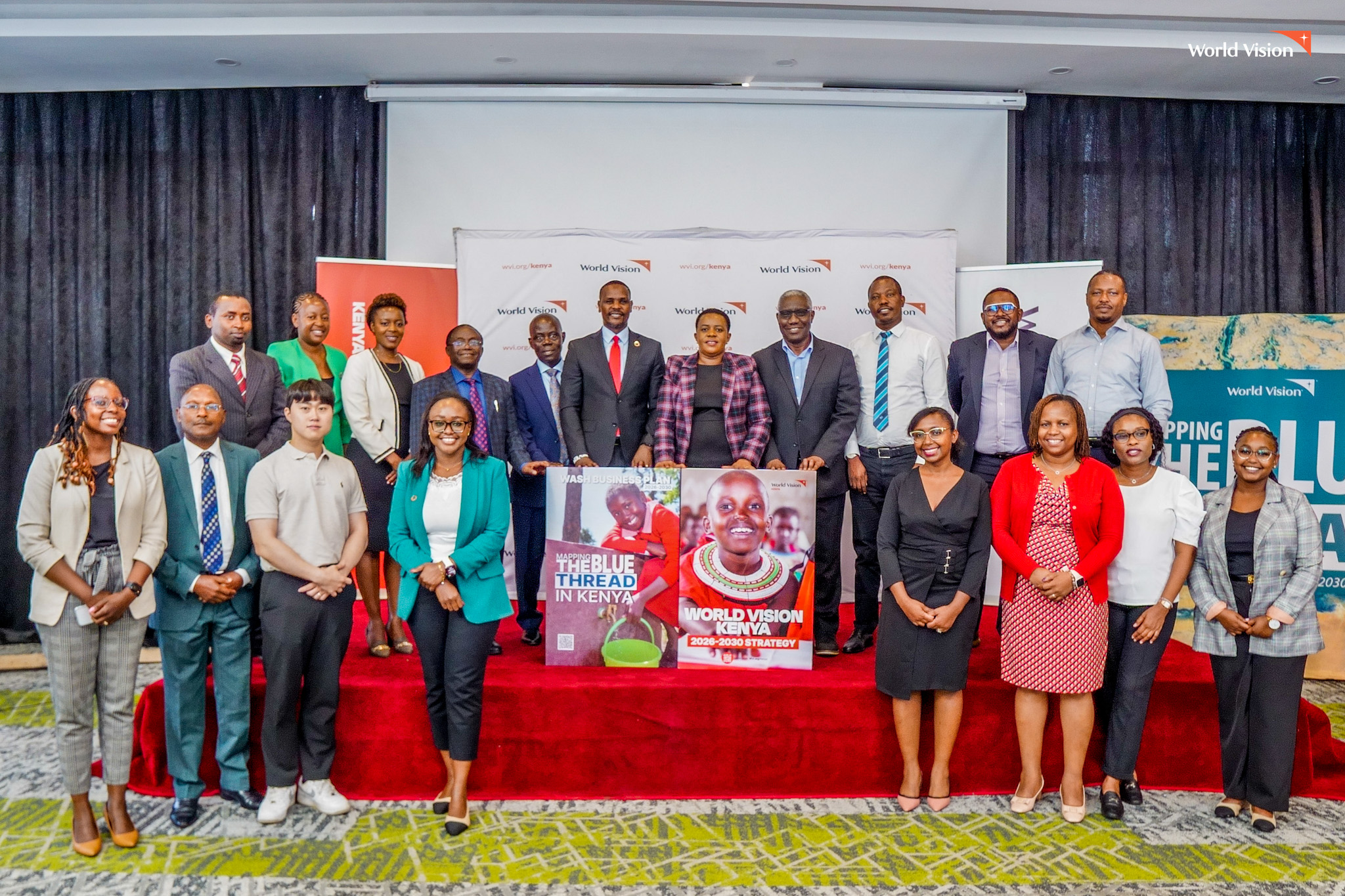
World Vision Kenya has launched its 2026–2030 National Strategy alongside a Water, Sanitation and Hygiene (WASH) Business Plan, outlining an ambitious agenda to improve the wellbeing of 13.3 million children across 33 counties through resilience building, inclusive development and strengthened child protection systems.
The strategy will be implemented through direct programming, strategic partnerships and evidence-based advocacy, in alignment with Kenya Vision 2030, County Integrated Development Plans and the Sustainable Development Goals.
Alongside the national strategy, the organisation unveiled its 2026–2030 WASH Business Plan, dubbed Mapping the Blue Thread. The plan aims to deliver direct WASH services to 2.27 million children and expand access to safe water for more than 1.2 million people in 18 counties by 2030. It prioritises climate-resilient water systems, improved sanitation services and hygiene promotion, particularly in arid and semi-arid areas.
World Vision Kenya Board Chairperson David Githanga said the new strategy represents a shift from short-term interventions to sustainable systems that protect children and strengthen communities.
“With an ambitious goal to reach 13.3 million children across 33 counties, this strategy prioritises those living in extreme poverty and children with disabilities, while focusing on lasting solutions,” he said.
The strategy builds on the organisation’s 2021–2025 programme, during which World Vision Kenya invested USD 432 million and reached more than 4.5 million people across 37 counties, including 2.6 million children directly. During the same period, 1.27 million children were engaged in initiatives to end violence against children, while reported cases of violence declined from 42 per cent to 28 per cent in programme areas.
World Vision Kenya National Director Gilbert Kamanga said the results underscore the impact of coordinated action between communities, leaders and partners.
“The new strategy builds on this foundation, responding to emerging risks while scaling approaches that have proven effective,” he said.
The 2026–2030 strategy is anchored on three integrated priorities: resilience building and climate action; water, sanitation, hygiene and health; and child protection, participation and access to education. It also places strong emphasis on strategic partnerships with national and county governments, bilateral and multilateral agencies, and the private sector.
Speaking at the launch, Eng. Festus Ng’eno, Principal Secretary in the State Department for Environment and Climate Change, said World Vision Kenya’s priorities align with the government’s climate, water and child protection agenda.
He noted that partnerships with organisations such as World Vision Kenya are critical in addressing persistent gaps in access to safe water and sanitation, particularly in rural areas, informal settlements and climate-vulnerable communities.
World Vision Kenya said the new strategy seeks to strengthen systems, scale proven interventions and deliver inclusive, sustainable outcomes for children and vulnerable populations over the next five years.
The launch brought together government officials, development partners and civil society leaders, with a focus on reaching children living in extreme poverty, children with disabilities, and those affected by climate shocks, violence and social exclusion.