A coalition of conservationists has accused the government of contradicting its ambitious plan to plant 15 billion trees by 2032 while allowing continued destruction of Kenya’s existing forests, national parks and public green spaces.
The conservationists, drawn from Friends of Nairobi’s Forests and Green Spaces, the Green Belt Movement, Friends of Oloolua Forest, Friends of Karura Forest, Friends of City Park, Friends of Nairobi National Park, Friends of Nairobi Arboretum, Ngong Road Forest, Thogoto Community Forest Association and JustAct, warned that ongoing infrastructure and commercial developments within protected ecosystems threaten the country’s environmental future and undermine its climate commitments.
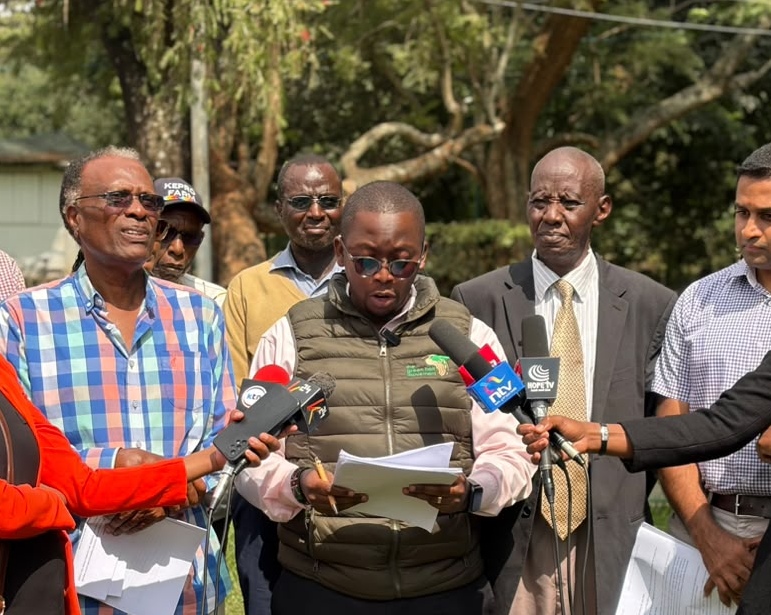
Speaking to the press on Thursday at Karura Forest, the conservationists said mature indigenous forests cannot simply be replaced by planting new seedlings elsewhere because they provide critical ecosystem services, including carbon storage, biodiversity conservation, water catchment protection and climate regulation.
“We cannot plant billions of trees while destroying the forests we already have,” the statement said. “Climate leadership is measured not by speeches or targets but by the courage to protect what already exists.”
The conservationists raised concern over increased encroachment into protected areas, particularly Ngong Road Forest, where they claimed several projects are either proposed or under construction.
According to the statement, the developments include a proposed luxury tented camp, the Riruta-Ngong Town Meter Gauge Railway, a road linking Talanta Stadium to the Bomas International Conference Centre, a contractor’s construction camp and land earmarked for the Talanta Sports City project.
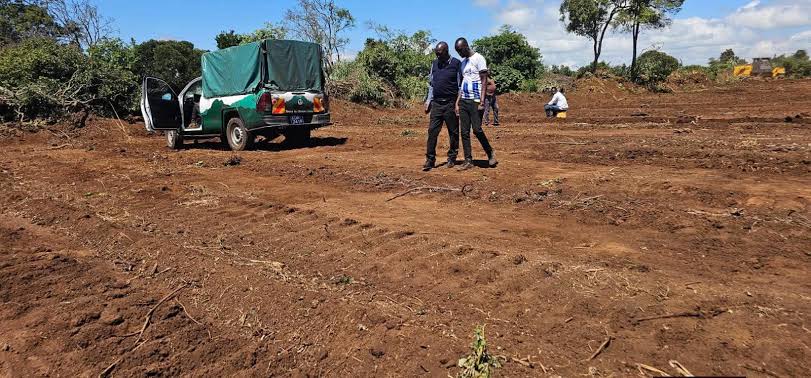
The conservationists alleged that despite previous government assurances that the luxury tented camp project had been halted, construction activities were continuing within the forest.
They also expressed concern over continued encroachment into Nairobi National Park, warning that years of infrastructure development had gradually reduced wildlife habitat. The latest proposals, they said, include the construction of a new Nairobi Animal Orphanage and a 1,300-vehicle parking facility to serve the adjacent Bomas International Conference Centre.
The conservationists further claimed that ongoing construction of an airstrip, State Lodge and golf course in Upper Imenti Forest threatens one of Kenya’s key water towers and wildlife habitats.
In Nairobi, they opposed plans to expand State House Road, saying the project would require the felling of mature trees along State House and Dennis Pritt roads. They also objected to proposals affecting Uhuru Park and called for urgent action to resolve governance and land ownership disputes surrounding City Park.
The conservationists further criticised the failure by environmental institutions to adequately safeguard protected ecosystems.
They questioned the role of the Ministry of Environment, Climate Change and Forestry, the Ministry of Tourism and Wildlife, the Kenya Forest Service, the Kenya Wildlife Service and the National Environment Management Authority in preventing continued encroachment into forests and protected areas.
The conservationists also expressed concern over alleged disregard of court orders halting developments in Ngong Road Forest and Upper Imenti Forest, saying such actions undermine the rule of law and constitutional environmental protections.
They called on the government to immediately halt activities resulting in the destruction or excision of public forests unless they are backed by transparent public participation, comprehensive environmental impact assessments and proof that no viable alternatives exist.
The conservationists also urged Parliament to strengthen legal protections for forests and public green spaces and appealed to development partners to closely monitor Kenya’s progress towards its climate and biodiversity commitments.
Kenya’s protected areas, including iconic urban forests and national parks, are facing increasing threats from infrastructure expansion, commercial development and land use changes.
Some of the most prominent areas affected include Nairobi National Park, Karura Forest, Uhuru Park, Upper Imenti Forest in Meru and Ngong Road Forest, among others.