By Jameson
The principal of Dandora Secondary School, Eutychus Thiong’o, has praised the exceptional performance of one of his students in the 2025 Kenya Certificate of Secondary Education examinations, describing it as proof that learners from informal settlements can excel academically with the right support.
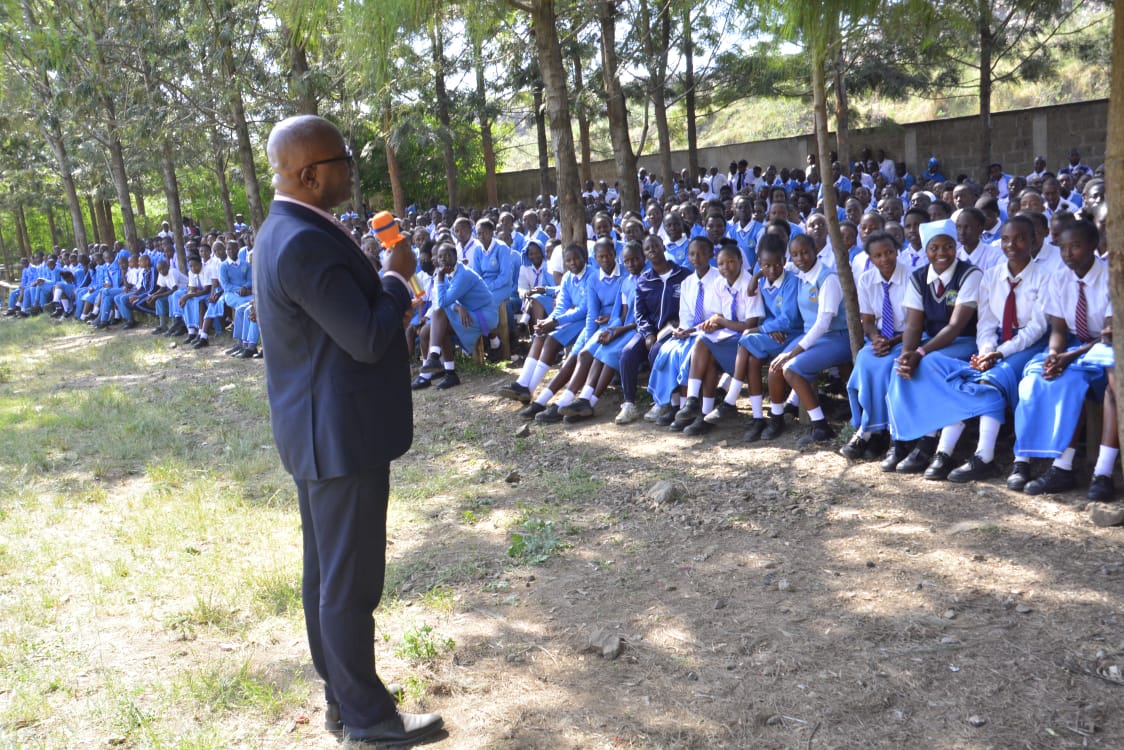
Speaking at the school, Thiong’o said Dandora Secondary currently has a student population of 1,628, supported by 48 teachers and 23 non teaching staff. He said he was a proud principal following the outstanding results of Agrrey Munandi, who scored an A minus of 80 points, narrowly missing a straight A.

Thiong’o said Munandi’s achievement was remarkable given the difficult circumstances he faced. He revealed that upon joining the school, Munandi demonstrated strong academic potential but came from a financially challenged background, with his mother unable to meet school costs.
“As the principal, I made a personal decision to pay all his school fees and levies, including academic trips, textbooks and literature requirements. I believed in him, and I am proud that he did not disappoint,” Thiong’o said.
He added that Munandi competed favorably with students from some of the country’s top schools, becoming a model learner and helping to place Dandora Secondary on the national academic map.
The principal said the school is now appealing to individuals, organizations and institutions of goodwill to support Munandi to access the best possible higher education opportunities locally or internationally.
Beyond celebrating the success, Thiong’o highlighted the challenges facing the school and the wider Dandora community. He said extreme poverty among parents makes it difficult for many to pay basic levies, including lunch fees, forcing the school to constantly seek external support.
He also raised concern over student exposure to juvenile criminal gangs, noting that fear of retaliation discourages learners from reporting cases of theft, vandalism and indiscipline.
Another major challenge, he said, is the negative perception of Dandora, which affects teacher deployment. According to Thiong’o, some teachers posted to the area seek immediate transfers due to stigma, despite the community having undergone significant positive change.

“We want to tell the country that Dandora has changed. We are a community that upholds morals and is committed to transformation,” he said.
Thiong’o further noted that overcrowding remains a serious issue, with an average of about 70 students per class, making it difficult to provide individual attention. He appealed to the government and the Teachers Service Commission to deploy more teachers and provide additional resources, saying this would enable the school to replicate Munandi’s success many times over.
On infrastructure, the principal acknowledged existing gaps but expressed gratitude for government funding so far. He called for affirmative action for Dandora schools, citing the high population and limited facilities.
He added that the school does not discriminate against learners and has accommodated students affected by the transition from the 8 4 4 system, including those who joined later than usual.
“With more support, we can nurture many more success stories and continue changing the narrative of Dandora,” Thiong’o said.