By James Mutua
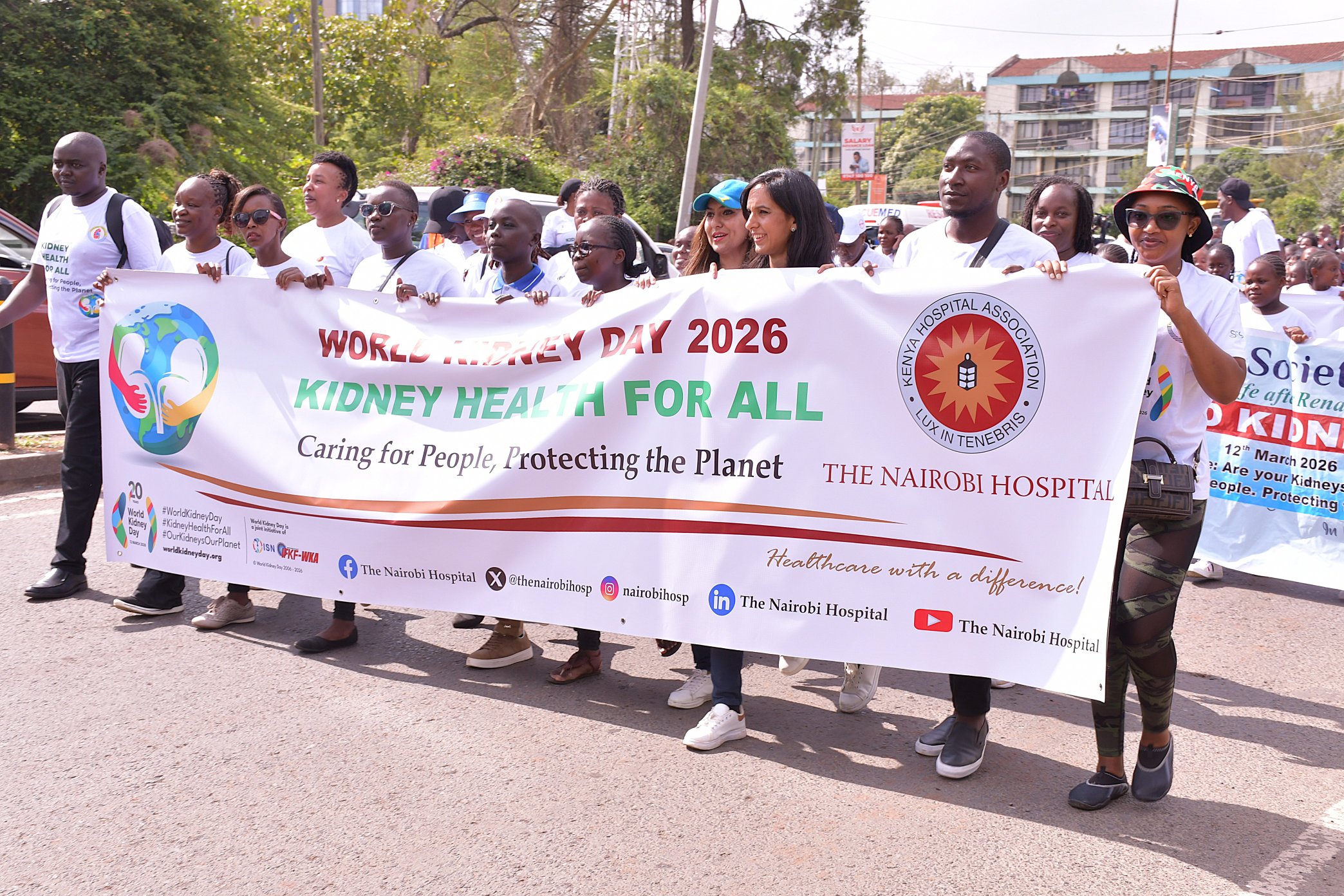
The Nairobi Hospital commemorated World Kidney Day 2026 with a public awareness and community engagement event aimed at promoting early detection and prevention of kidney disease.
Held under the theme Kidney Health for All Caring for People, Protecting the Planet, the event brought together healthcare professionals and members of the public to highlight the importance of kidney health and encourage routine medical check ups.
Global health experts estimate that chronic kidney disease affects about 850 million people worldwide, making it a growing public health concern. In Kenya, the number of kidney related illnesses has been rising, largely driven by the increasing prevalence of non communicable diseases such as diabetes and hypertension. Medical professionals warn that many people remain undiagnosed until the disease has already progressed, underscoring the need for early screening and greater public awareness.
Speaking during the event, Dr Peris Koge, Lead Nephrologist at The Nairobi Hospital, emphasised the importance of early detection and proactive care in managing kidney disease.
“Kidney disease is often referred to as a silent condition because many people do not experience symptoms until it has advanced. Through initiatives like these, we hope to encourage individuals to prioritise regular health checks and adopt healthier lifestyles that support kidney function. Early screening and awareness are essential in preventing complications and improving long term health outcomes,” she said.
As part of the hospital’s corporate social responsibility initiative, members of the public were offered free health screenings, including kidney tests, urinalysis, blood sugar testing, Body Mass Index measurements and blood pressure checks.
Participants also received educational materials outlining practical steps to maintain kidney health, such as maintaining a balanced diet, staying hydrated, controlling blood pressure and seeking regular medical check ups.
For many attendees, the initiative provided a valuable opportunity to better understand their health status. Several participants welcomed the free screenings and expert medical guidance, noting that such outreach programs help raise awareness about kidney conditions that often go undetected.
Community outreach initiatives like this play a crucial role in strengthening the connection between healthcare institutions and the public by encouraging preventive care and early medical intervention.
According to Ministry of Health Kenya, approximately 3.1 million Kenyans are living with chronic kidney disease, a growing public health concern largely driven by the rising prevalence of non communicable diseases such as hypertension and diabetes. The Ministry says non communicable diseases currently account for about 43 per cent of all deaths in Kenya, underscoring the need to strengthen prevention, early diagnosis and management of kidney disease.