By Jameson
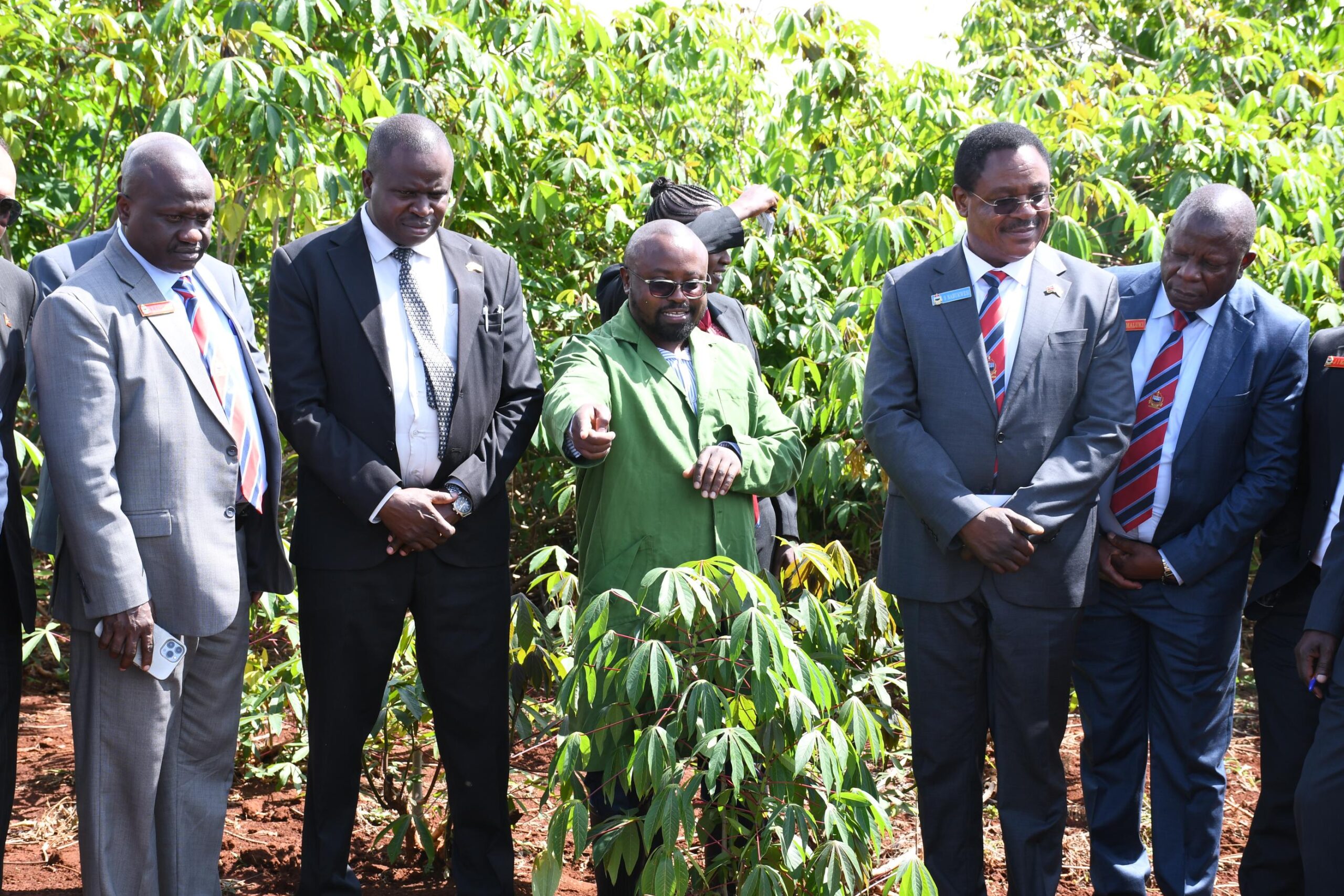
The National Biosafety Authority has announced the successful completion of National Performance Trials for genetically modified cassava, clearing the way for its commercialisation.
The newly developed cassava varieties have been engineered to resist cassava brown streak disease, a destructive viral infection that causes browning and deformation of edible roots, leading to significant crop losses. Some of the varieties also possess drought tolerance traits aimed at increasing productivity and strengthening food security.
The trials were conducted in Mtwapa, Kandara and Alupe, ahead of full commercial release in Kenya and Uganda.
NBA Acting Director of Technical Services Josphat Muchiri likened the rollout of GM cassava to that of Bt cotton, which was commercialised in 2020 and now covers approximately 10,000 acres across Eastern, Central, Western and Nyanza regions.
He also cited Bt maize, which was approved for commercialisation in 2025 but has yet to be rolled out due to ongoing High Court conservatory orders.
“BT maize is genetically modified to resist stalk borers and fall armyworm pests, while BT cotton resists the cotton bollworm. In the same way, GM cassava resists cassava brown streak disease, GM soya bean tolerates herbicides, and drought tolerant maize is designed to withstand water stress,” Muchiri said.
Muchiri further pointed to global adoption of biotechnology, highlighting examples such as genetically modified mosquitoes used in the United States and Brazil, Glo fish developed for ornamental purposes, and GM salmon approved for consumption in the United States and Canada.
He noted that research and development on genetically modified organisms in Kenya continues at several institutions, including the Kenya Agricultural and Livestock Research Organisation, the International Livestock Research Institute, Kenyatta University, the International Centre of Insect Physiology and Ecology, and Masinde Muliro University of Science and Technology.
The NBA’s mandate has expanded to include biosecurity, which is now regarded as an issue of national security. A review of the National Biosafety Act is underway to address emerging technologies such as genome editing, synthetic biology and gene drive technologies, which may present new security challenges.
“NBA conducts border patrols at key entry points to prevent unauthorised GMOs from entering the country,” Muchiri said.
“We also carry out quarterly market surveillance and intelligence led inspections of shops and agro dealers to monitor biological products in circulation.”
The Authority is responsible for overseeing and regulating the transfer, handling and use of GMOs to safeguard human and animal health while protecting the environment.
The successful completion of the National Performance Trials marks a significant milestone for Kenya’s biotechnology sector, paving the way for the commercialisation of GM cassava expected to deliver higher yields, improved disease resistance and enhanced food security for farmers and consumers.