By Jameson
The government has extended the nationwide mentorship program under the NYOTA Project to April 8, 2026, allowing more beneficiaries to complete a critical phase of enterprise development aimed at strengthening youth-led businesses across the country.
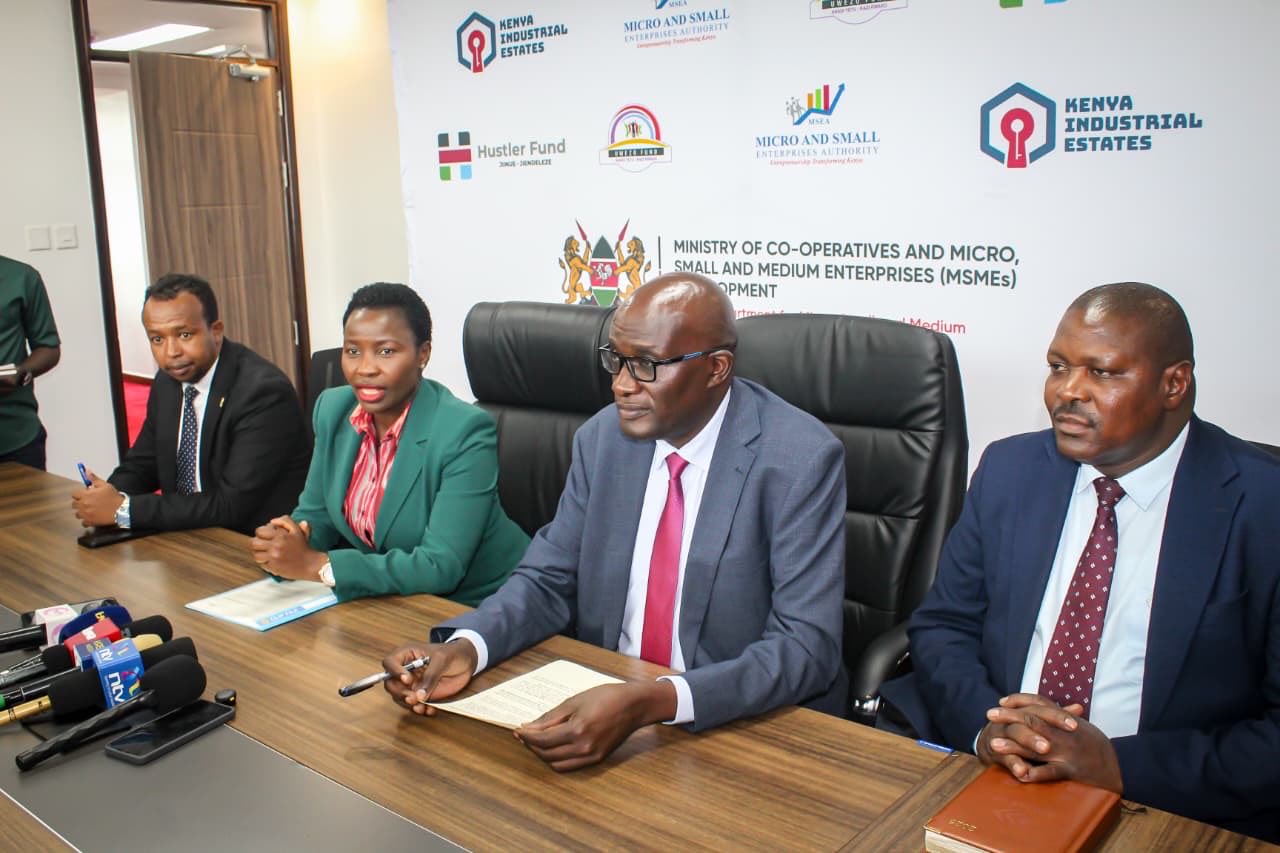
Speaking during a press briefing in Nairobi on Tuesday, Principal Secretary for Micro, Small and Medium Enterprises Susan Mang’eni said the mentorship initiative, which began on March 4, has already reached 94 percent of beneficiaries across all 1,450 wards in Kenya.
According to the PS, the mentorship program has played a key role in translating funding into active enterprises, with 98 percent of beneficiaries who received funds already having started their businesses, while the remaining 2 percent are in the process of launching their ventures.
“The mentorship program includes site visits, business guide talks, experience sharing, peer-to-peer learning and networking sessions designed to equip beneficiaries with practical skills to start and grow sustainable businesses,” Mang’eni said.
Findings from the program show that a majority of participants are new to entrepreneurship, with 65 percent identified as first-time business owners. Nineteen percent have less than one year of experience, 13 percent have operated for between one and three years, while only 3 percent have more than three years of experience. This, the ministry noted, underscores the project’s focus on nurturing early-stage enterprises.
Gender distribution among participants remains balanced, with women accounting for 51 percent of beneficiaries and men 49 percent, reflecting near gender parity in access to the program.
Sectoral analysis indicates that agriculture, livestock, forestry and fisheries dominate, accounting for 41 percent of supported enterprises. The wholesale and retail sector follows at 26 percent, while fashion and design account for 11 percent and beauty and cosmetics 7 percent. Other sectors benefiting from the initiative include ICT, manufacturing, tourism and hospitality, as well as transportation and storage.
The extension of the mentorship program is intended to accommodate the remaining 6 percent of beneficiaries who are yet to participate. Officials emphasized that the mentorship component is mandatory for progression to the second phase of business skills classroom training.
The next phase of training is scheduled to begin on April 15, 2026, across all constituencies. Upon completion, beneficiaries will receive a second tranche of startup capital amounting to Ksh 25,000, including Ksh 3,000 allocated to savings under the Haba Haba scheme managed by the National Social Security Fund. This will bring the total funding per beneficiary to Ksh 50,000.
The government expects to complete the second disbursement before the end of April 2026, paving the way for a second mentorship cycle that will connect entrepreneurs to the broader micro, small and medium enterprises ecosystem.
Special arrangements have also been made for beneficiaries in Dadaab Refugee Complex and Kakuma Refugee Camp, who will undergo classroom training in April and May alongside members of host communities.
The NYOTA Project has also expanded opportunities for graduate-level youth, with over 3,600 trainers and 5,500 mentors engaged to support participants throughout the program.
Mang’eni urged beneficiaries who have not yet engaged with mentors to contact their constituency NYOTA Project coordinators immediately to avoid missing out on the next phase of support.
The initiative forms part of the NYOTA Project’s broader strategy to promote entrepreneurship through a three-pronged approach comprising business skills training, funding and mentorship. It follows the disbursement of the first tranche of startup capital to 121,800 beneficiaries nationwide.