By Jameson
Kenya has launched a comprehensive review of the 2013 National Environment Policy, citing significant changes in the country’s environmental governance framework and the need to address emerging global and local challenges.
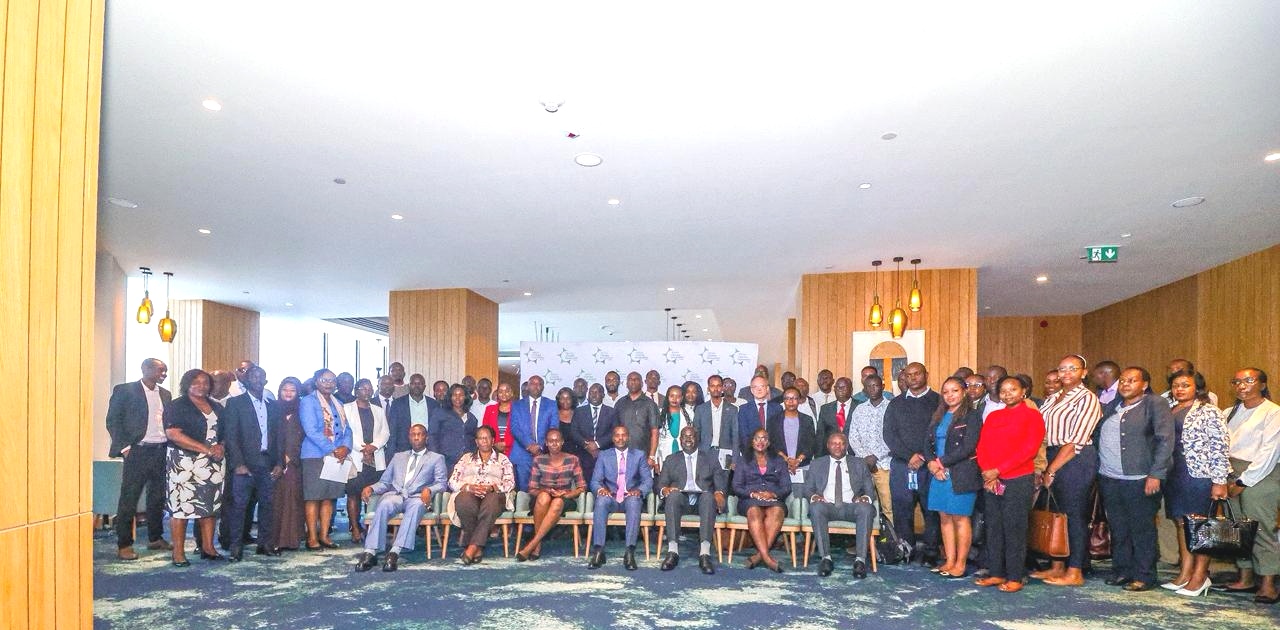
Speaking during a stakeholder consultative meeting in Nairobi, Principal Secretary for Environment and Climate Change Engineer Festus Ng’eno said the policy review is a strategic step aimed at repositioning the country to effectively address climate change, biodiversity loss, pollution and new opportunities within the green and blue economy.
Eng. Ng’eno explained that the review of the Environmental Management and Coordination Act (EMCA) will follow the policy review, after the earlier EMCA amendment process was withdrawn from Parliament in 2023. He said this decision was informed by the realization that the current policy is more than a decade old and requires updating before any legal reforms are undertaken.
“We decided to review the policy first because of the changing environmental landscape. Once this is completed, we will move swiftly to review EMCA so that both instruments are aligned and responsive to current realities,” Ng’eno said, adding that the policy review process is expected to be concluded by March 31.
The Principal Secretary noted that since its adoption in 2013, the National Environment Policy has served as a guiding framework for sustainable management of Kenya’s natural resources. However, he said intensified climate impacts, land degradation, pollution, waste management challenges and governance issues now require renewed strategic focus.
He underscored that environmental protection is a constitutional obligation, pointing to Article 42 of the Constitution which guarantees every Kenyan the right to a clean and healthy environment. He also noted that environmental considerations are embedded in the Constitution’s preamble, underscoring their national importance.
The review, he said, is aligned with Kenya Vision 2030, the Fourth Medium Term Plan, the Bottom Up Economic Transformation Agenda and international commitments including the Paris Agreement, the Kunming Montreal Global Biodiversity Framework and the Sustainable Development Goals.
Ng’eno outlined key priorities of the revised policy, including job creation through green and blue economy opportunities, particularly targeting youth and women through circular economy and agricultural waste enterprises. Ecosystem restoration is also central to the review, with a focus on the presidential directive to grow 15 billion trees by 2032 and increase forest cover from the current 12.8 percent to 30 percent.
Other focus areas include strengthening disaster risk reduction to build resilience against droughts and floods, mainstreaming environmental education, research and innovation, and enhancing climate adaptation across all levels of government.
To address what he termed the “triple planetary crisis” of climate change, biodiversity loss and pollution, the policy will integrate sustainable finance mechanisms such as green bonds and carbon markets, leverage technology and innovation for environmental monitoring, promote circular economy approaches to waste management and incorporate natural capital valuation into national accounting.
The review will also address invasive species and biodiversity loss, which Ng’eno said pose growing threats to agriculture, tourism and livelihoods.
He stressed that the success of the policy review depends on meaningful stakeholder participation, cautioning that consultation must go beyond attendance and ensure that stakeholder views are reflected in the final document.
“This is a sensitive policy for the country. The voices, comments and aspirations of stakeholders must be incorporated so that the final policy truly reflects the needs of Kenyans,” he said.
The policy review is necessitated by evolving thematic areas such as carbon markets, big data, artificial intelligence, rising lake levels and Kenya’s obligations under multilateral environmental agreements, which form part of Kenyan law under the Constitution.