ByOur Reporter
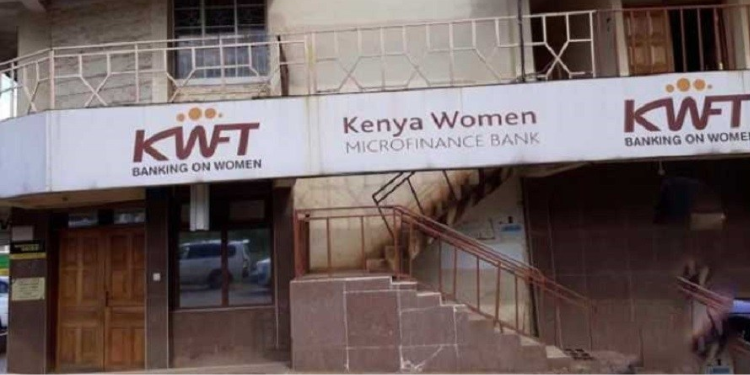
Kenya Women Microfinance Bank (KWFT) has built a cumulative KES6.7 billion housing finance loan book, as regional financial institutions show growing interest in its Nyumba Smart model for helping low-income households finance the construction and improvement of decent homes
The bank has issued more than 100,000 housing loans to over 83,000 customers, with an average loan size of KES70,000 with the portfolio recording a 98 per cent performance rate.
Unlike conventional mortgages, which typically require households to borrow substantial amounts upfront, the Nyumba Smart model is designed around the way many rural families build their homes; gradually and using locally available materials to keep construction costs manageable.
Customers can access financing in stages based on their immediate construction needs, from purchasing building materials and laying foundations to putting up walls, roofing and completing the house.
The approach also recognises how many rural households build over time using locally available materials to reduce construction costs. By providing financing in stages, customers can build according to their financial ability rather than having to raise the full cost of construction upfront.
“For many women and families, building a decent home is not a one-off investment. It is a journey that takes place over time and in stages as household incomes allow. Our approach is to provide financing that matches this reality, enabling customers to improve their homes without having to wait until they can afford to build everything at once,” said Rose Muyanga, Managing Director and CEO, KWFT.
Nyumba Smart was developed to address the housing needs of low-income and underserved households, particularly women who may face barriers to conventional mortgage finance. The model was developed with technical support from Habitat for Humanity following market research and feasibility work in 2014, with a pilot launched in November 2014 before wider rollout in July 2015.
The model has also attracted interest from financial and housing institutions in Tanzania, with a recent delegation visiting Kenya to examine KWFT’s experience in housing microfinance and the application of incremental lending to home construction and improvements.
The delegation comprised representatives from Tanzania Mortgage Refinance Company (TMRC), Tanzania Institute of Bankers (TIOB), NMB Bank Tanzania and CRDB Bank PLC, led by Elibariki Ndosi, CEO of TMRC, and Hellen Waigwa, Senior Manager, Housing Finance Systems at Habitat for Humanity International.
The visit provided an opportunity for the delegation to learn from KWFT’s experience in developing and delivering housing microfinance solutions, with a particular focus on reaching households that are underserved by traditional mortgage finance.
Hellen Waigwa noted that “Across the housing finance sector, there is growing interest in housing microfinance as a practical way to serve households with modest, informal or variable incomes. The opportunity is to develop financing solutions that reflect how families build and improve their homes incrementally and as resources allow. KWFT’s experience offers valuable lessons and insights into designing customer-focused products and building the institutional capabilities needed to deliver them sustainably. These lessons provide useful guidance for financial institutions looking to expand housing finance and reach more underserved households at scale.”
The model links financing to a customer’s housing needs and ability to repay. This involves assessing the construction requirement and household cash flow, determining the appropriate loan amount, disbursing funds, monitoring construction and repayment, and assessing financing for subsequent stages.
Women are a key focus of the approach, given that many earn their livelihoods through small businesses and informal activities that may not fit the income documentation requirements of conventional mortgage lending. Cash-flow assessment and smaller loans allow financing decisions to take account of how customers earn and repay.
The Tanzanian delegation also visited Machakos to see homes supported through housing finance and examine how incremental lending has been used to improve housing conditions at household level.