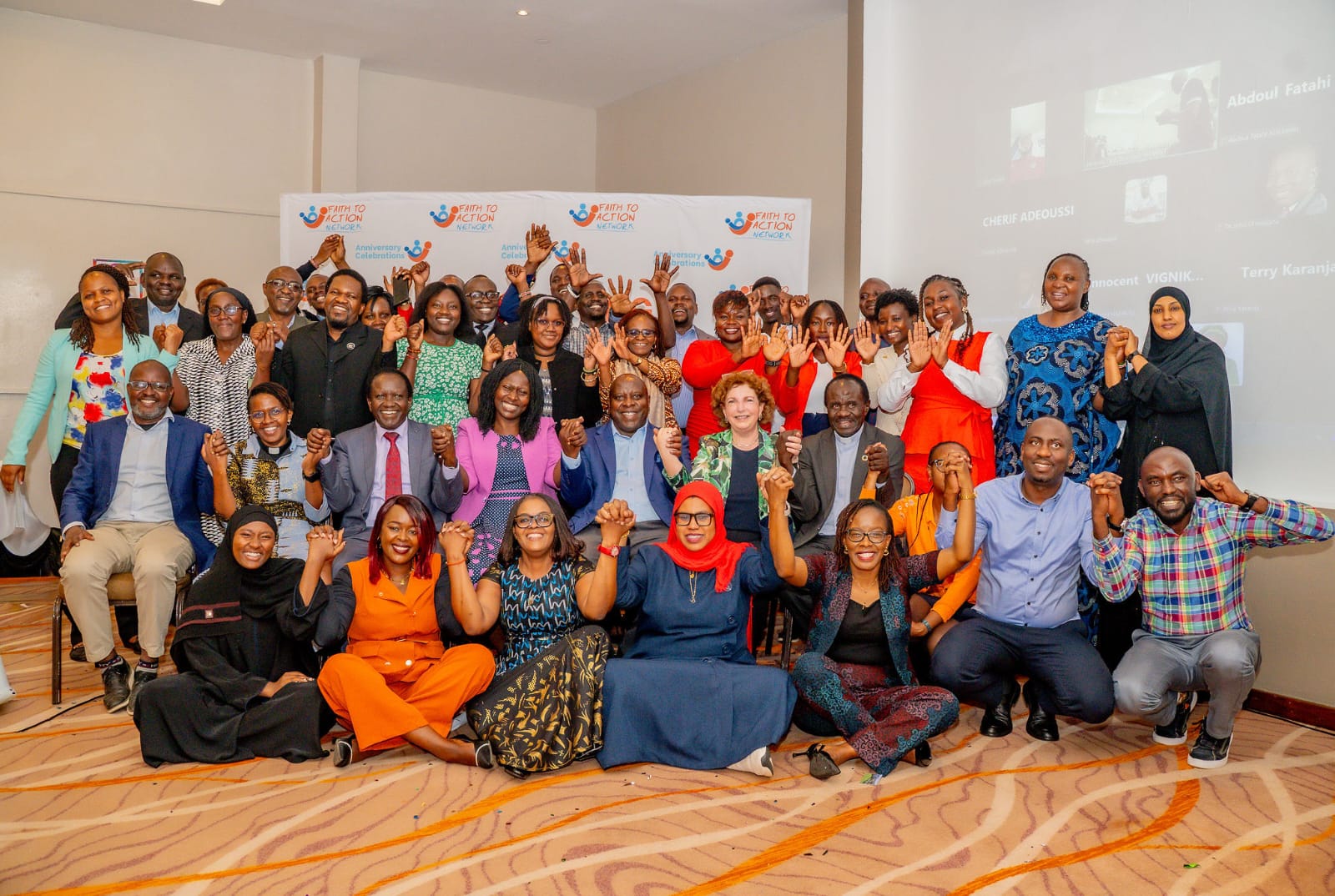
Faith to Action Network has marked 15 years of advancing family health, gender justice and social transformation across Africa, celebrating its evolution into a leading interfaith platform shaping public policy and empowering faith leaders to drive sustainable development.
Speaking during the anniversary celebrations in Nairobi on Thursday, incoming Chief Executive Officer Jane Ng’ang’a said she was honoured to lead the organisation into its next phase of growth, building on the foundation laid over the past 15 years.
She said the network would strengthen its regional hubs while expanding into new frontiers, with a renewed focus on documenting its impact, increasing youth participation and responding to emerging social challenges without losing sight of its core mission.
Ng’ang’a also announced plans to enhance the organisation’s financial sustainability by reducing reliance on donor funding through enterprise development and income generating initiatives.
“We have valuable expertise, tools and resources that can be packaged into consultancy services and other ventures to support the long term sustainability of the network,” she said.
Outgoing Chief Executive Officer Peter Moti said the organisation had grown from 12 founding members to a network spanning more than 215 member organisations across Africa, Asia, Europe and the Americas.
He said its mandate had expanded beyond family health to include women’s rights, gender justice, peacebuilding, inclusive communities, environmental protection and climate action.
Moti noted that the network had gained recognition at national, African Union and United Nations levels for its advocacy, despite facing challenges such as funding constraints, staff turnover and managing diverse faith traditions.
He attributed the organisation’s success to the influence of faith leaders, describing them as trusted voices uniquely positioned to promote health, gender equality and accountability within their communities.
Among its major achievements, he cited the network’s contribution to securing broader interfaith representation at the United Nations, ensuring diverse faith perspectives are reflected in global policy discussions.

Incoming Supervisory Council Chair Samuel Mwenda pledged to build on the legacy of the organisation’s founders and outgoing leadership by strengthening governance, enhancing transparency and providing strategic oversight to support future growth.
He credited the outgoing leadership with expanding global partnerships, strengthening the secretariat and positioning Faith to Action Network as an influential voice in international advocacy.
Representing the government, National Council for Population and Development Deputy Director for Population Education and Advocacy Fidelis Ndung’u underscored the critical role of religious leaders in shaping values and guiding young people.
She said faith institutions remain trusted platforms for promoting responsible decision making, moral values and healthy behaviour among adolescents.
Ndung’u called for closer collaboration between government and faith organisations to tackle teenage pregnancy, new HIV infections, gender based violence and harmful social practices through age appropriate and faith sensitive education.
She noted that the council had partnered with religious leaders to develop adolescent health and wellbeing guidelines aimed at addressing the “triple threat” of new HIV infections, adolescent pregnancies and gender based violence.
Congratulating the network on its milestone, Ndung’u described Faith to Action Network as a respected force for social transformation.
“We celebrate your 15 years of service to humanity and look forward to seeing even greater impact as you mark two decades in the years ahead,” she said.
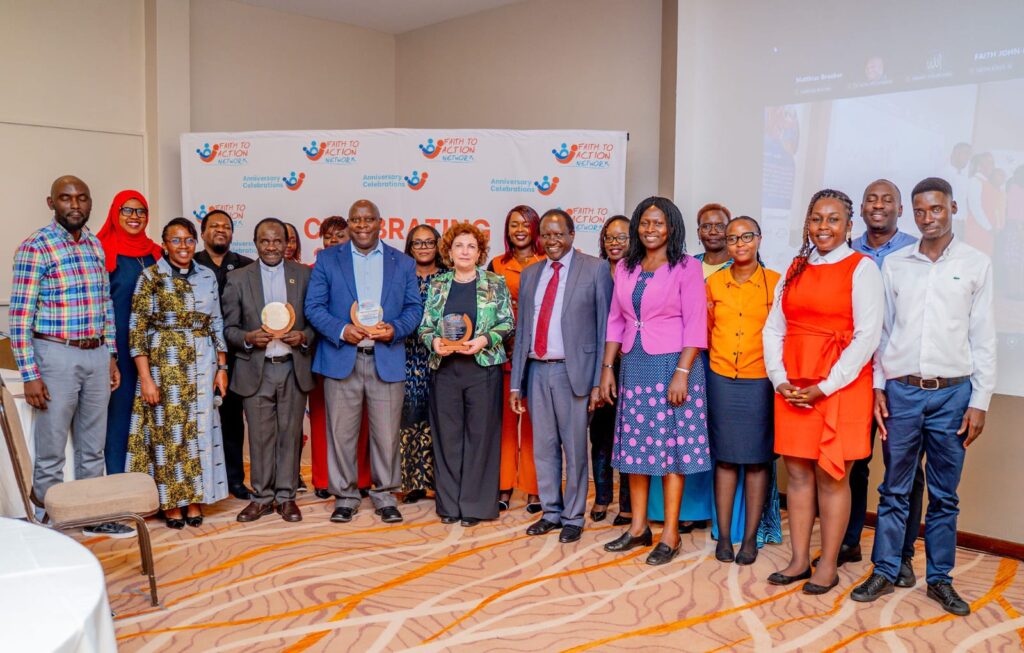
The anniversary brought together government officials, faith leaders, development partners, civil society organisations and youth representatives to reflect on the network’s achievements and outline its future direction.
Since its establishment, Faith to Action Network says it has reached more than 30 million people with faith sensitive family health information, grown its membership to more than 140 organisations operating in 39 countries and contributed to 47 policy changes supporting family health, women’s rights and social wellbeing.
The organisation traces its roots to consultations held in 2010 that culminated in the signing of the Nairobi Declaration in 2011 by religious leaders from different faiths committed to improving access to family health information and services.
Its work is anchored on three strategic pillars: gender justice and women’s rights, family health and wellbeing, and faith leadership and social accountability.
Among its flagship initiatives is the Delivering Sustainable and Equitable Increases in Family Planning (DESIP) programme in Kenya, which between 2019 and 2020 reached more than 132,000 women with family planning services, recorded over 143,000 couple years of protection and increased service uptake by 80 per cent in targeted communities.
The organisation said the programme demonstrated how faith leaders can effectively integrate health messages into sermons, community dialogues and outreach activities while dispelling myths, encouraging male involvement and improving access to essential health services.