By Our Reporter
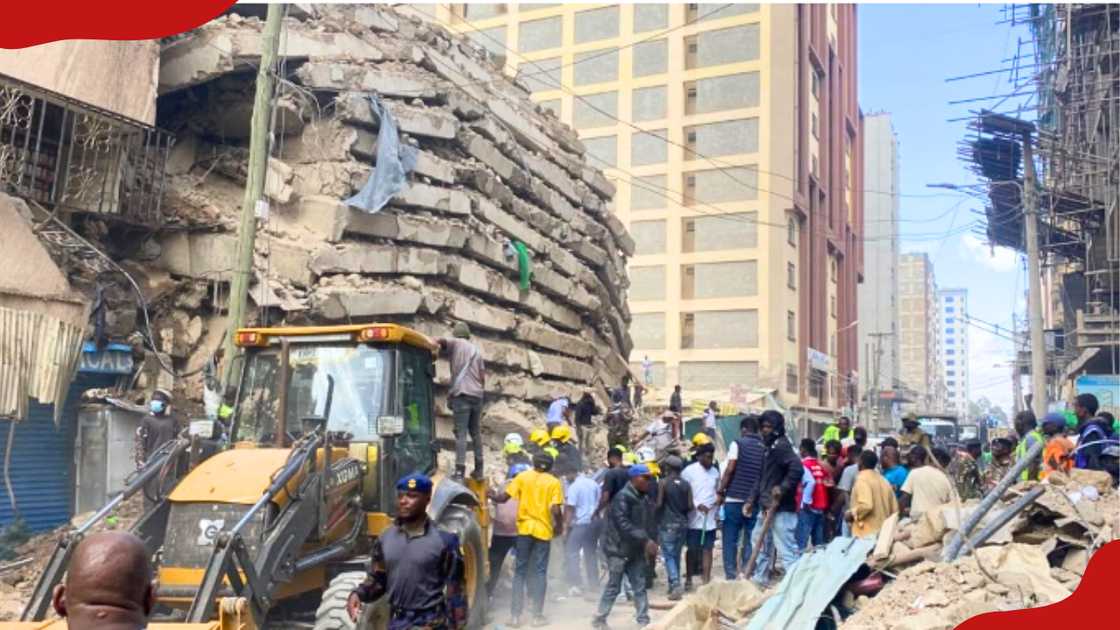
The Architects Alliance (TAA) has called for sweeping reforms to Kenya’s building approval, construction supervision and regulatory systems following the collapse of a multi-storey building under construction in Eastleigh, Nairobi.
The alliance said recurring building collapses highlighted weaknesses in development control and called for long-term solutions to prevent further incidents and protect public safety.
In a statement issued following the collapse on Friday, October 23, TAA President Sen. Dr. Arch. Sylvia Kasanga said the incident should prompt renewed efforts to address the factors that allow unsafe buildings to be constructed and occupied.
The organisation wants an independent technical investigation into the Eastleigh collapse, comprehensive safety audits of buildings and greater accountability across the construction sector.
The building collapsed along 9th Street in Eastleigh, a busy commercial and residential neighbourhood. According to Reuters, the ground floor was occupied at the time of the incident. Rescue operations continued into Saturday as authorities sought to establish the circumstances surrounding the collapse.
The precise cause had not been confirmed in the reports reviewed.
TAA Raises Concerns Over Building Safety
TAA said the incident had revived longstanding concerns over building approvals, professional supervision, statutory inspections and enforcement of construction regulations.
The alliance recalled raising similar concerns in January 2026 following a building collapse in South C, Nairobi, and renewing its calls for transparent investigations and stronger institutional accountability in June.
It questioned whether existing regulatory systems were adequately protecting the public from unsafe construction, warning against treating each collapse as an isolated incident.
“Building collapses should not become an accepted feature of urban development in Kenya,” the statement said.
The alliance stressed that the cause of the Eastleigh collapse must be established through an independent technical investigation rather than speculation.
It identified approval procedures, construction supervision, enforcement of regulations, unregulated professional practice and fragmented institutional responsibilities as areas requiring scrutiny.
Calls for Independent Investigation and Building Audits
TAA has urged the national government, county administrations, Parliament, the National Construction Authority (NCA), the Board of Registration of Architects and Quantity Surveyors (BORAQS), professional associations and other stakeholders to coordinate efforts to improve building safety.
The proposed investigation should establish the building’s approval status, the adequacy of construction supervision, inspections conducted before the collapse and any enforcement measures taken by the relevant authorities.
The alliance also wants the findings made public to ensure transparency and help establish accountability.
It has called for immediate, risk-based safety audits of existing and ongoing developments, with priority given to densely populated urban areas and buildings showing signs of structural distress.
Authorities should take appropriate measures to protect occupants and the public wherever safety risks are identified, TAA said.
The organisation is also seeking reforms to make building approvals, professional supervision, statutory inspections and occupation certification transparent, technically sound and consistently enforced.
It further proposed restoring the Office of the City Architect in Nairobi and establishing equivalent Offices of Chief Architect across counties to strengthen professional oversight.
Alliance Wants Previous Collapse Reports Published
TAA is calling for a national framework for investigating building failures and preventing similar incidents.
Under the proposed framework, investigation findings, recommendations, responsible institutions and progress in implementing corrective measures would be recorded in a publicly accessible register.
The alliance also wants previous building collapse investigation reports released, including details of identified causes, recommendations, accountability measures and actions taken to implement the findings.
It said public access to the reports would help establish whether earlier investigations had resulted in meaningful reforms and why similar incidents continued to occur.
The organisation has urged the government to convene an urgent meeting involving regulators, professional bodies, developers, contractors and relevant public institutions to develop a time-bound programme for improving building safety.
It also wants independent regulatory frameworks for different professions in the construction sector to promote competence, ethical conduct and accountability without undue political, administrative or commercial interference.
Questions Over Building Approvals and Enforcement
The Eastleigh collapse has renewed scrutiny of how construction projects are approved, supervised and cleared for occupation in Nairobi.
In separate comments reported by The Standard, Nairobi Governor Johnson Sakaja said the collapsed building did not have an occupation certificate. He also raised concerns about changes to the building’s intended use and the approval of architectural designs.
The issues have added to questions surrounding the project, although the precise cause of the collapse remains subject to investigation.
The incident has highlighted the need to examine the entire construction process, from architectural design and planning approvals to structural engineering, site supervision, inspections and occupation certification.
TAA said accountability should cover every stage of the process. Where negligence, professional misconduct, corruption or other unlawful conduct is established, those responsible should face appropriate consequences through fair and lawful procedures.
However, the alliance maintained that enforcement measures introduced after a collapse could not replace effective prevention.
It said regulatory institutions should ensure that unsafe buildings are neither constructed nor occupied.
TAA Urges Shift Towards Prevention
The alliance has called on the government and relevant institutions to move away from reactive responses to building disasters towards a preventive, transparent and professionally led development control system.
TAA President and former Senator Sylvia Kasanga is urging the government to bring together regulators, professional bodies, developers and contractors to agree on a time-bound reform programme and independent regulatory frameworks aimed at strengthening professional standards and accountability in the construction sector.
The alliance acknowledged that no single institution or profession could address the problem alone, saying safer buildings required competent professionals, responsible developers, effective governance, coordinated institutions and consistent enforcement.
It urged authorities to assess progress not simply by the number of investigations launched, arrests made or public statements issued, but by whether reforms were implemented and future building failures prevented.
TAA reaffirmed its readiness to contribute technical expertise and policy proposals towards developing lasting solutions.
“The safety of our built environment must never be negotiable,” the statement said.
The alliance said the Eastleigh collapse should serve as a turning point in efforts to address weaknesses in Kenya’s construction oversight systems, calling for sustained reforms to protect lives, strengthen accountability and restore public confidence in the built environment.