By James Mutua
The Institution of Surveyors of Kenya (ISK) has supported government efforts to reclaim and protect riparian reserves along Nairobi rivers, while raising concerns over legal inconsistencies and the protection of private property rights.
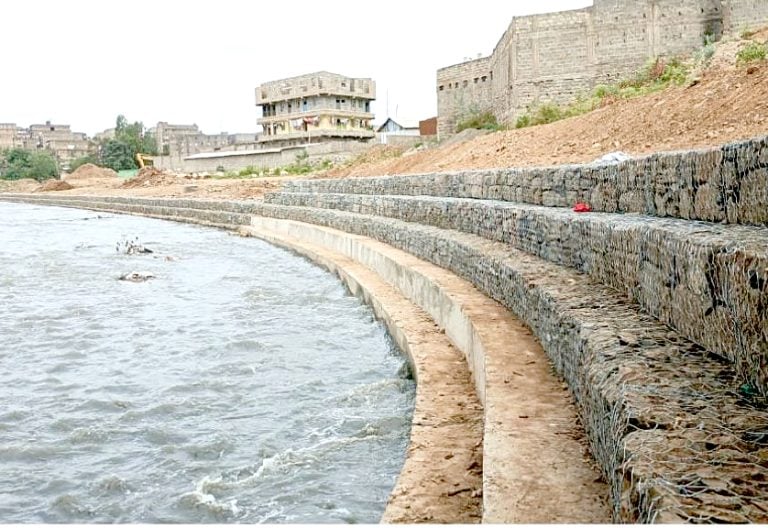
The statement follows recent directives by the Ministry of Lands and remarks by the Nairobi Governor Johnson Sakaja on demolitions of structures located on riparian land under the Nairobi Rivers Regeneration Project.
Addressing the press on Tuesday ISK President Eric Nyadimo said restoring water bodies, preventing flooding, and safeguarding ecosystems are necessary and timely interventions. However, it warned that enforcement is being complicated by conflicting laws, unclear definitions of riparian boundaries, and inconsistent measurement standards.
The surveyors’ body challenged the assumption that all riparian reserves are public land, noting that some may fall within privately owned property but remain subject to regulated use. It emphasized that ownership and usage rights must be clearly distinguished, in line with the Constitution.
Mr. Nyadimo cautioned that any action depriving landowners of their property without due process would be unconstitutional.

A key concern raised is the treatment of properties legally acquired and developed under previous laws. ISK argued that where valid title deeds and approvals exist, changes in riparian definitions cannot be applied retroactively without compensation.
In such cases, the government must follow due process, including valuation, notice, and prompt compensation before demolition. However, the institution noted that illegally acquired or fraudulently developed properties do not qualify for such protection.
ISK urged the government to harmonize laws and technical standards governing riparian reserves, including clear definitions of boundaries and setback distances.
It also called for strict adherence to due process, public participation, and fair administrative action in enforcement.
Beyond demolitions, ISK highlighted poor drainage, unregulated development, and environmental degradation as major contributors to flooding. It recommended improved planning, mapping, and enforcement of zoning and waste management regulations.
The institution reaffirmed its commitment to work with government and stakeholders to ensure that river restoration efforts are legally sound, technically accurate, and balanced with property rights.