

By Jameson
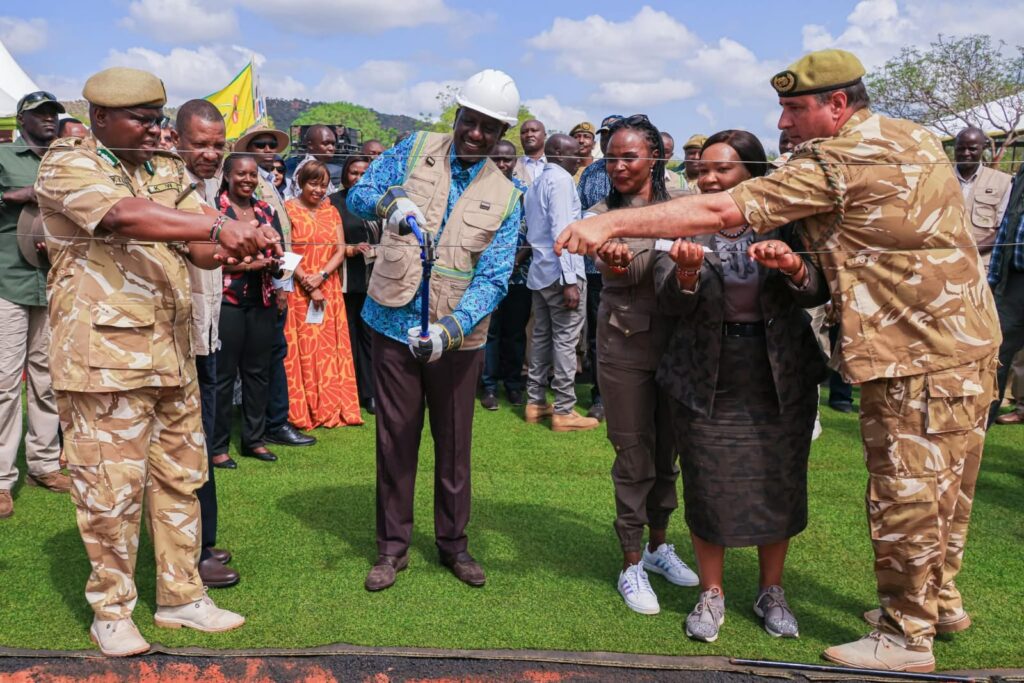
Kenya marked a major milestone in global conservation today after President William Samoei Ruto officially opened the expanded Tsavo West Rhino Sanctuary. The sanctuary now spans three thousand two hundred square kilometres, making it the largest rhino sanctuary in the world and a significant boost to wildlife conservation, climate resilience and nature based economic growth.
Speaking at Tsavo West National Park, President Ruto described the expansion as a strategic national investment that integrates wildlife protection, national security, climate action and sustainable development. The enlarged sanctuary builds on the former Ngulia Rhino Sanctuary and secures the future of one of Kenya’s most critically endangered Eastern black rhino populations.
Kenya hosts an estimated two thousand rhinos, including more than one thousand black rhinos and one thousand southern white rhinos. This accounts for nearly seventy eight percent of the global Eastern black rhino population. The expanded habitat brings together one hundred and fifty black rhinos from the former Ngulia Sanctuary and fifty from the Tsavo West Intensive Protection Zone, creating a founder population of two hundred animals. This is now the largest intact black rhino population in the country.
For years, the ninety two square kilometre Ngulia Sanctuary had exceeded its ecological carrying capacity, which restricted breeding and survival. The new three thousand two hundred square kilometre landscape restores ecological balance, supports long term population growth and strengthens Tsavo’s position as a leading conservation and tourism destination.
Reflecting on Kenya’s conservation journey, President Ruto noted that the Tsavo ecosystem once held more than eight thousand black rhinos before poaching reduced the population to fewer than twenty by nineteen eighty nine. This crisis period prompted the creation of the Kenya Wildlife Service. He reiterated that protecting Kenya’s wildlife remains a national responsibility with global significance.
Tourism and Wildlife Cabinet Secretary Rebecca Miano said the sanctuary is a central pillar of the Kenya Rhino Range Expansion initiative and aligns with the Black Rhino Recovery and Action Plan as well as the National Wildlife Strategy twenty thirty. She added that the increased habitat will boost genetic diversity, reduce territorial conflict, improve breeding success and enhance community benefit sharing across the wider Tsavo region.
Kenya Wildlife Service Director General Professor Erustus Kanga noted that the shift from a confined sanctuary to a fully connected landscape was enabled by extensive ecological planning, advanced LoRaWAN and VHF tracking systems, artificial intelligence assisted surveillance and upgraded ranger facilities. He said that success will be measured not only by rhino population recovery but also by improved livelihoods through tourism, youth employment and community partnerships.
The transformation was supported by the Kenya Rhino Range Expansion programme, the lead partner in Kenya’s landscape scale rhino recovery efforts. The programme’s Chief Executive Officer Jamie Gaymer said effective conservation is nation building and that every protected rhino strengthens both environmental and economic resilience. He added that KRRE’s investments in ecological assessments, monitoring technology, security and long term planning ensure the sanctuary meets international standards and national recovery goals.
With expanded space, enhanced security and improved genetic diversity, Kenya aims to increase the annual black rhino population growth rate from five percent to eight percent. This is expected to help the country reach one thousand four hundred and fifty rhinos by twenty thirty and two thousand rhinos by twenty thirty seven. By twenty thirty, the sanctuary is projected to generate significant job opportunities and more than forty five million United States dollars in tourism and conservancy related revenue.
President Ruto officially declared the expanded Tsavo West Rhino Sanctuary open, describing it as a national legacy that restores Tsavo’s historic role as a continental stronghold for Africa’s rhinos and protects Kenya’s natural heritage for future generations.
The ceremony was attended by Taita Taveta Governor Andrew Mwadime, the Principal Secretary for Wildlife, the Principal Secretary for Aviation, Principal Secretary Ambassador Doctor Monica Juma, Ambassador Meg Whitman, Members of Parliament and multiple conservation partners.
nice read