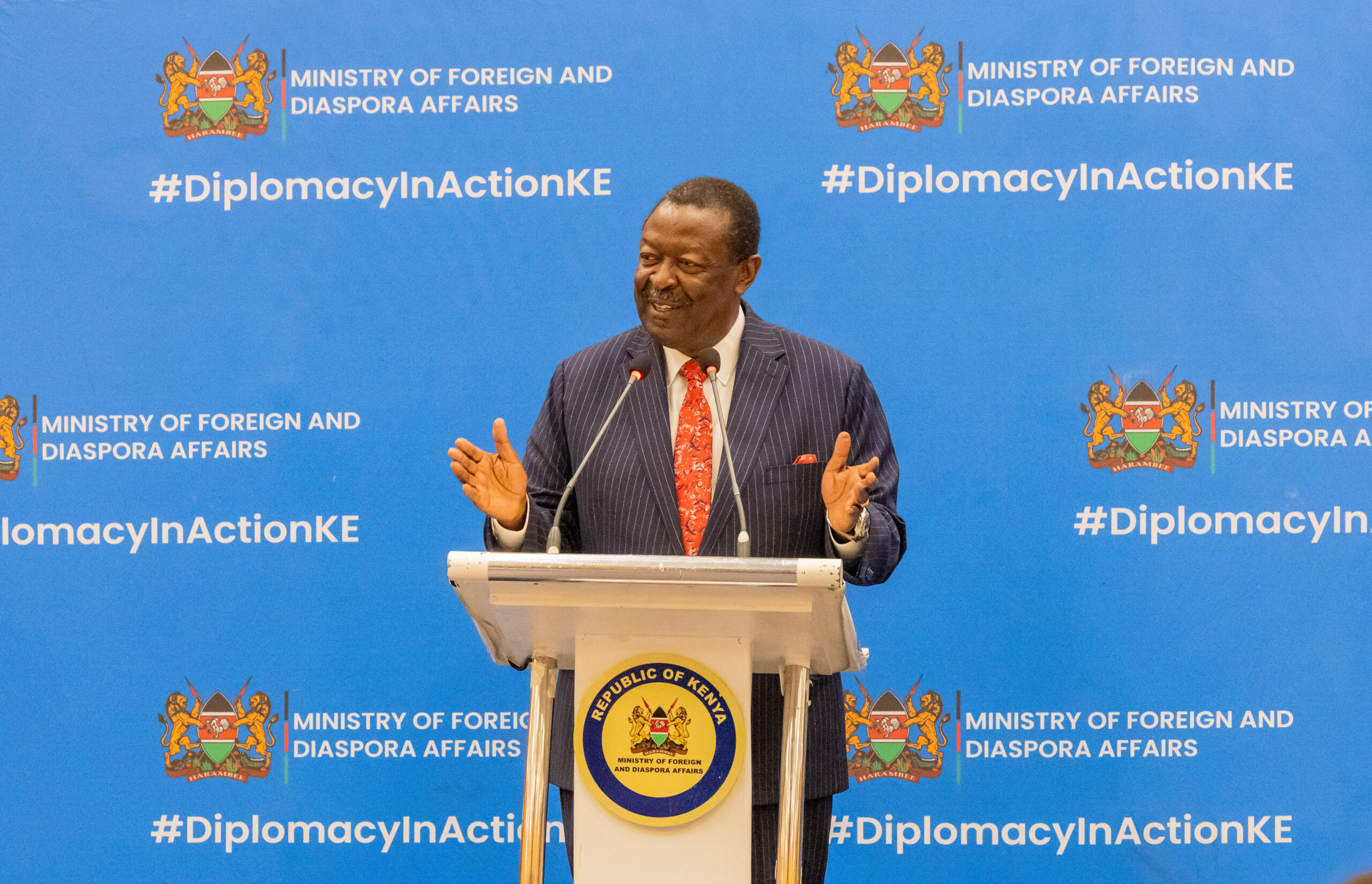
The government has warned Kenyans to prepare for above average rainfall expected across the country from October 2026 into early 2027, with authorities putting the probability of unusually heavy rains at 90 per cent.
Government Spokesperson Charles Owino said the forecast is being driven by rising sea surface temperatures, which are expected to surpass the current positive 2.7 threshold and result in warmer ocean conditions and increased rainfall.
He said the intensity and destructive potential of the rains would, however, depend on the Indian Ocean Dipole (IOD), which is currently at a neutral positive 0.25.
“The Meteorological Department continues to monitor the Indian Ocean Dipole with hope that it does not go beyond positive 0.4,” Owino said.
Despite the possibility of heavy rainfall, Owino urged Kenyans not to panic but to remain alert and take precautionary measures.
“There’s no cause for panic. However, there’s every reason for government institutions, communities and individual citizens to remain alert and take appropriate precautionary measures,” he said.
Owino said the government has adopted a coordinated multi agency approach to prepare for the anticipated rains, with national government departments expected to establish standing committees to coordinate preparedness and response to El Niño related incidents.
County governments, supported by national government administration offices, have also been directed to take measures to protect lives and livelihoods, safeguard critical infrastructure and ensure emergency response mechanisms can be activated quickly.
Authorities are expected to map areas likely to be affected by flooding and prepare for the safe evacuation of families living in high risk zones.
Owino particularly urged people living along riparian areas to move to safer grounds ahead of the onset of the rains.
He said the Kenya Meteorological Department will continue issuing updates on the El Niño and Indian Ocean Dipole conditions, as well as October, November and December weather patterns, on a monthly basis or whenever necessary.
The government will also work with development and humanitarian partners to strengthen national preparedness and ensure communities have timely information to protect themselves, their families and livelihoods.
Owino noted that the warning comes against the backdrop of depressed rainfall in parts of western Kenya, which is the country’s main food basket. He said the region has experienced crop failures following prolonged dry conditions.
Meanwhile, Principal Secretary for the State Department of Broadcasting and Telecommunications Stephen Isaboke said the government had strengthened its crisis communication system to ensure Kenyans receive accurate and timely information ahead of the expected rains.
Isaboke, who chairs the newly established National Crisis Communication Standing Committee, said the government would “over communicate” the risks to ensure no community is left without critical information.
He said the committee is working to operationalise crisis communication plans and protocols to coordinate public messaging during emergencies.
The PS said the communication strategy would focus on accuracy, timeliness, transparency, consistency and inclusivity, while also addressing misinformation and ensuring official advisories reach communities through accessible channels.
He said the government would work with the media, vernacular radio stations and national government administration officials to take the warnings to communities on the ground, particularly in areas prone to flooding.
Isaboke said the government wants to shift from early warning to early action so that communities can take preventive measures before disasters occur.
“This communication framework is not just intended for the El Niño alone. Our objective is to institutionalise a coordinated mechanism that can be activated during any different national crisis,” he said.
He urged Kenyans to rely on information from official government and technical agencies, follow advisories relevant to their counties and communities and avoid spreading unverified information.
Both officials called on Kenyans to stay informed, prepare early, follow official advisories and act when advised to do so.