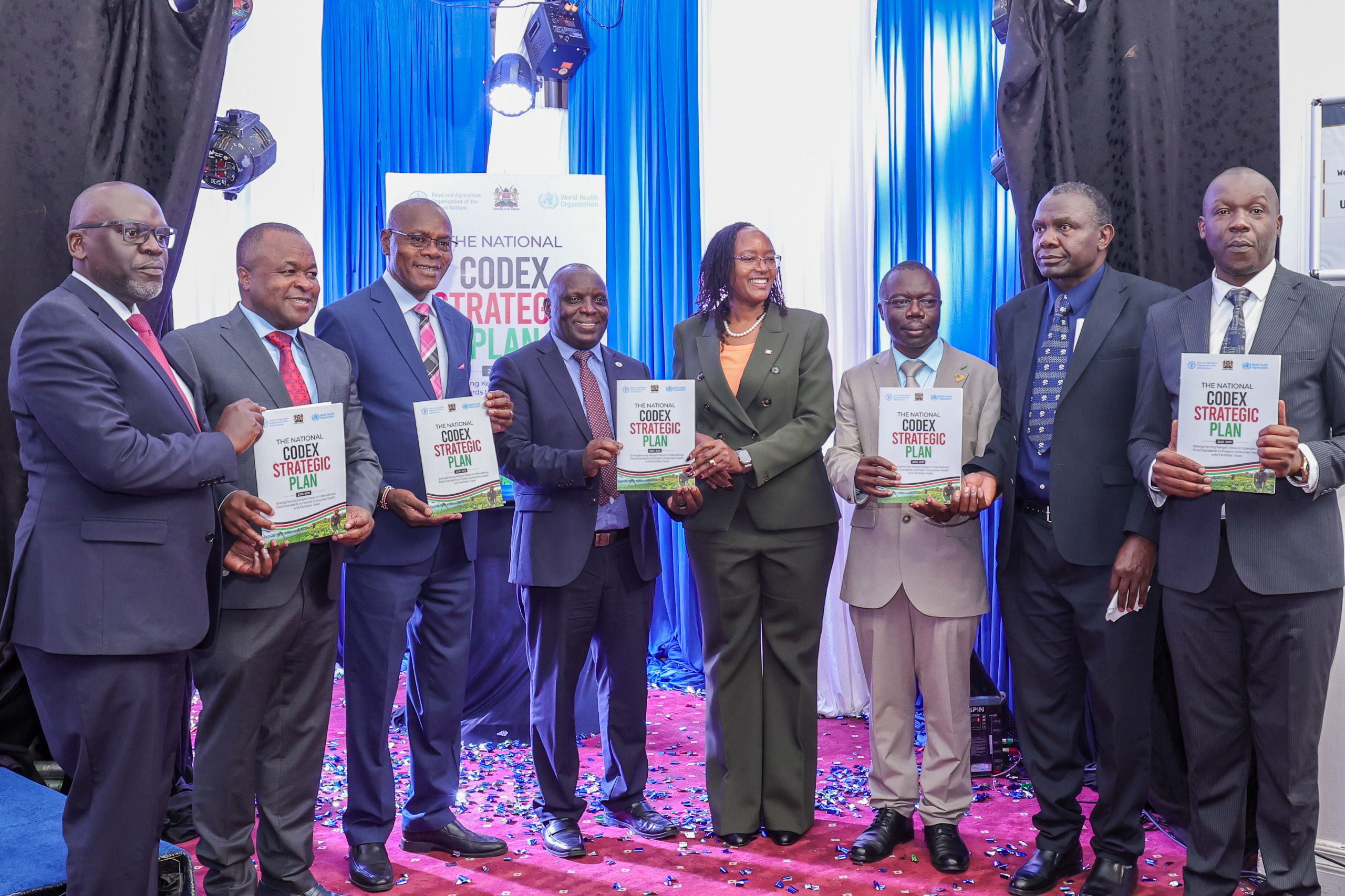
Kenya plans to spend Sh760 million over the next five years to strengthen food safety, improve product quality and help local businesses meet international market requirements.
The funding is part of the National Codex Strategic Plan 2026–2031, launched on Wednesday by Industrialisation Secretary Prof Erastus Gatebe in Nairobi.
The strategy seeks to strengthen Kenya’s participation in international food standards development, improve coordination among government agencies and ensure locally produced food meets internationally recognised safety requirements.
Speaking during the launch, Prof Gatebe said compliance with food safety standards was essential for Kenyan farmers, manufacturers and exporters to access and compete in international markets.
“One of the biggest challenges to trade is acceptance of products. When we meet all these standards, you are sure our products will be highly competitive and accepted,” he said.
He urged government institutions to allocate funds towards implementing the strategy, saying its success would depend on sustained commitment and cooperation among agencies responsible for agriculture, health, standards and trade.
Prof Gatebe said the plan also supported the Government’s economic transformation agenda, particularly its focus on agriculture, value addition, small businesses and industrialisation.
Kenya Bureau of Standards (KEBS) Director-General Esther Ngari said the strategy would build the country’s capacity to influence international food standards and ensure their adoption locally.
Kenya joined the Codex Alimentarius Commission in 1969 and has since progressed to leadership positions in the international food standards body.
Ms Ngari said the five-year strategy was anchored on three pillars: science-based standards, stronger institutional coordination and sustainable food safety practices.
The plan targets the training of at least 160 food safety experts, conducting seven commodity-based risk assessments and ensuring all relevant national submissions to Codex are made within the implementation period.
It also seeks to incorporate sustainability considerations into all national food standards by 2031.
Ms Ngari said Kenya had already submitted 58,000 data points on aflatoxin contamination in cereals and cereal-based foods to the Joint FAO/WHO Expert Committee on Food Additives (JECFA).
She said the information would strengthen the scientific evidence available for assessing food safety risks and developing international standards.
National Standards Council chairman Chris Wamalwa said the strategy should translate into practical measures that protect consumers and improve the competitiveness of Kenyan products.
He called on government agencies to incorporate its priorities into their institutional work plans and budgets, noting that implementation required the participation of all institutions represented in the National Codex Committee.
Mr Wamalwa said food standards were important not only for protecting public health but also for building consumer confidence and facilitating trade.
The meeting also provided an opportunity to share policy briefs containing recommendations on managing aflatoxin contamination in nuts and cereals.
Aflatoxins are toxic substances produced by certain fungi that can contaminate food crops and pose risks to human health.
The policy briefs seek to strengthen surveillance, prevention and control measures through coordinated action by government agencies, researchers and the private sector.
The National Codex Committee, coordinated by KEBS, brings together stakeholders involved in food safety, agriculture, health, research and trade.