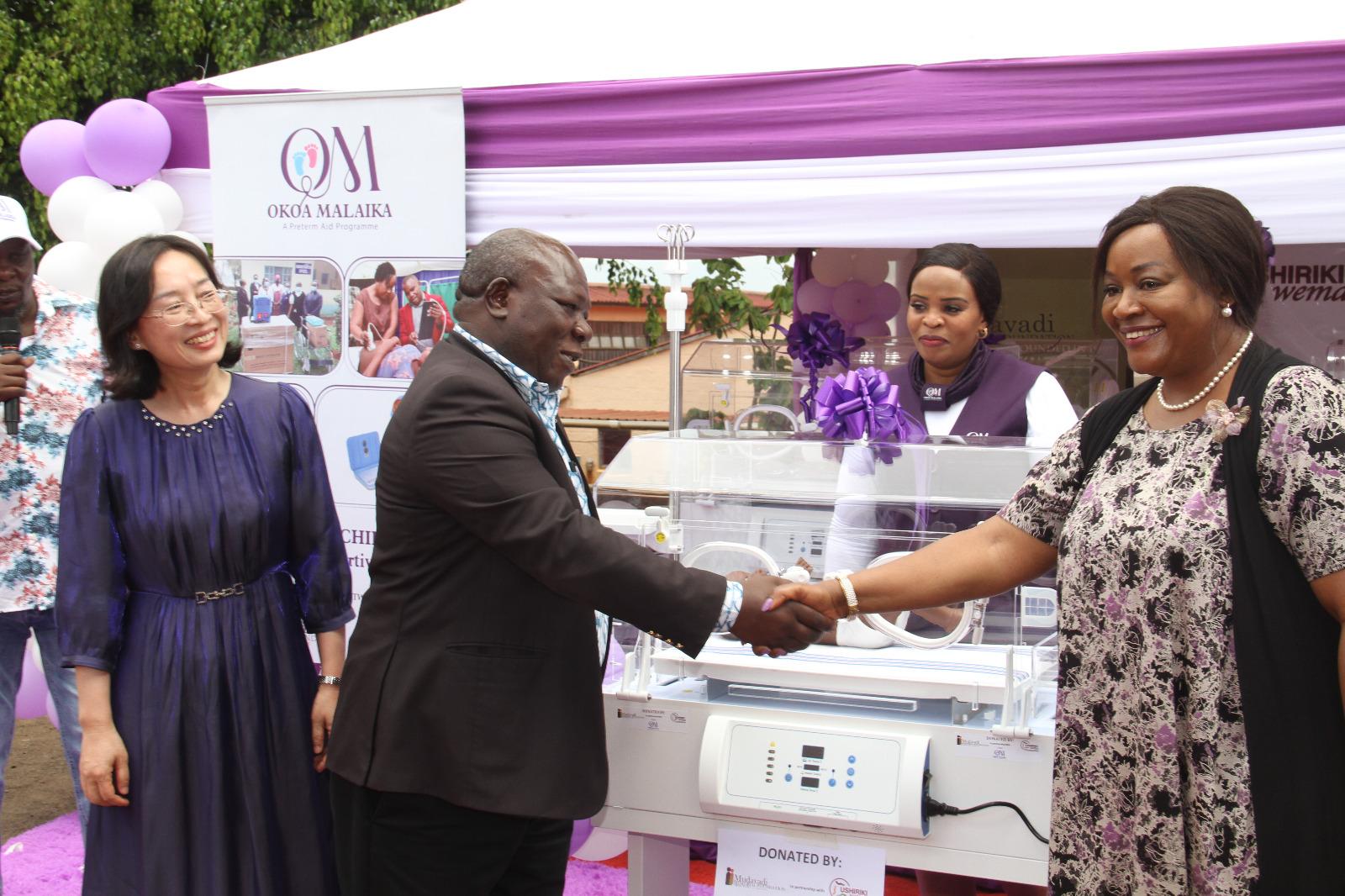
At least 92 neonatal incubators have been distributed to 49 public health facilities across 44 counties under a three-year initiative seeking to improve the survival of premature babies in Kenya.
The distribution marks the completion of the final phase of the Okoa Malaika programme, which concluded its nationwide rollout with the delivery of newborn care equipment to six counties in the Central region.
The final handover ceremony was held on Saturday at Nyeri County Referral Hospital, with Nyeri, Laikipia, Nyandarua, Kirinyaga, Kiambu and Murang’a among the beneficiary counties.
The exercise completed Strategic Plan A of the programme, which focused on equipping public hospitals with incubators and other essential newborn care equipment.
Launched on November 17, 2023, Okoa Malaika is jointly implemented by the Mudavadi Memorial Foundation Trust Fund and Ushiriki Wema Foundation. It aims to reduce preventable newborn deaths by strengthening hospital capacity to care for premature and vulnerable babies.
Speaking during the ceremony, Tessie Musalia, spouse of the Prime Cabinet Secretary and chairperson of Ushiriki Wema Foundation, described the completion of the programme as an important milestone in improving maternal and newborn healthcare.
She said the initiative had reached 44 counties through 10 phases, providing health facilities with equipment to support the care of premature infants.
“Prematurity is not just a medical issue; it is also a family, community and public health concern,” she said, urging healthcare providers, communities and development partners to work together to ensure premature babies receive timely and specialised care.
Musalia said the foundation had also contributed to maternal and newborn health policy development and advocacy through initiatives such as the National Obstetrics Point-of-Care Ultrasound (O-POCUS) Guidelines, launched in November 2024, and the Kenya Every Woman, Every Newborn, Everywhere (EWENE) Acceleration Plan for 2026–2028, launched in May.
The foundation has supported the integration of O-POCUS competencies into pre-service training programmes for radiography, nursing and clinical medicine at the Kenya Medical Training College.
It is also supporting the development of the Bungoma County EWENE Acceleration Plan for 2027–2029.
She called on healthcare providers to strengthen antenatal services and improve early detection of pregnancy complications to minimise risks associated with premature births.
Musalia also urged expectant mothers to attend antenatal clinics regularly, recognise pregnancy danger signs and seek medical attention whenever complications arise.
She highlighted the importance of Kangaroo Mother Care, breastfeeding, proper nutrition and emotional support for families caring for premature babies.
Chinese Ambassador to Kenya Guo Haiyan commended the programme for bringing together different partners to improve the health and survival of vulnerable newborns.
Guo said the Chinese Embassy had supported Okoa Malaika for three consecutive years, describing the partnership as a demonstration of the growing friendship between Kenya and China.
“An incubator protects a tiny life, while a set of medical equipment sustains the hope of a family. What this equipment represents is not only progress in medical technology, but also our respect and care for life,” she said.
She noted that China continued to support Kenya’s healthcare development through partnerships involving the construction of medical facilities and trilateral cooperation with UNICEF and the Kenyan government.
Guo said maternal and child health remained a key priority for China, adding that every newborn deserved an opportunity to survive and enjoy a healthy future.
Okoa Malaika brand ambassador Njoki Mambo said the programme’s three-year journey demonstrated the impact of collective action, compassion and partnerships in improving newborn survival.
She said this year’s World Prematurity Day theme, “Small babies, big potential. Invest in follow-up care to protect their future!”, underscored the need for continued medical attention after premature babies are discharged from newborn care units.
Mambo said regular medical assessments, follow-up services and family support were essential in helping premature infants grow and achieve their full potential.
She also acknowledged the contribution of doctors, nurses and other healthcare workers, noting that their expertise and commitment were critical in ensuring the donated equipment translated into better health outcomes.
Stakeholders called for sustained investment in maternal and newborn healthcare, stronger partnerships and improved medical services to give premature babies a better chance of survival.
World Prematurity Day is marked globally on November 17 to raise awareness about premature births, their associated health risks and the need for improved care and support for affected families.
The November 14 event brought together healthcare stakeholders and development partners ahead of this year’s global commemoration.