By James Mutua
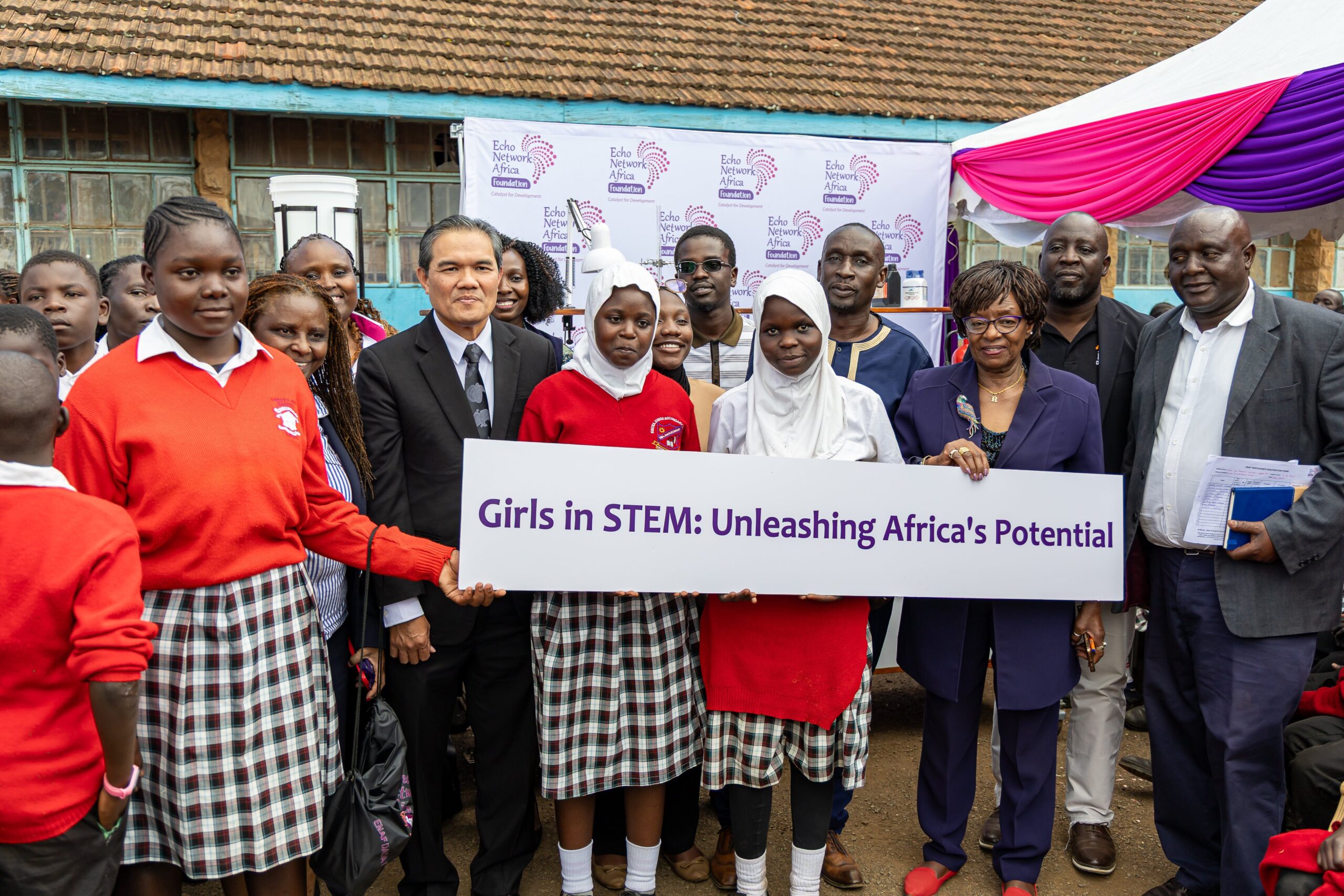
Learners at Kibera Primary and Junior School are set to benefit from enhanced science education and improved menstrual health support following the launch of a mobile science laboratory and the distribution of dignity packs by the Echo Network Africa Foundation (ENAF) in partnership with the Malaysian High Commission in Kenya.
The initiative, unveiled on Thursday to coincide with the global observance of Menstrual Hygiene Day, saw the official handover of ENAF’s 18th mobile science laboratory in Kenya. The project seeks to strengthen practical science learning under the Competency-Based Education (CBE) curriculum while addressing barriers that affect girls’ access to education.
Speaking during the handover ceremony, Malaysian High Commissioner to Kenya Ruzaimi Mohamad said the mobile laboratory would help bridge gaps in science education by providing learners with access to practical lessons.
“Many students have struggled to fully understand science due to the lack of laboratory facilities. We believe this mobile laboratory will enhance their learning experience and help prepare them for future opportunities,” said Mohamad.
He underscored the importance of science education in shaping future careers, noting that access to hands-on learning is critical in ensuring all learners can compete on an equal footing regardless of their background.
ENAF Chief Executive Officer Dr. Jennifer Riria said schools across the country continue to face significant challenges in implementing the Competency-Based Education curriculum due to inadequate infrastructure, limited resources and teacher shortages.
“Schools are grappling with inequalities in terms of equipment and facilities. While the curriculum is important, its successful implementation requires collective support from all stakeholders,” she said.
Dr. Riria stressed that quality education depends on sufficient funding, adequate staffing and continuous teacher training.
“Schools cannot effectively deliver quality education without enough resources, qualified teachers and ongoing capacity building,” she added.
The event also highlighted the issue of menstrual health, with schoolgirls receiving dignity packs containing sanitary towels, soap, oil and undergarments.
Dr. Riria said period poverty remains a major obstacle to girls’ education, forcing some learners to miss school and, in extreme cases, exposing them to risky situations in search of sanitary products.
“It is deeply concerning that some girls are compelled to seek sanitary towels through unsafe means. No child should have to face such circumstances simply to manage their menstrual health,” she said.
She noted that many girls lose several school days each month due to menstruation, negatively affecting their academic performance.
“Our goal is to ensure girls remain in school and continue learning with dignity. These dignity packs will help ease the challenges many face every month,” she said.
Dr. Riria also called for stronger collaboration among communities, development partners and organizations to support schools struggling with limited resources.
“There is still a great deal to be done. Supporting our children and schools is a collective responsibility,” she said.
The ENAF CEO further expressed concern over recent school fire incidents that have claimed the lives of learners, emphasizing the need for improved safety measures in educational institutions.
“It is heartbreaking to lose children through preventable tragedies. Schools must have adequate safety systems and infrastructure to protect learners,” she said.
She urged authorities to ensure dormitories and other school facilities comply with safety standards, including the provision of emergency exits and proper supervision.
Kibera Primary and Junior School Headteacher Samuel Onyango welcomed the support, saying the institution’s approximately 1,800 learners would greatly benefit from the initiative.
He noted that although the school occasionally receives sanitary towels from the Ministry of Education, the supplies often fall short of demand.
“We appreciate the support from our partners because the need among our learners remains significant,” Onyango said.
While acknowledging government efforts to support the Competency-Based Education system through teacher training, he identified teacher shortages in junior secondary schools as a major challenge.
“The transition to junior secondary has increased the demand for teachers, and staffing remains one of our biggest challenges,” he said.
The partnership between ENAF and the Malaysian High Commission reflects growing efforts to address educational inequalities, strengthen STEM learning and ensure vulnerable learners, particularly girls, remain in school and achieve their full potential.