By Gladys Karuga
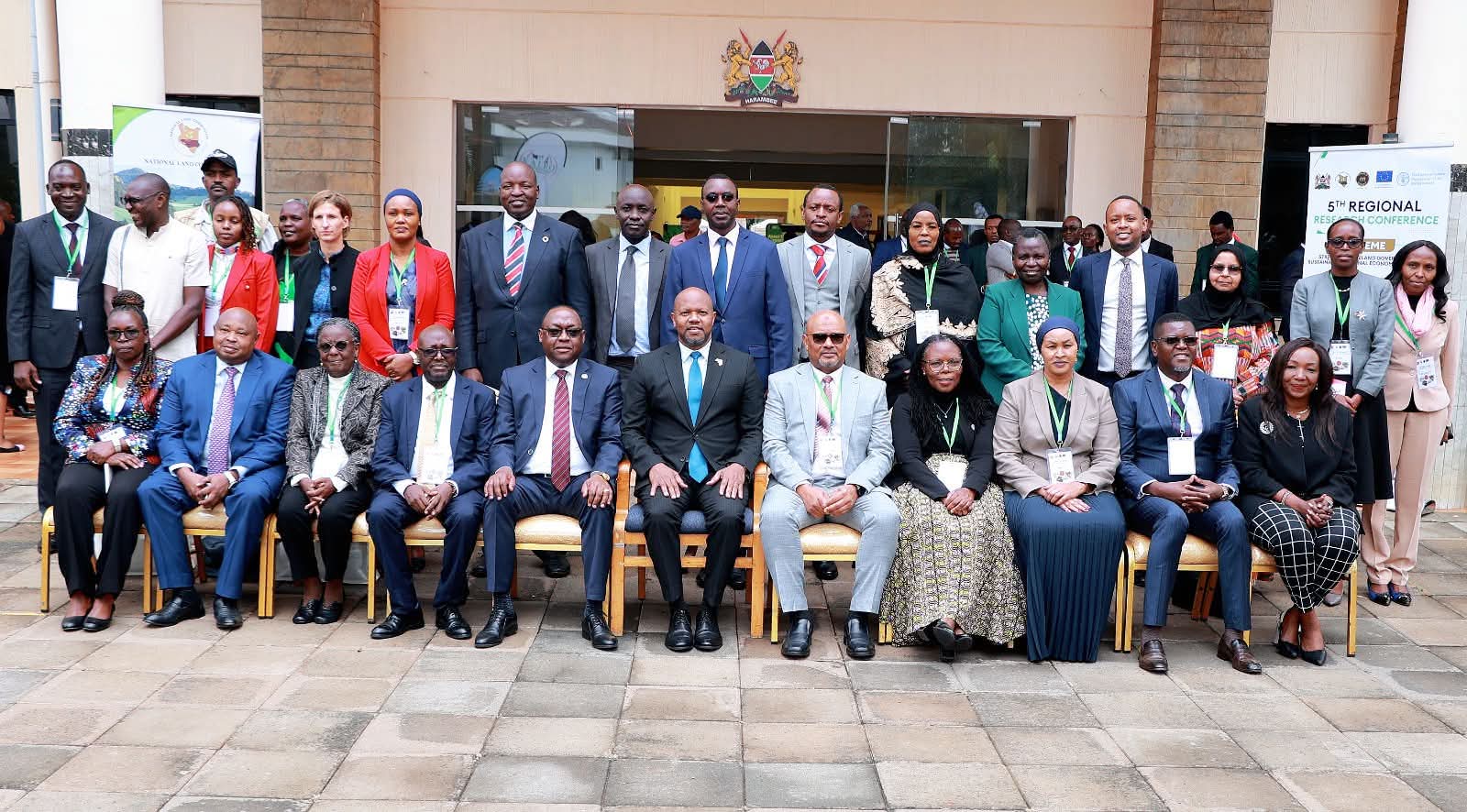
The National Land Commission (NLC) is hosting the 5th Regional Research Conference at the Kenya School of Government (KSG), Kabete, Nairobi, under the theme Strengthening Land Governance for Sustainable National Economic Development.
The two-day conference, running from August 19 to 20, brings together policymakers, researchers, academia, development partners, national and county governments, the private sector and other stakeholders to explore how effective land governance can accelerate Kenya’s economic transformation.
NLC Chairman Dr Abdillahi Saggaf Alawy reaffirmed the Commission’s commitment to advancing research, knowledge sharing and dialogue on emerging land governance issues.
Dr Alawy said land remains a critical factor of production and a foundation for key sectors of the economy, including infrastructure, housing, agriculture, industrialisation, energy and urban development.
“Land is the basis for our socio-economic development. Therefore, the way we govern our land has consequences for our economic prosperity, social protection and national development,” Dr Alawy said.
He noted that Kenya is undergoing significant socioeconomic, environmental, technological and institutional changes, making stronger land governance and evidence-based policymaking increasingly important.
Dr Alawy also welcomed the ongoing review of the national land policy but called for the process to be expedited and concluded within the shortest possible time to respond to emerging challenges in the land sector.
NLC CEO CHRP Kabale Tache Arero, MBS, said the conference comes at a critical time as Kenya reflects on its development agenda beyond Vision 2030.
She emphasised that land will continue to be a key foundation for the country’s economic and social development and called for research and evidence-based knowledge to inform practical policy interventions beyond 2030.
Chief Guest Dr Emmanuel Nzai reiterated the Government’s commitment to strengthening effective, transparent, inclusive and sustainable land governance as a foundation for national development.
He urged participants to engage in open, constructive and evidence-based discussions on challenges affecting land governance and come up with practical and actionable recommendations that can strengthen land governance and accelerate Kenya’s national economic transformation.
Nairobi Deputy Governor Jelani Ndebe, who represented Governor Johnson Sakaja, said land governance is closely linked to the challenges facing Nairobi, including housing, transport, water, waste management and protection of public spaces.
Ndebe said Nairobi’s 606-square-kilometre size means the city cannot solve its housing and infrastructure challenges by simply expanding outward, but must make better use of the land it already has.
He said the county is developing public assets through partnerships with the private sector, particularly for housing, while seeking to ensure that existing residents are not unfairly displaced.
The Deputy Governor also warned against treating parks, road reserves, schools, markets and other public spaces as surplus land.
“Once public land is lost, it is almost impossible to recover,” Ndebe said.
He said Nairobi is also moving from paper-based records to digital land management systems that will provide accurate information on county assets, their location, purpose and utilisation.
The conference is also examining opportunities to strengthen land administration, management, planning, valuation and land information systems to unlock the potential of land in key sectors, including infrastructure, food security, affordable housing, industrialisation, mining, green energy and land-based financing.
FAO representatives at the conference stressed the importance of secure land rights for women, pastoralist communities, youth and other vulnerable groups, noting that secure and equitable access to land can encourage investment, increase productivity, improve access to finance and reduce conflicts.
Through research, innovation and knowledge exchange, the conference seeks to generate actionable recommendations that will strengthen land governance and position land as a strategic enabler of inclusive, resilient and sustainable national economic development.