
By Jameson
The Kenya Electricity Generating Company PLC (KenGen) shareholders have approved sweeping changes to the company’s governance framework in a move aimed at strengthening board independence and protecting minority investors, as the state-backed utility positions itself for long-term, capital-intensive expansion.
The resolutions were adopted during a duly convened Extraordinary General Meeting held virtually on February 12, 2026, with participation from shareholders across the world.
At the centre of the reforms is a revised board structure that expands the role of independent directors and introduces clearer eligibility requirements. Under the new framework, independent directors must step down if they assume political office or become employees of government or state-owned entities. These provisions are designed to reduce political exposure and perceived governance risk.
Shareholders also approved a ring-fenced voting mechanism allowing non-state shareholders to elect independent directors without participation from the majority shareholder, a move seen as a significant step in enhancing minority shareholder protections.
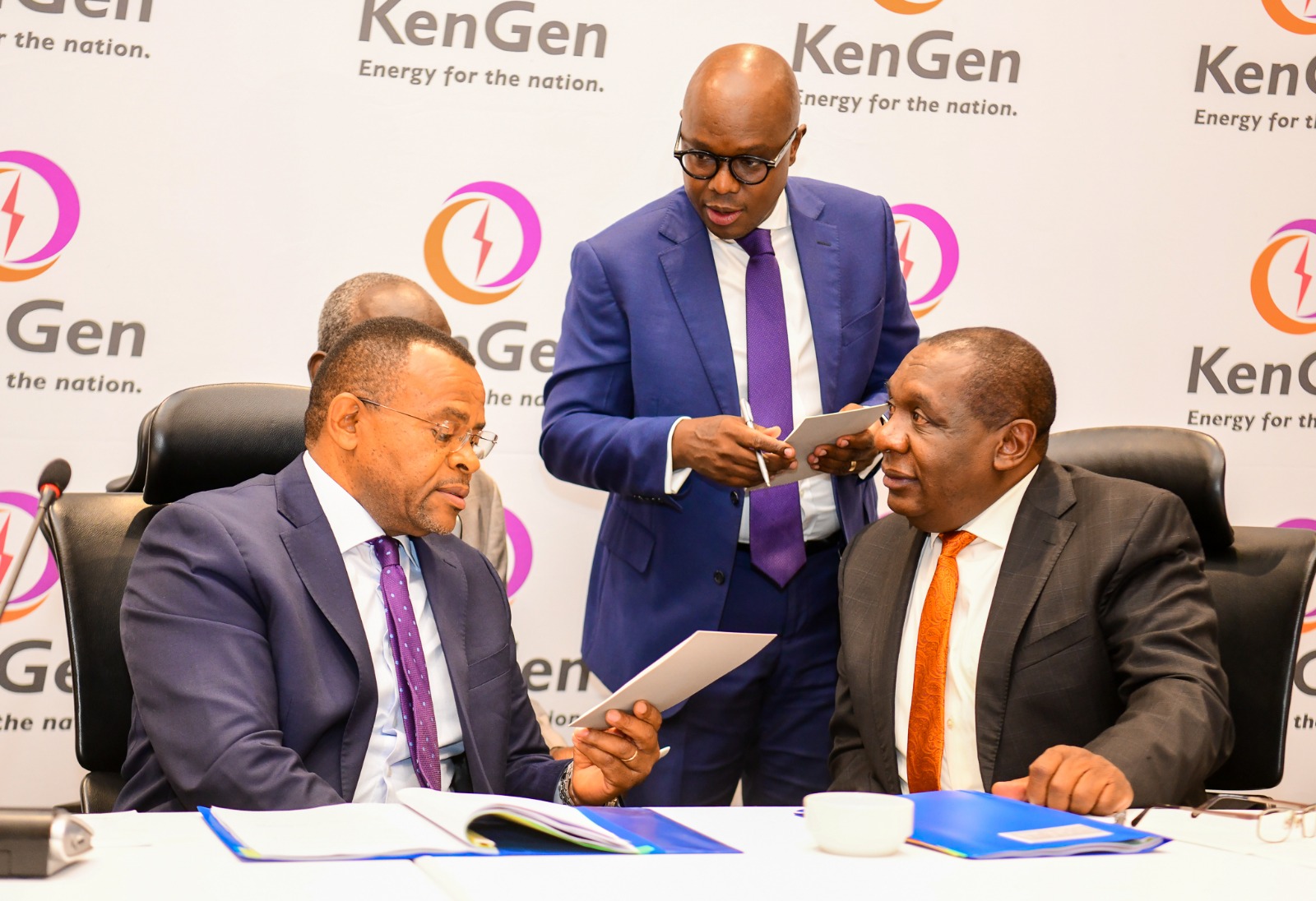
KenGen Chairman Hon. Alfred Agoi said the reforms align with the recently enacted legislation that seeks to strengthen governance, accountability, and performance across state-owned enterprises.
“Today’s resolutions were principally aimed at accommodating representation of all shareholder interests at Board level, thereby strengthening inclusivity, enhancing transparency, and reinforcing investor confidence in the company’s governance framework,” Agoi said.
He clarified that the Government of Kenya remains the majority shareholder and that the approved amendments do not alter the company’s ownership structure.
“What has changed is the strength of our governance architecture, including clearer Board structures, firm independence requirements, and structured minority shareholder representation,” he added.
Managing Director and CEO Eng. Peter Njenga said the governance overhaul was designed to support disciplined capital allocation and operational performance under the company’s ongoing G2G 2034 Strategy.
“These resolutions strengthen our governance framework and reinforce the institutional stability required to manage long-term, capital-intensive energy investments,” Njenga said.
“Strong governance lowers risk premiums. That matters when you are financing large-scale energy infrastructure over decades as we plan to do between now and 2034.”
KenGen currently supplies more than 60 percent of Kenya’s electricity and is pursuing expansion across geothermal, hydro, nuclear, wind, and other renewable energy sources. The company is also focused on optimizing its existing generation fleet, improving plant performance, reducing operational risk, and driving cost efficiencies.
Njenga noted that electricity demand continues to rise, underscoring the need for disciplined execution.
System peak demand currently stands at 2,444.40 megawatts, recorded on January 14, 2026, while the highest gross energy demand to date is 45,323.22 megawatt-hours, recorded on December 5, 2025.
“These actions are essential to supporting national energy security and maintaining a stable electricity supply as demand continues to grow,” he said.
Under the G2G 2034 Strategy, KenGen targets delivery of an additional 1,500 megawatts while upholding high safety and environmental standards.
“As a Board, we are committed to transparency, accountability, and decisions that safeguard KenGen’s long-term resilience,” Agoi said. “We appreciate the confidence shown by our shareholders and the continued interest of the public in KenGen’s journey.”
The governance reset signals a balancing act between maintaining state majority ownership and strengthening protections for minority investors, a shift analysts say could improve capital access and deepen investor confidence in Kenya’s listed state-controlled entities.

