By James Mutua
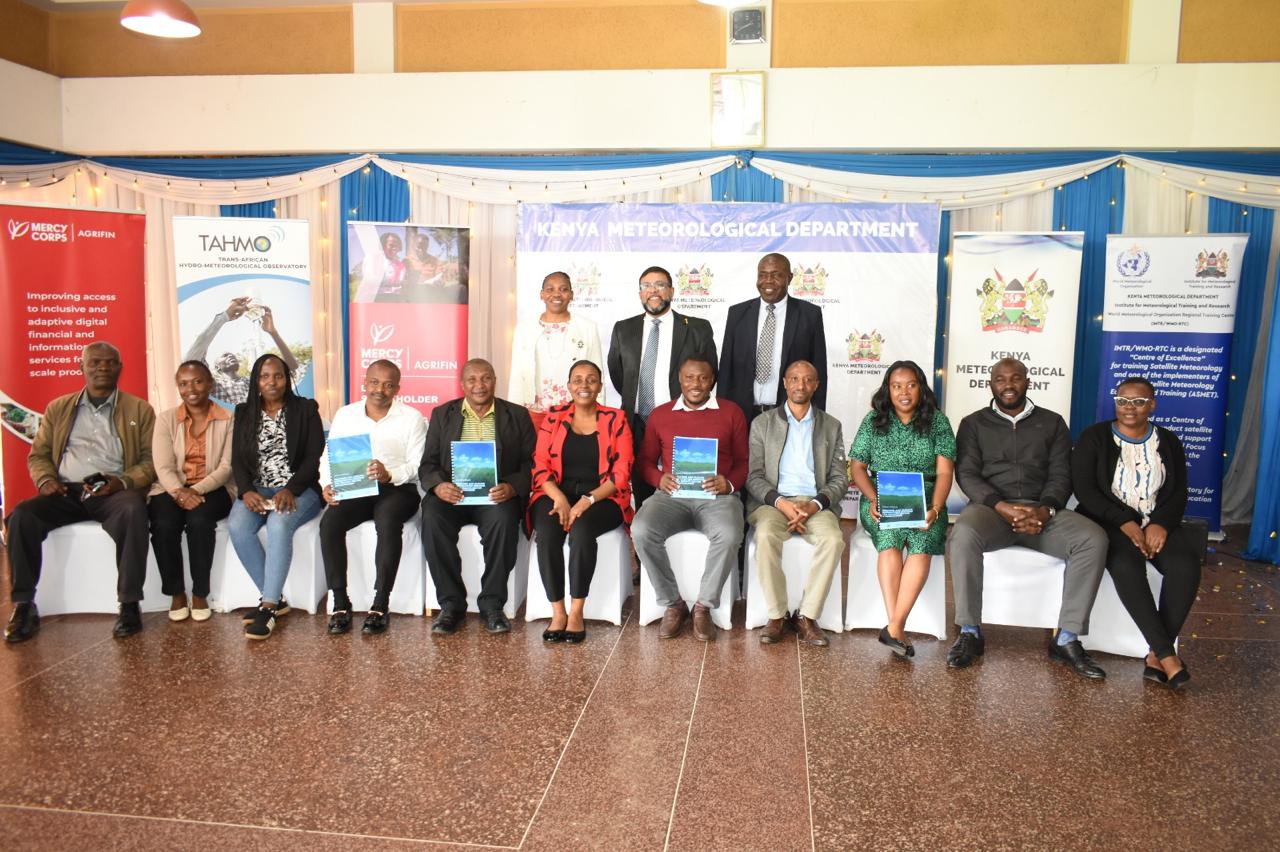
The Institute for Meteorological Training and Research (IMTR), a directorate of the Kenya Meteorological Service Authority (KMSA) and the designated Africa Regional Training Centre for English-speaking countries under the World Meteorological Organization (WMO), has launched a new Training Curriculum on Weather and Climate Information Services for Private Sector Stakeholders.
The curriculum, jointly developed by IMTR and KMSA with support from Mercy Corps AgriFin, the Kenya National Qualifications Authority (KNQA), and the Technical and Vocational Education and Training Authority (TVETA), aims to strengthen the interpretation and application of climate information across climate-sensitive sectors of the economy.
Speaking during the launch in Nairobi on Tuesday, WMO Regional Coordinator Ishaam Abader described the curriculum as a major milestone in strengthening public-private engagement in climate services.
“This curriculum comes at a time when WMO has launched the Guidelines for Public-Private Engagement. Today, I am very excited to witness a real-life demonstration of the implementation of the WMO Guidelines for Public-Private Engagement, and on behalf of WMO, I sincerely appreciate Kenya, the Kenya Meteorological Services Authority and IMTR for leading the way,” he said.
Abader noted that the private sector plays a critical role in climate action by driving innovation, financing climate solutions, and supporting the dissemination of climate information to vulnerable communities.
He further praised Kenya for strengthening its position as a regional training hub under the WMO framework and called for continued support to KMSA to help address institutional gaps affecting climate services delivery.
Kenya’s Permanent Representative with WMO, Edward Muriuki, said the curriculum reflects the growing importance of climate information in national development planning and economic resilience.
“Weather and climate information is no longer a peripheral scientific function. It is a strategic national asset supporting policy formulation, investment planning, disaster risk reduction and socio-economic transformation,” Muriuki said.
He added that the curriculum would strengthen the interface between meteorological science, policy implementation, and private sector application by enhancing understanding and utilization of weather and climate products.
Muriuki said the initiative would support climate-smart investments, informed risk management, business continuity planning, and stronger early warning systems, particularly for small and medium enterprises, agribusinesses, financial institutions, and transport operators vulnerable to climate shocks.
Bernard Chanzu, Director of the Meteorological Training and Research Directorate, said the programme represents a shift toward deeper collaboration between public institutions and private sector actors.
“This curriculum demonstrates that strengthening climate services is not only about improving access to climate data, but also about building the leadership and institutional capacity needed to transform information into meaningful action,” Chanzu said.
He noted that the programme recognizes the private sector as a critical partner in ensuring weather and climate information reaches communities and sectors that need it most.
Sieka Gatabaki emphasized the importance of public-private engagement in scaling climate solutions across Africa.
“It is encouraging to see how Mercy Corps AgriFin’s Weather and Climate Services programme continues to support partners in designing, testing and scaling digital climate solutions that strengthen smallholder farmers’ productivity and resilience in the face of climate change,” he said.
Gatabaki expressed optimism that the curriculum could be expanded beyond Kenya to strengthen climate resilience efforts across the continent, noting that private sector actors are essential in supporting localized and last-mile delivery of climate information to farming communities.
The programme is designed to equip private sector players with practical skills to understand, interpret, apply, and disseminate KMSA weather and climate forecasts. It also seeks to deepen collaboration between public institutions and private sector actors in climate services delivery while improving resilience among small-scale producers facing increasing climate variability.
The launch comes amid growing climate-related challenges in Kenya, including erratic rainfall, prolonged droughts, floods, pest outbreaks, and shifting planting seasons that continue to disrupt livelihoods and economic productivity.
Organizers said public institutions responsible for generating and disseminating climate information continue to face capacity constraints in delivering timely, localized, and user-friendly forecasts, making private sector partnerships increasingly critical.
The curriculum incorporates national, regional, and international best practices, including KMSA forecasting products, WMO guidelines, and accreditation standards from KNQA and TVETA. It also integrates insights from regional climate outlook forums, satellite and reanalysis datasets, and lessons from collaborations among meteorological agencies, research institutions, agritech innovators, and development partners.
The programme is expected to improve the translation of climate data into localized, practical, and farmer-centered advisories that support resilience, productivity, and informed decision-making across sectors.