By Jameson
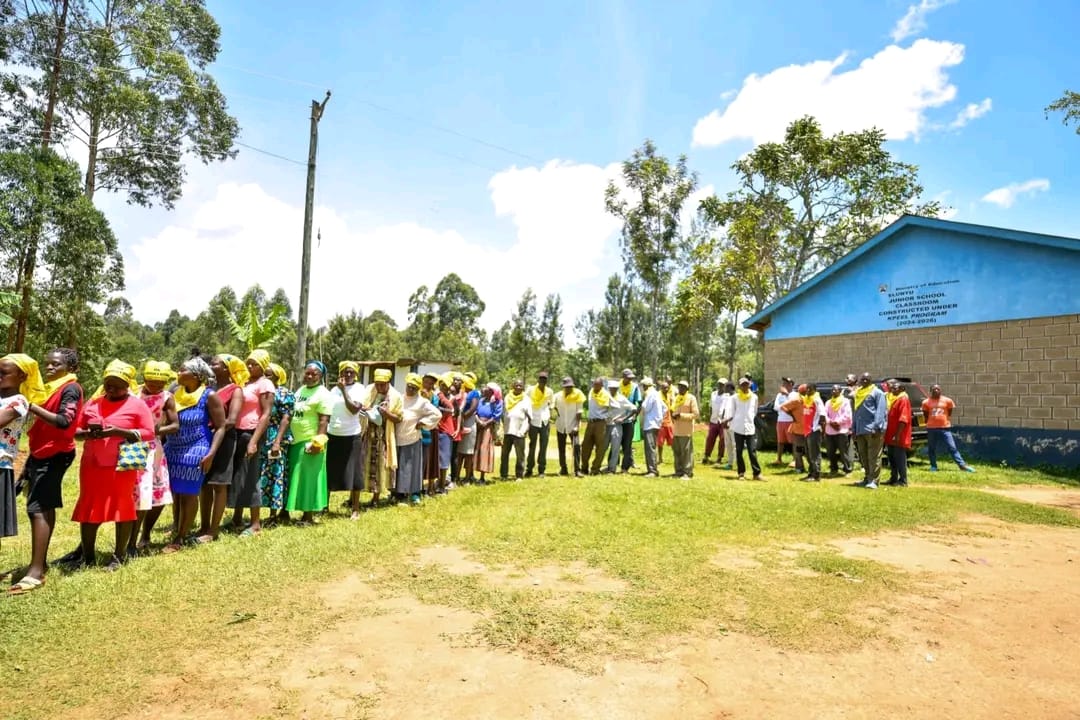
Voting in the repeat Phase III grassroots elections of the United Democratic Alliance began earlier today in several parts of the country, with party officials reporting largely smooth operations despite minor logistical challenges.
Speaking during an update, Prof. Kithure Kindiki, the Deputy Party Leader of the UDA Party, said polling opened successfully across most centres, although a few stations experienced delays related to the opening of polling centres and the distribution of electronic voting gadgets.
Kindiki explained that some gadgets arrived late at certain polling stations due to slow distribution methods. To address the issue quickly, the party adopted faster means of delivering equipment and reaching polling centres.
“We had one or two cases where gadgets were delayed or the method used to distribute them was slow. We therefore deployed faster methods of accessing the polling centres, including the use of motorbikes instead of vehicles,” he said.
According to the deputy party leader, the delays were mitigated and where time was lost, voting hours were extended to ensure members were not disadvantaged.
Heavy rains in some areas also created transport challenges, making several roads difficult to access. Party officials said they implemented alternative arrangements to ensure election materials and personnel reached affected polling centres.
In a few cases, candidates’ names were missing from the electronic database due to incomplete data submissions. Kindiki noted that the party resolved such cases by allowing the use of manual registers as a backup voting method.
“Where we experienced technological challenges with digital voting, we allowed the use of manual registers as a last resort, similar to what the IEBC does when digital systems encounter challenges,” he said.
Despite the challenges, the party reported encouraging voter turnout, particularly considering the unfavorable weather conditions in some regions. Kindiki expressed optimism that turnout would increase further in the afternoon.
A key feature of the election, he said, is the use of a fast digital voting system that enables party members to cast their votes within seconds. The system also allows results to be transmitted electronically, significantly speeding up the tallying process.
“We expect results within minutes after voting closes. The system is fully electronic, meaning there are no physical forms or intermediaries between the polling centre and the national tallying centre,” Kindiki said.
The party expects results from across the 18 participating counties to be available within less than an hour after voting ends.
However, the exercise was marred by a tragic incident in Tigania West, Meru County, where a returning officer collapsed and died while on duty.
According to preliminary medical reports, the officer suffered an asthma attack.
Kindiki conveyed the party’s condolences to the family of the deceased official and assured them of support.
“We want to send our sympathies as a party to the family. She lost her life while serving the party during this important democratic exercise,” he said.
The UDA leadership also noted that no incidents of violence had been reported during the exercise so far, emphasizing the party’s strict stance against any form of electoral violence.
“We have zero tolerance for violence. Anyone who attempts to use violence to advance their interests in this election will face severe disciplinary action,” Kindiki warned.
The repeat Phase III elections are being conducted across about 9,000 polling centres in 18 counties, involving approximately 500,000 candidates competing for about 150,000 grassroots positions.
The party plans to continue the exercise in other counties in the coming weeks before moving to the constituency-level elections.
Kindiki said the large-scale exercise is part of the party’s effort to strengthen internal democracy and improve its electoral systems as it prepares for future political contests.