By James Mutua
Health experts have raised concern over the growing threat of antimicrobial resistance (AMR) in Kenya and globally, warning that the rising ineffectiveness of antibiotics could reverse decades of medical progress if urgent action is not taken.
AMR, also known as antibiotic resistance, occurs when bacteria, viruses, fungi and parasites evolve over time and no longer respond to medicines designed to treat infections. This makes illnesses harder to treat, increases the risk of severe disease and death, and places a heavy burden on healthcare systems. Globally, bacterial AMR was linked to more than one million deaths in 2021.
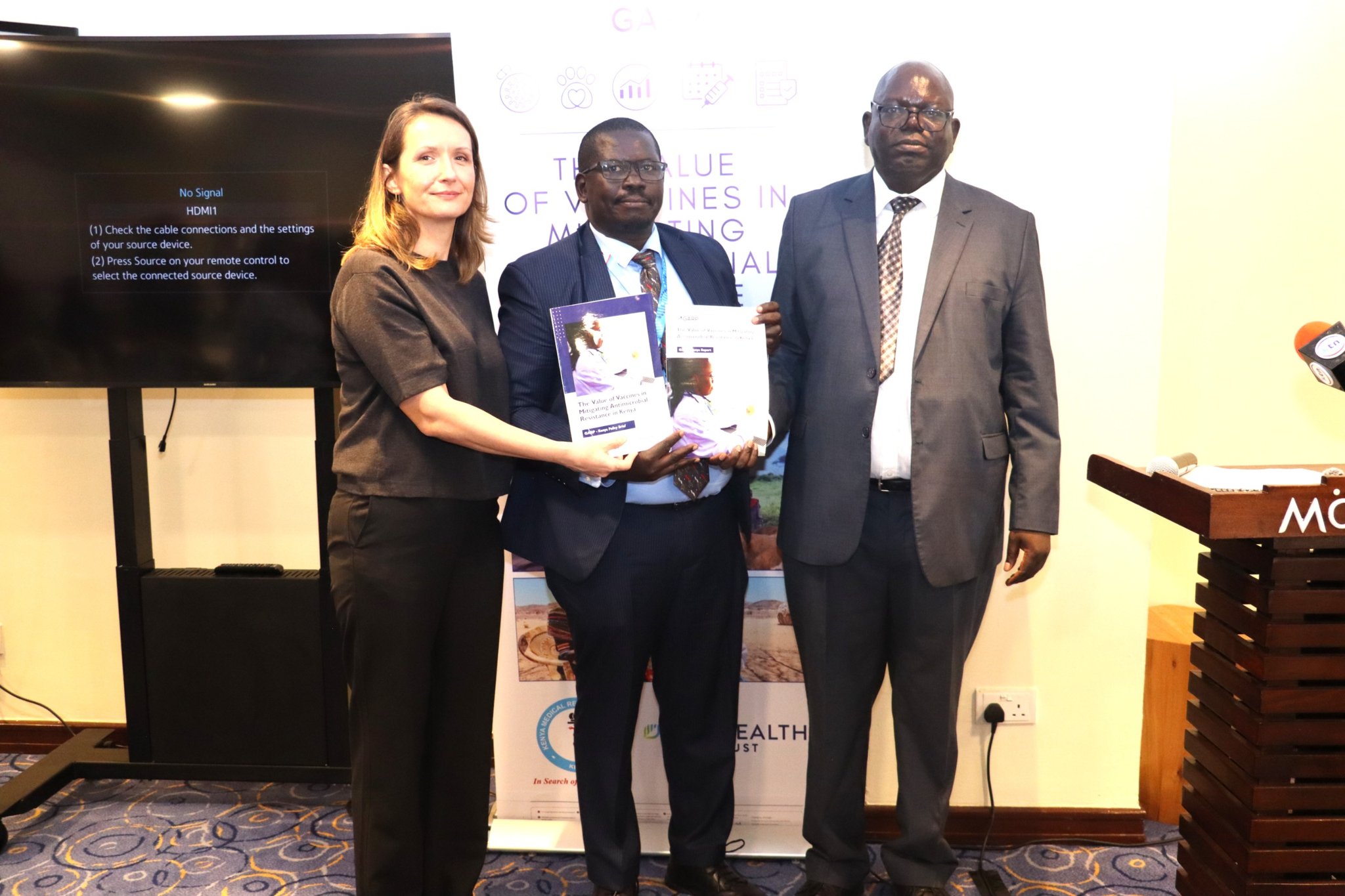
A newly unveiled policy brief and report by the Global Antibiotic Resistance Partnership Technical Working Group, in collaboration with the Kenya Medical Research Institute (KEMRI) and the One Health Trust, highlights vaccines as a powerful and underutilised tool in slowing the spread of resistant infections.
Speaking during the launch on Friday in Nairobi, Dr Eric Muok, Acting Director of Research and Development at KEMRI, who represented Acting Director General and CEO Prof Elijah Songok, described AMR as a “silent pandemic” already affecting lives across Kenya and the wider African region.
“In Kenya and across East Africa, AMR is no longer a distant theoretical risk, it is a present reality claiming lives, complicating routine surgeries and straining our healthcare budgets.” Dr. Erick Muok
He warned that the interconnected nature of countries in the region allows resistant pathogens to spread easily across borders, threatening public health gains and economic development.
Dr Muok emphasised that vaccines play a critical role in tackling AMR by preventing infections before they occur, thereby reducing the need for antibiotics.
“Prevention is the ultimate cure. If a child does not get pneumonia or typhoid, there is no need for antibiotics,” he noted.
According to the report, vaccines help reduce antibiotic use, slow the emergence of resistant bacteria and provide community-wide protection through herd immunity.
Kenya’s immunisation programmes have already demonstrated success. The introduction of the pneumococcal conjugate vaccine has led to a significant decline in infections caused by penicillin-resistant strains, with cases of invasive pneumococcal disease dropping by more than 90 percent among children under five.
Similarly, the malaria vaccine has reduced cases by more than one-third in young children in some settings, while the recently introduced typhoid conjugate vaccine is expected to significantly cut drug-resistant typhoid infections among children aged between nine months and 15 years.
Dr Robert Onsare, Head of the Enteric Pathogens and AMR Research Division at KEMRI and Chair of GARP-Kenya, said vaccines offer an immediate and effective solution in the fight against AMR.
“Addressing AMR starts with preventing infections in the first place. Vaccines stand out as a powerful, readily available tool that can be used in the short term.” ~ Dr. Robert Onsare
“For certain infections where resistance is widespread, vaccines may be the only effective way to save lives,” he added.
The report outlines several recommendations, including increased investment in existing vaccines, expansion of newer vaccines such as the typhoid conjugate vaccine and strengthening vaccine delivery systems, particularly in underserved and remote areas.
It also calls for efforts to build public confidence in vaccines and ensure reliable cold-chain infrastructure to maintain vaccine effectiveness.
Dr Muok highlighted KEMRI’s ongoing role in combating AMR through surveillance, research and innovation, noting that the institution is tracking resistance patterns and developing new vaccine candidates tailored to regional disease threats.
The report further emphasises the importance of adopting a One Health approach, which integrates human, animal and environmental health strategies to curb the spread of resistant pathogens.
Policymakers have been urged to develop a clear national strategy that incorporates vaccination as a central pillar in Kenya’s response to AMR.
Experts say such measures are critical not only to protect current populations but also to preserve the effectiveness of antibiotics for future generations.