By Jameson Mutua
Ushiriki Wema Foundation Chair Tessy Musalia has urged the Government of Kenya to extend maternity leave for mothers of preterm babies, saying the current three-month provision does not adequately address the unique demands and emotional strain these mothers face.
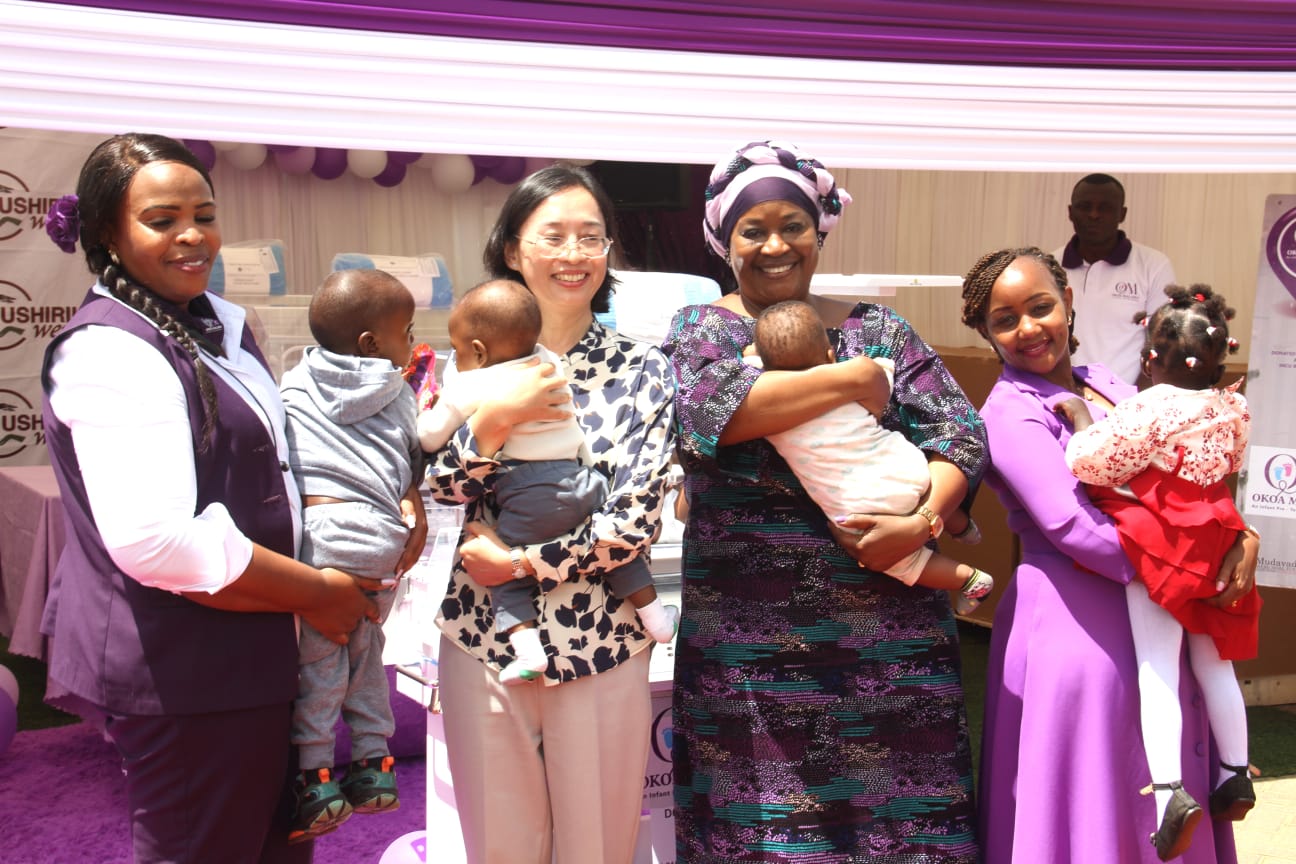
Speaking in Makueni County at the Mother and Child Hospital during the Okoa Malaika Programme event marking World Prematurity Day, Musalia noted that women who deliver prematurely often spend their entire maternity leave in hospital corridors, neonatal intensive care units (NICUs), and incubator rooms, unlike other mothers who recover and bond with their babies at home.
“They spend their maternity leave in the hospital, beside incubators, fighting fear and exhaustion. Their leave should be extended to six or nine months until their babies are at least three months old,” she said.
Celebrating Life, Strengthening Healthcare
The event, organised by Ushiriki Wema Foundation, brought together health officials from Makueni, Machakos, and Kitui counties. Musalia applauded the hospital, an arm of Machakos Referral Hospital, for upgrading its neonatal intensive care unit, saying it represents the kind of investment needed to safeguard vulnerable infants.
China Pledges Continued Support for Maternal and Child Health
China’s Ambassador to Kenya, Guo Haiyan, who served as the chief guest, praised Ushiriki Wema Foundation for driving a “deeply commendable and socially transformative” initiative.
Haiyan highlighted the essential role of neonatal care in reducing infant mortality, noting that China operates more than 3,000 NICUs nationwide. She reaffirmed her country’s commitment to supporting Kenya in neonatal care, professional training, maternal health, and disease control.
“Premature birth concerns not only medical care but also family happiness and national well-being. Every life is precious, and every family deserves warmth and hope,” she said.
The ambassador also welcomed Musalia’s call for increased investment in Community Health Promoters (CHPs), pledging to explore avenues for enhanced collaboration.
Maternal Health and Emerging Climate Pressures
Musalia raised concerns over global research showing that climate change is worsening health outcomes for pregnant women, newborns, and adolescents. She stressed the need for stronger community-level health systems and greater support for CHPs, who form the frontline link between households and health facilities.
“CHPs identify at-risk mothers, offer antenatal support, educate women on nutrition, and ensure timely referrals. It is imperative that we strengthen their skills and resources,” she said.
Launched in 2023, the Okoa Malaika Programme has been equipping level 4 and 5 hospitals with life-saving neonatal machines to reduce preventable deaths among preterm babies. To date, the initiative has supplied more than 45 incubators across 22 counties.