Kenya has been urged to increase investment in scientific research and innovation, with experts warning that the country’s ability to address challenges such as food insecurity, climate change and disease outbreaks depends on strengthening its research capacity.
Principal Secretary for Science, Research and Innovation Shaukat Abdulrazak said scientific research was critical to Africa’s ability to determine its economic and technological future, calling for stronger investment, international collaboration and commercialisation of research findings.
Speaking during the 2026 International Centre of Insect Physiology and Ecology (icipe) Science Day in Nairobi on Tuesday, Abdulrazak said research should go beyond academic publications and produce practical solutions that improve people’s lives.
“Only scientific research will bring Africa to a position where it can control its destiny,” he said.
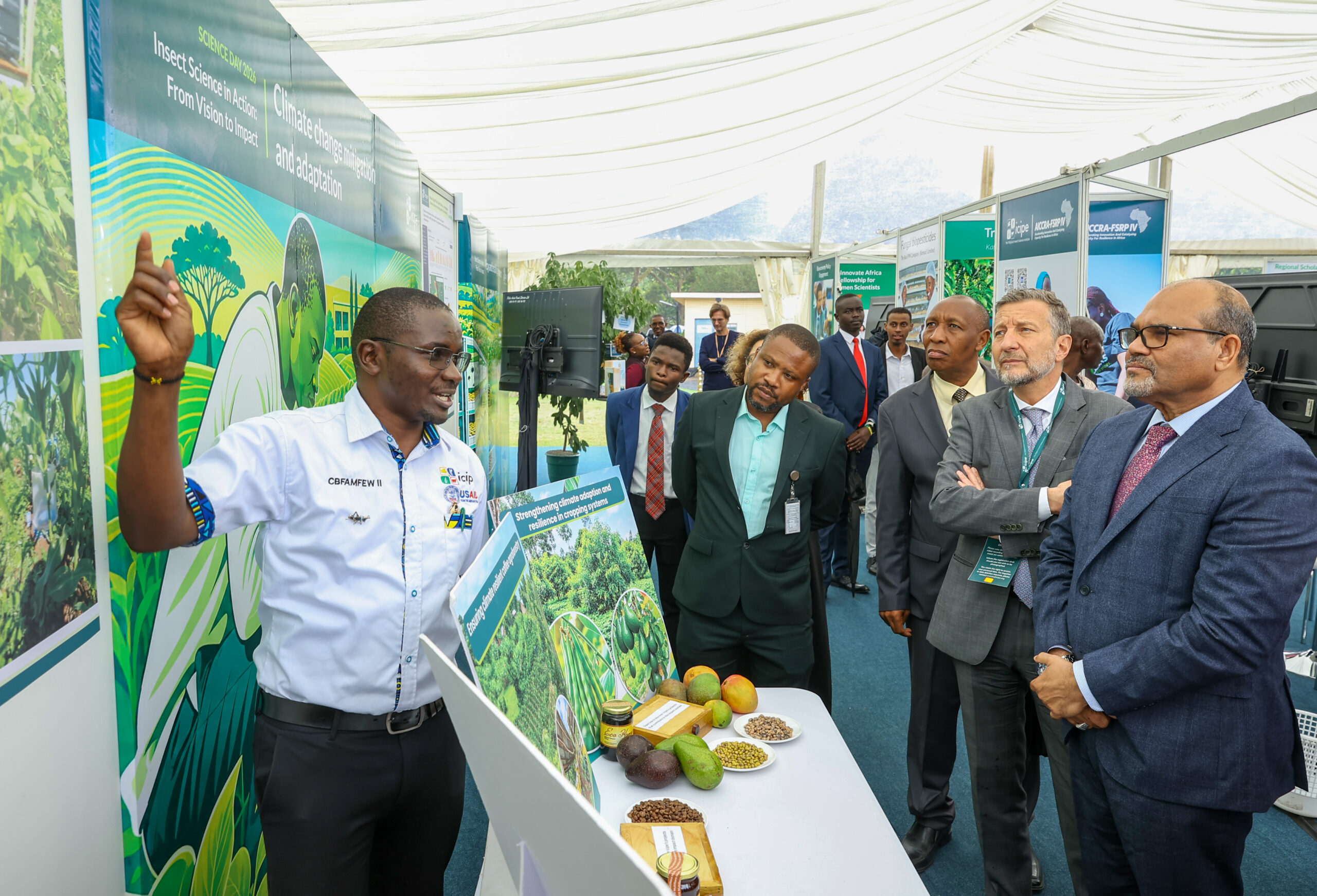
The event, held under the theme Insect Science in Action: From Vision to Impact, brought together researchers, policymakers and development partners to showcase how insect science is being applied to address challenges in agriculture, human health and environmental conservation.
Abdulrazak said scientific research had a critical role in addressing food losses, noting that up to 40 per cent of global crop production is lost annually to plant pests and diseases, according to the Food and Agriculture Organisation.
He said Kenya also experiences significant pre- and post-harvest losses, estimated at between 30 and 40 per cent, calling for greater application of scientific innovations in pest management, plant health and food preservation.
The PS cited entomology, biological control, integrated pest management and pollination as important areas of research that could improve agricultural productivity while protecting biodiversity.
He urged research institutions to adopt multidisciplinary approaches, bringing together biological scientists, social scientists and other experts to ensure scientific discoveries reach communities and address real-world challenges.
Abdulrazak also challenged researchers to accelerate the transition from laboratory discoveries to marketable products, saying scientific publications and innovations alone were not enough without measurable economic and social impact.
“It is not enough just to publish. It is not enough just to have innovation. This innovation must be able to have impact,” he said.
He disclosed that Kenya currently invests about 0.8 per cent of its Gross Domestic Product in research and development, against a target of one per cent, and called for greater private sector participation to increase funding and support commercialisation.
He further urged researchers to strengthen partnerships with industry, venture capitalists and international institutions to turn scientific discoveries into products, enterprises and employment opportunities.
His remarks came as icipe marked one year since launching its Vision and Strategy 2026–2030, which seeks to strengthen research excellence, deliver development impact and build scientific capacity across Africa.
icipe Director General Abdou Tenkouano said the centre was translating its strategic ambitions into practical solutions through research, stronger partnerships and expansion of its regional and global presence.
He highlighted ongoing research in human health, agriculture and livestock production, including efforts to use naturally occurring microbes to block malaria transmission.
In plant health, the centre is developing nature-based solutions to control the red palm weevil, an invasive pest that threatens palm trees in the Middle East and North Africa.
The research includes the use of biopesticides and beneficial insects to control the pest.
Tenkouano also cited innovations targeting nagana, a livestock disease transmitted by tsetse flies, including repellent collars worn by animals and specially designed traps that attract the flies away from livestock.
He said the centre was also advancing initiatives that combine beekeeping, crop production and tree planting to restore degraded land and improve livelihoods.
In Ethiopia, its MaYEA project has helped farmers improve land productivity and created employment opportunities for more than 300,000 young people since 2023, according to the director general.
Tenkouano said icipe was strengthening engagement with the private sector to promote the marketing and commercialisation of its innovations.
The centre has also introduced a quarterly online forum to connect researchers developing pest and disease control technologies with agricultural businesses, creating opportunities for industry partnerships and wider adoption of research findings.
He said the centre’s ambition was to strengthen its position as a leading institution in insect science while ensuring its research benefited farmers and communities across Africa.
Meanwhile, icipe Governing Council Chairperson Ylva Hillbur said the centre’s Vision and Strategy was anchored on research excellence, impact delivery and capacity development.
She said the three pillars were essential in strengthening the institution’s position as a global centre of excellence in insect science while addressing Africa’s pressing development challenges.
Hillbur noted that icipe’s research covered five key areas: agrifood systems, global health, environment and biodiversity, climate change, and policy.
She said partnerships with governments, donors and research institutions remained central to expanding the centre’s reach and ensuring its innovations translated into meaningful development outcomes.
Hillbur also highlighted icipe’s postgraduate programmes, saying the centre played an important role in developing the next generation of African scientists through its PhD and master’s degree training.
Abdulrazak called for increased investment in young researchers, greater opportunities for women in science and support for indigenous knowledge systems.
He said African countries needed to work together in addressing cross-border challenges such as climate change, pandemics, food insecurity and biodiversity loss.
“Connect institutions, integrate knowledge, mobilise resources and accelerate impact,” he said.
He urged icipe and its international partners to move beyond agreements and focus on collaborations that deliver joint research, technology transfer, shared infrastructure and measurable benefits to society.