By Jameson
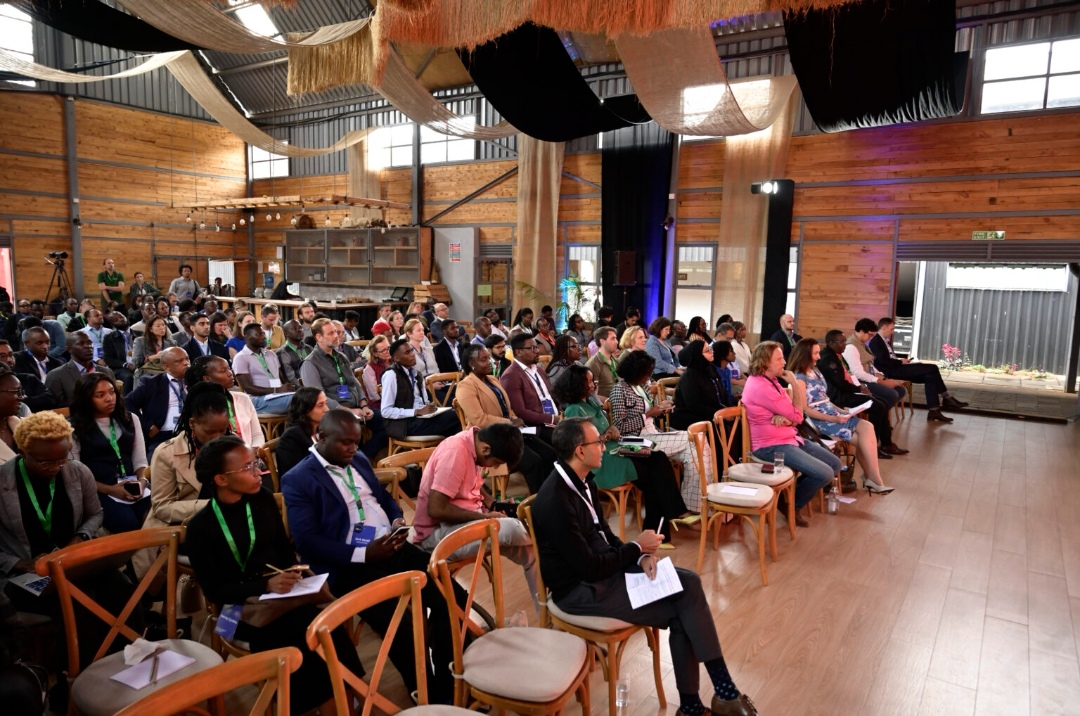
The UK government funded Manufacturing Africa programme today hosted the Pan African Green Business Building GBB Forum in Nairobi, bringing together about 150 green manufacturing stakeholders, including high potential startup founders, investors and system partners. The one day forum sought to catalyze growth in green manufacturing by connecting capital to industry opportunities across the sector.
Nairobi was strategically selected as the venue due to its vibrant ecosystem of small and medium sized enterprises, which attracted the largest share of start up funding in Africa in 2025. Kenya has also cemented its position as a continental leader in renewable energy, generating electricity from geothermal, hydro, wind and solar sources.
At the heart of the forum were pitching sessions where green manufacturing startups presented investment opportunities to more than 30 impact investors. The deals spanned diverse subsectors including electric mobility, recycling, solar energy, organic fertilizers and other innovative industries driving Africa’s green transition.
Research by the UK funded Manufacturing Africa programme indicates that unlocking new green investments could deliver revenues of between 2 and 4 billion dollars per year by 2030, creating at least 200,000 direct and indirect jobs in green industries across participating African countries.
Speaking at the forum, Daniel Wilcox, Economic Counsellor and Head of Economic Development and Climate Change at the British High Commission, said the event was designed to bridge the gap between promising startups and investors.
“We have sponsored this event through one of our key programmes, Manufacturing Africa. Today we are bringing together exciting East African and Kenyan startups working in green industrial sectors with investors to listen to their pitches and understand their business models,” Wilcox said.
He noted that early stage founders often require not only financing but also guidance on how to engage investors and structure their proposals. “When you are a founder with an idea that could revolutionise a sector, you need the right support and the right kind of financing. Part of our role is to bring startups and investors together, support them to pitch effectively and ultimately unlock investment,” he added.
Wilcox underscored the urgency of green industrialisation in Kenya, noting that roughly 800,000 young Kenyans enter the job market each year while manufacturing currently accounts for about 8 percent of GDP, far below the 20 percent target often cited for structural transformation.
“There is a clear gap that needs to be filled, and green industrialisation is one of the ways to do it. Kenya is uniquely positioned with its green energy mix and educated workforce to drive re industrialisation,” he said, adding that Kenya attracted about 30 percent of venture capital flows into Africa last year.
He highlighted electric mobility as an example of a fast growing sector supported by recent policy direction. With around 25 electric vehicle startups operating in Kenya, Wilcox said the sector is already creating demand for renewable energy while reducing fuel imports and strengthening energy security.
However, he pointed to infrastructure and policy gaps as key challenges. These include energy access and costs, trade routes, export infrastructure and regulatory frameworks within Kenya and across the East African Community. He also stressed the importance of nurturing nascent sectors through supportive tax and regulatory policies to enable long term growth and higher future tax revenues.
On skills development, Wilcox observed that while about 60 percent of Kenyans are employed in agriculture, there is potential to transition and upskill workers into manufacturing as the sector expands. He added that technologies such as artificial intelligence could enhance productivity in manufacturing through smarter processes and improved efficiency.
Thomas Pascoe, Team Leader of the Manufacturing Africa programme, said the initiative is committed to supporting the next generation of African business talent.
“We are thrilled to support the next generation of African business talent on their journey to growth and success. Supporting these entrepreneurs at this critical early stage will not only drive job creation and tax revenue but also solidify Africa’s leadership in green industrial innovation for years to come,” Pascoe said.
The forum also served as a platform for shaping Africa’s climate industrial narrative, featuring a mix of emerging and established voices in green manufacturing. Speakers included Peter Scott, CEO of BURN Manufacturing, Jesse Moore, CEO of M-KOPA, Bethelhem Dejene, Founder and CEO of Zafree, Jack Oyugi, Founder and CEO of Vertical Lake, and Simon Mnyele, Co Founder of Lishe360.
The GBB Forum builds on the success of the UK funded Green Business Building Accelerator, which was launched to cultivate a thriving green manufacturing ecosystem by empowering startups to scale climate positive solutions. Over an intensive three month period, the accelerator provides tailored expert led mentorship, peer to peer learning opportunities and direct access to a network of investors.
To date, the GBB Accelerator has supported more than 50 startups across Kenya, Ethiopia, Nigeria and Tanzania, driving sustainable innovation and fostering a new generation of green manufacturing leaders.
The GBB Forum and Accelerator align with the UK government’s broader commitment to advancing shared priorities on climate, nature and clean energy. By fostering partnerships and unlocking investment in green manufacturing, the initiative underscores the critical role of African innovation in addressing global climate challenges.