
By East Africa Times Reporter
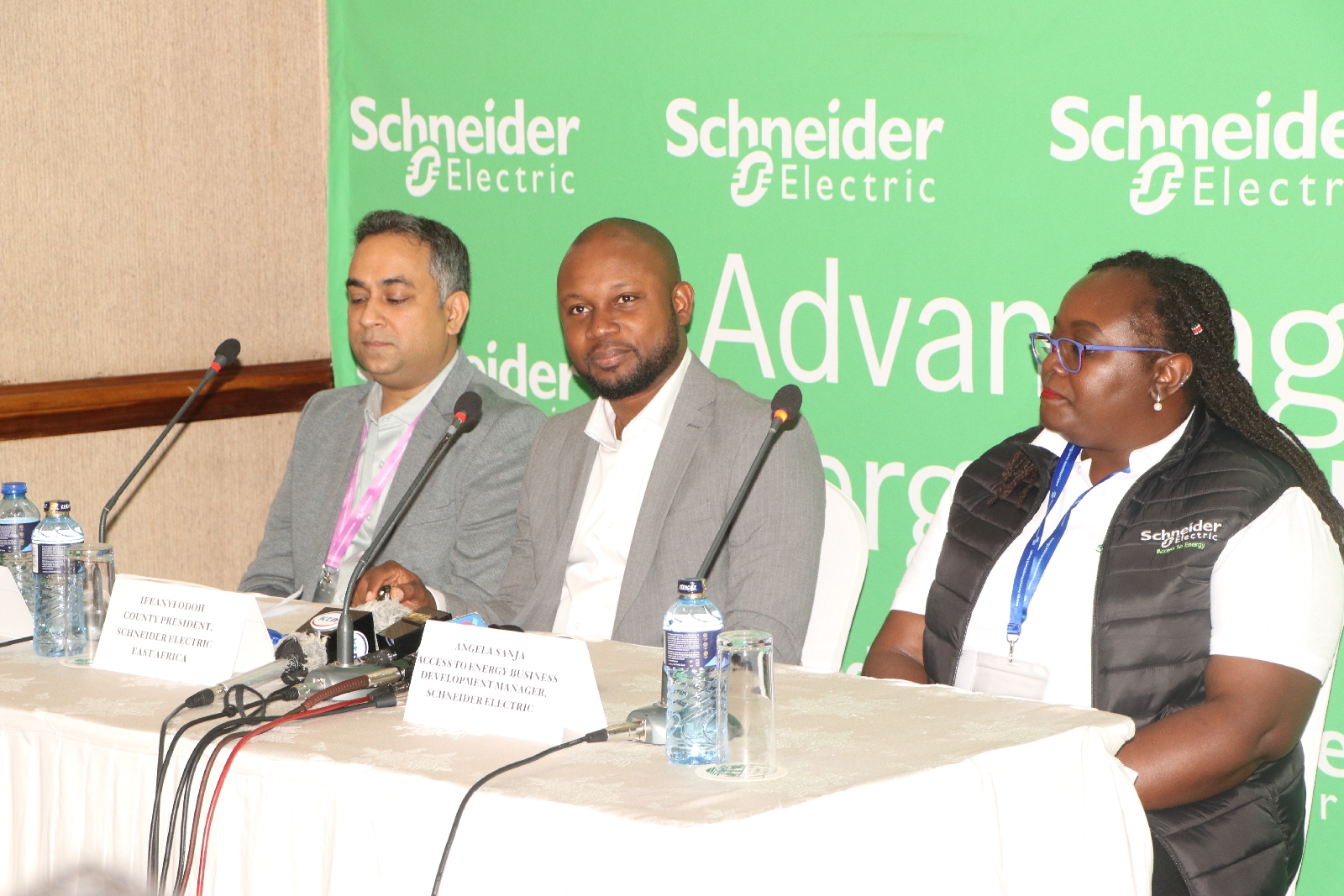
Schneider Electric has reaffirmed its commitment to expanding access to affordable, reliable, and sustainable electricity across Sub-Saharan Africa, as it targets reaching 100 million people globally with clean energy by 2030. The announcement was made during the opening of the Alliance for Rural Electrification Energy Access Investment Forum (EAIF) 2026 in Nairobi on Tuesday.
According to the International Energy Agency’s Tracking SDG 7: The Energy Progress Report 2025, more than 666 million people worldwide still lack electricity, with Sub-Saharan Africa accounting for the largest share. Without faster progress, universal energy access by 2030 remains unlikely. Distributed renewable energy solutions such as mini-grids and off-grid solar are increasingly seen as critical to bridging this gap.
Schneider Electric is calling for stronger global collaboration to promote “energy democracy” and address challenges of access, affordability, and reliability. The company emphasises a shift toward community-led, decentralized energy systems that can drive local economic growth while accelerating the clean energy transition.
At the four-day forum, Schneider Electric showcased innovations including its Climate Smart Village model, which integrates clean energy with community-focused development. The company says its approach combines electrification with vocational training, entrepreneurship support, and impact investment to ensure long-term sustainability.
“Access to energy must go hand in hand with strengthening human capacity and fostering local entrepreneurship,” said Ayush Gupta, Director of Global Strategy & Business for Anglophone Africa. Since 2009, the company has linked energy access to skills development and business support to promote self-reliance.
Schneider Electric reports that its initiatives have already impacted over 61.7 million people with access to clean electricity, supported 11,000 entrepreneurs across 60 countries, and empowered more than one million individuals.
The company also highlighted key solutions such as the Homaya Advanced Solar system, which delivers clean electricity to underserved communities, and the Altivar Solar ATV320, a solar-powered water pumping solution that supports irrigation and water access. These technologies aim to boost agricultural productivity, food security, and public health.
A case study from India demonstrates the potential impact of such models. In Jharkhand, solar-powered systems have enabled farming communities to increase productivity, double household incomes within four years, and reduce carbon emissions, while also expanding opportunities for women.
Schneider Electric says similar community-driven solutions could be adapted across Sub-Saharan Africa to strengthen resilience and unlock economic opportunity. “Access to clean and reliable electricity can transform communities,” said Ifeanyi Odoh, Country President for East Africa, noting that locally tailored solutions and strong partnerships will be key to achieving sustainable progress.

