By Editor
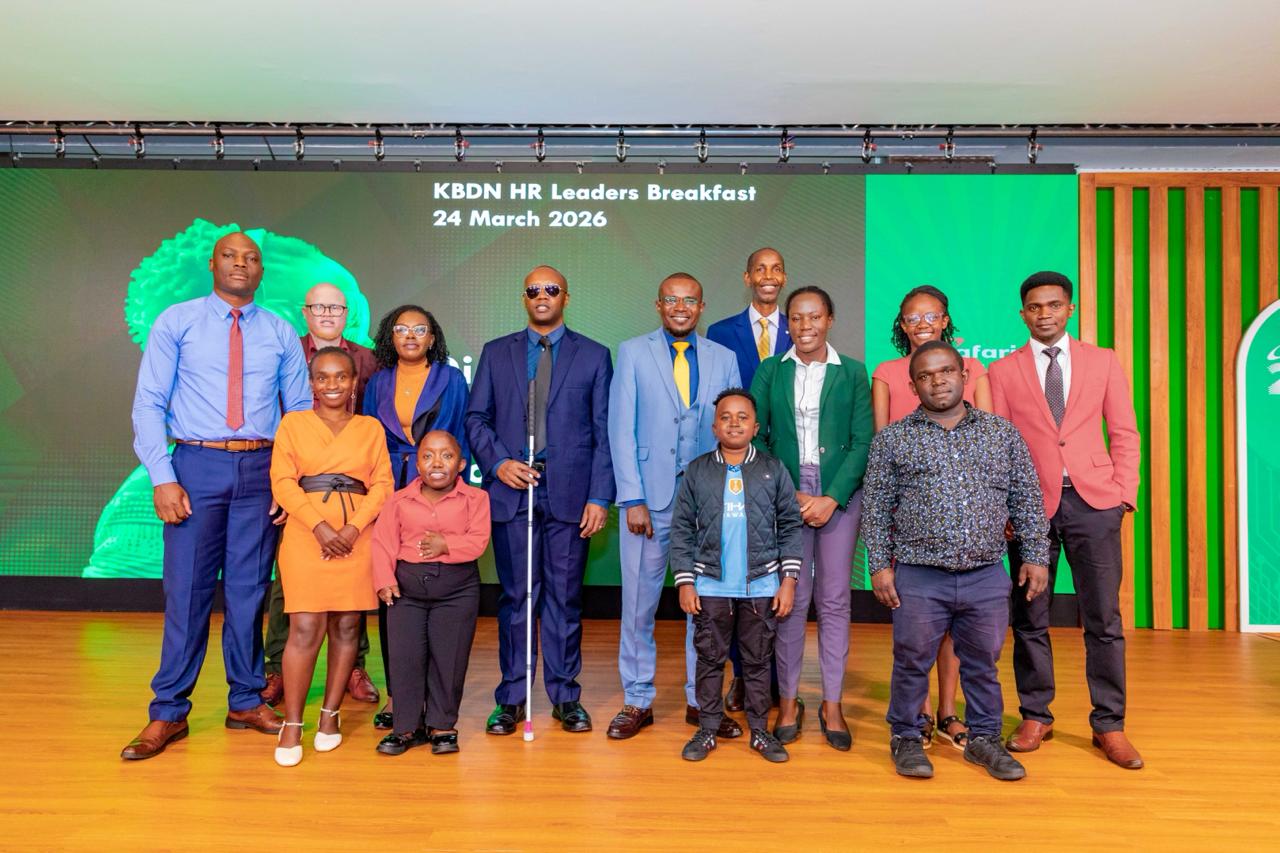
SAFARICOM PLC, in partnership with the Kenya Business and Disability Network (KBDN), brought together human resource leaders and industry stakeholders for a high-level breakfast forum aimed at advancing disability inclusion in the workplace.
The KBDN HR Leaders Breakfast, held under the theme “Advancing Disability Inclusion in the Workplace,” focused on practical strategies organizations can adopt to create inclusive work environments while aligning with Kenya’s evolving legal framework on disability rights.
The discussions come at a time when the Persons with Disabilities Act, 2025 has strengthened obligations on employers by adopting a rights based approach and requiring at least five percent representation of persons with disabilities in both public and private sector workplaces.
The law also broadens the definition of disability to include physical, sensory, mental, intellectual and developmental impairments, including conditions such as albinism, while introducing incentives such as tax deductions for workplace modifications and exemptions on assistive devices.
Despite these provisions, stakeholders noted that many organizations are yet to meet the threshold.
Speaking at the forum, Eric Ngondi Vice Chair Kenya Business Disability Network (KBDN) said inclusion remains a journey for many companies but urged HR leaders to take immediate steps.
“It does not matter where you are, start now. Take that one step to begin the journey,” he said.
Ngondi noted that Safaricom’s current four percent representation of employees with disabilities demonstrates progress, adding that such milestones begin with deliberate action, referencing the company’s first hire of a person with a disability in 2001.
He emphasized that inclusion is both a social and economic imperative, citing estimates that about 16 percent of the population lives with disabilities, yet nearly 80 percent are not engaged in meaningful economic opportunities.
“HR leaders are the gatekeepers. They determine whether persons with disabilities are included or left out,” he said, adding that KBDN provides a platform for organizations to collaborate, learn and access tools on accessibility, disability etiquette and reasonable accommodation.
Florence Nyokabi, Safaricom’s Group Chief People Officer, highlighted the company’s inclusion journey, noting that while efforts began in 2001, a structured approach was adopted in 2016 with the establishment of a diversity and inclusion function.
She described disability inclusion as a pressing priority in Kenya, particularly as organizations work toward meeting the legal five percent target.
“Inclusive workplaces do not just happen. They require deliberate effort, and they are good for business,” she said.
Nyokabi added that inclusive hiring enables companies to tap into a broader and often underutilized talent pool, strengthening innovation and performance.
She called on organizations to partner with networks such as KBDN to accelerate their inclusion efforts.
“If your organization is not yet part of KBDN, join the growing community and move from intent to action,” she said.
The forum featured keynote addresses, interactive sessions and stakeholder engagements aimed at fostering dialogue and accelerating implementation of inclusive workplace practices.
Organizers said the initiative is part of a broader effort to encourage private sector leadership in advancing opportunities for persons with disabilities and ensuring compliance with the Persons with Disabilities Act, 2025.
The meeting called for stronger accountability, urging organizations to embed inclusion into core business strategies and take concrete steps toward meeting the five percent employment requirement.