By James Mutua
Residents in Wajir County are experiencing improved sanitation and health outcomes following the rollout of EcoSan toilets targeting vulnerable households under a major water and sanitation initiative.
The project, implemented by Wajir Water & Sewerage Company (WAJWASCO) with support from development partners, has seen the construction of 35 EcoSan toilet units distributed across Wajir town. The facilities were allocated to the most vulnerable members of the community, including female-headed households, the elderly, chronically ill individuals, and child-headed families.
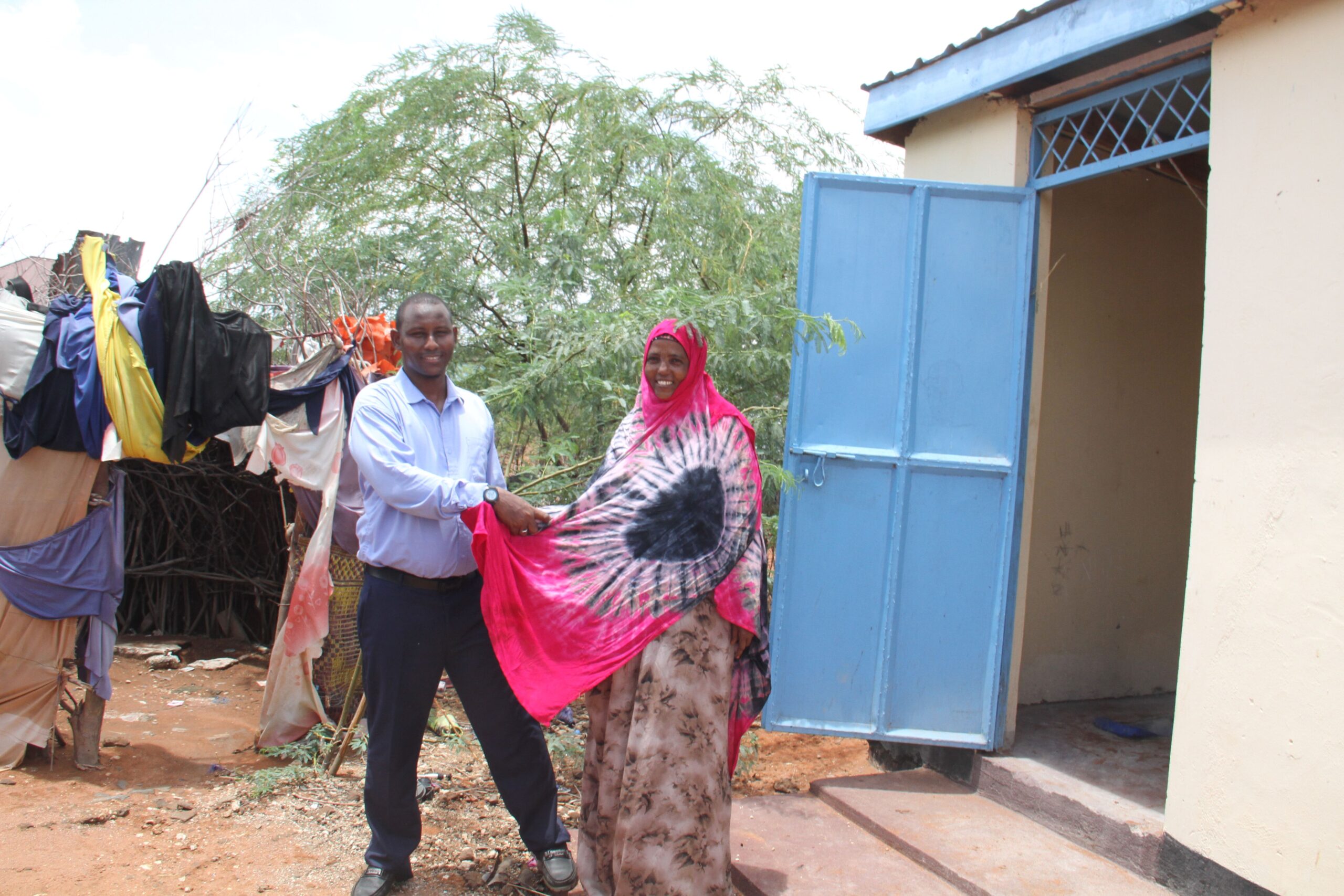
Abdi Mohamed Adan, a social safeguard expert working with WAJWASCO, said the selection of beneficiaries was guided by strict vulnerability criteria to ensure the most in-need households benefitted.
“This family is one of the beneficiaries. At the time of documentation, the household had about nine members. They received one EcoSan unit, which has significantly improved their sanitation,” he said.
He explained that the EcoSan toilets are uniquely designed to separate liquid and solid waste, making them suitable for areas facing water scarcity. The system allows fecal matter to decompose in a controlled chamber, with soda ash used to manage odor and facilitate the conversion of waste into manure.

The EcoSan units form part of a broader sanitation project that also included the construction of ablution blocks in schools across the county.
Siyat Adow, the Deputy Project Coordinator for the Water and Sanitation Development Project in Wajir County, said the initiative falls under a larger programme aimed at scaling up sanitation infrastructure.
“Under this project, we constructed ablution blocks for both secondary and primary schools, alongside the 35 EcoSan toilets for vulnerable households. All facilities are now complete, operational, and have been handed over to the beneficiaries,” he said.
Adow noted that the project was designed to address long-standing sanitation challenges in the region, including reliance on unsafe and unhygienic methods such as open defecation and the use of “packet toilets.”
“In densely populated institutions like boarding schools, traditional systems were not sustainable. This project aims to phase out those methods and provide safer, long-term solutions,” he added.
County Public Health Officer Ibrahim Mohammed emphasized the health benefits of the intervention, noting that poor sanitation had previously exposed communities to serious diseases.

“Open defecation leads to environmental contamination. During rains, waste is washed into water sources, increasing cases of diarrheal diseases such as cholera and dysentery,” he said.
He added that EcoSan toilets, which do not require water for flushing, are particularly effective in arid areas like Wajir, where water is scarce but sunlight supports natural waste decomposition.
Beneficiaries have welcomed the initiative, citing improved hygiene and restored dignity. Araba Mohamed, a farmer and head of her household in Rahma Village, Wajir East Constituency, said the facility has significantly transformed her family’s living conditions.
“Before, we used to go to the bush. Now we have a proper toilet, and our health has improved,” she said, adding that her household of ten members now has access to a clean and safe sanitation facility.
However, she pointed out a minor challenge, noting that rainwater occasionally drains into the waste chamber due to the roofing design, an issue she hopes will be addressed.
EcoSan toilets are increasingly being adopted in Kenya’s arid and semi-arid regions as a sustainable sanitation solution. The waterless system not only conserves scarce resources but also converts waste into useful compost, supporting agricultural activities.