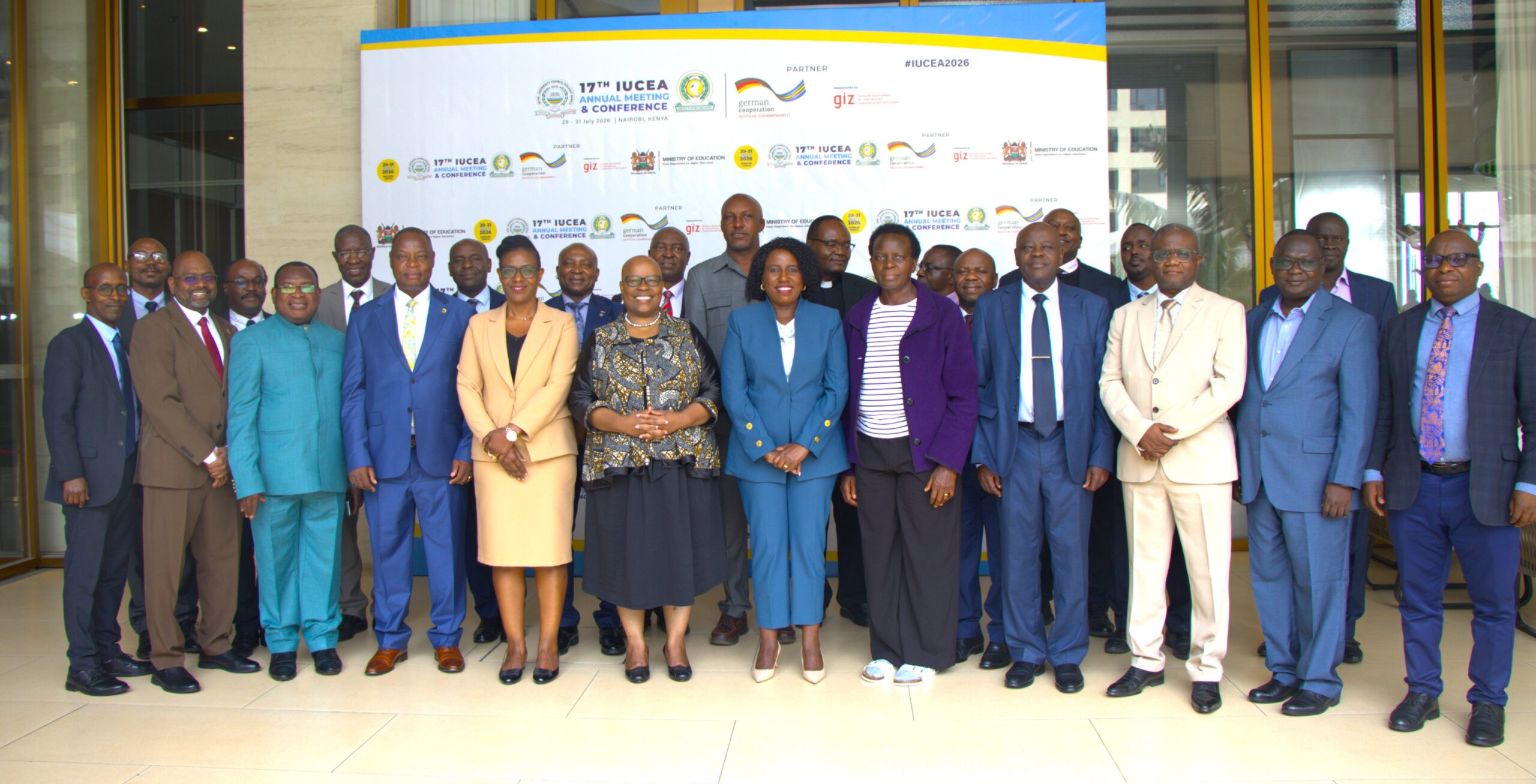
East African countries are moving to harmonise their higher education systems in a bid to allow students and graduates to study, work and have their academic qualifications recognised across the region without additional certification.
The renewed push was announced on Wednesday during the opening of the 17th Inter-University Council for East Africa (IUCEA) Annual Meeting and Conference in Nairobi, where policymakers, university leaders and development partners called for stronger collaboration to accelerate regional integration through higher education.
Speaking at the conference, Principal Secretary for Higher Education Dr Beatrice Inyangala said the region is making significant progress towards establishing a Common Higher Education Area that will enable students to move freely across East African Community (EAC) partner states for education and employment.
“Education is a key driver of regional integration because it creates opportunities for our students across the region,” she said.
Dr Inyangala said the meeting, which brought together vice-chancellors, principal secretaries and senior education officials from across East Africa, reflects the EAC’s commitment to strengthening regional integration through education.
On Kenya’s university funding reforms, she said the government remains committed to ensuring students receive financial support before reporting to university, noting that this has been the case over the past two years.
She said while the current funding model focuses on equity by providing greater support to students from disadvantaged backgrounds, the proposed reforms seek to strengthen equality by ensuring every learner receives the support they need.
“The proposals will be debated in Parliament, and the finer details will become clear once they are approved and enacted into law,” she said.
East African Community Deputy Secretary General Annette Semuwemba said the conference also marked the launch of IUCEA’s five-year strategic plan, aligned with the EAC development agenda, to strengthen higher education across the region.
She urged students and lecturers to take advantage of scholarships, fellowships and staff exchange programmes offered through IUCEA in partnership with countries and organisations, including Germany, South Korea, China and the United Nations.
“We encourage students and lecturers to visit the IUCEA website and apply for these opportunities,” she said.
Acting IUCEA Executive Secretary Prof Idris Rai said the council, an EAC institution established in 1970, is spearheading efforts to harmonise higher education systems across the bloc’s eight partner states to facilitate the free movement of skilled labour.
He said IUCEA has developed regional quality assurance standards, curriculum benchmarks and qualifications frameworks to ensure degrees awarded in one member state are recognised across the region.
“We are building a system where professionals can move freely across East Africa without having to undergo additional qualification recognition processes,” Prof Rai said.
He added that IUCEA also promotes academic mobility, collaborative research, innovation, leadership development, the use of artificial intelligence in teaching, research management and strategic partnerships among universities.
According to Prof Rai, the council also advises partner states on higher education policies and develops regional frameworks that guide the harmonisation of education systems across the East African Community.
The three-day conference, convened by IUCEA in partnership with Kenya’s Ministry of Education under the theme, Powering the Future of Higher Education in East Africa through Strategic Partnerships and Collaborations, has brought together more than 400 participants, including policymakers, university leaders, higher education regulators, researchers, students, industry representatives and development partners from East Africa and beyond.