The Government is seeking increased financing and technical partnerships to accelerate the restoration of Nairobi’s rivers amid growing concerns over pollution, flooding, poor sanitation and encroachment on riparian land.
Lands, Public Works, Housing and Urban Development Cabinet Secretary Alice Wahome said the scale of the Nairobi Rivers Regeneration Programme required support from development partners, financial institutions, private investors and other stakeholders.
Speaking at a high-level development partners and diplomatic roundtable in Nairobi on Tuesday, Wahome said the Government was seeking grants, concessional financing, climate finance, blended finance, impact investment, technology and technical expertise to support the programme.
“The scale of the challenge requires financing and expertise beyond what Government can provide alone,” Wahome said.
She said the Nairobi Rivers Regeneration Programme had adopted an integrated approach involving the national and county governments, public institutions, communities, development partners, academia and the private sector.
Wahome said the first catalytic corridor was already under implementation, with lessons from the project expected to guide the expansion of regeneration efforts across the Nairobi Metropolitan Region.
The Government is also linking river restoration with broader urban renewal and livelihood programmes.
Wahome said Phase One of the Gikomba Market redevelopment was 80 per cent complete and was expected to be handed over next month.
She said improving urban infrastructure and livelihoods was critical to the success of the river regeneration programme.
The Government is also preparing for increased climate risks, including possible El Niño related rains, which could worsen flooding in Nairobi.
Wahome called for the clearing and protection of drainage channels, maintenance of river corridors and stronger flood-risk management measures.
Environment, Climate Change and Forestry Cabinet Secretary Dr. Deborah Barasa said the 27-kilometre Catalytic Corridor, which forms Phase One of the Nairobi River restoration programme, was between 60 and 70 per cent complete.
Barasa said the project had recorded progress in riverbank restoration, sanitation infrastructure, flood-risk reduction and the development of public green spaces.
She, however, cautioned that restoring individual sections of the river would not be enough to revive the wider ecosystem.
Barasa said regeneration must cover the entire river system, from upstream forests and catchment areas through urban centres to downstream communities.
She said degraded river basins posed a threat to water security, public health, biodiversity and climate resilience.
The Environment Ministry, through agencies including the National Environment Management Authority and Kenya Forest Service, will support the programme through environmental regulation, waste management and ecosystem restoration.
Dr. Barasa said the Environmental Management and Coordination Act provides the legal framework for environmental impact assessments, water quality regulation, waste management and protection of riparian areas.
She also cited the National Landscape and Ecosystem Restoration Strategy, which targets the restoration of more than 10.6 million hectares of degraded land by 2032.
Barasa said protecting forests and catchment areas was essential to securing the headwaters of the Nairobi River basin and sustaining water resources.
The Nairobi Rivers Commission, whose mandate covers Nairobi, Kiambu, Machakos, Kajiado and Makueni counties, is coordinating the wider regeneration programme.
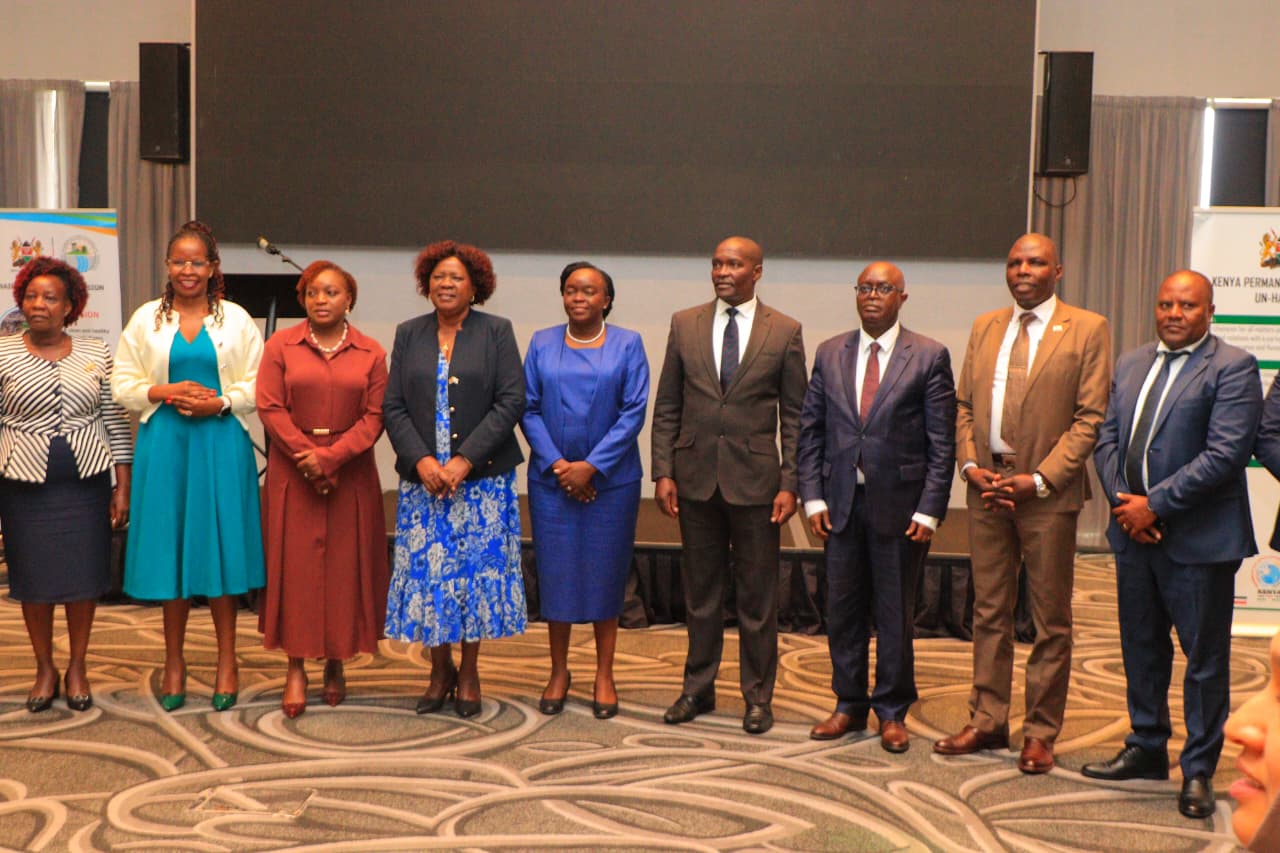
The roundtable, convened by the Nairobi Rivers Commission in partnership with UN-Habitat and the State Department for Housing and Urban Development, brought together Government officials, development partners, diplomatic missions, financial institutions, the private sector and community stakeholders.
The meeting sought to showcase the Nairobi Rivers Regeneration Masterplan, review progress and identify financing and technical partnerships for the next phase of the programme.
Wahome said the Government wanted the discussions to result in concrete investments and bankable projects rather than remain at the level of dialogue.
She said the restoration of Nairobi’s rivers should be viewed as an investment in public health, climate resilience, livelihoods and the future of the capital city.
The Government also hopes to use the programme to demonstrate how African cities can combine river restoration, sanitation, urban renewal, climate resilience and community participation as Kenya prepares for COP31.