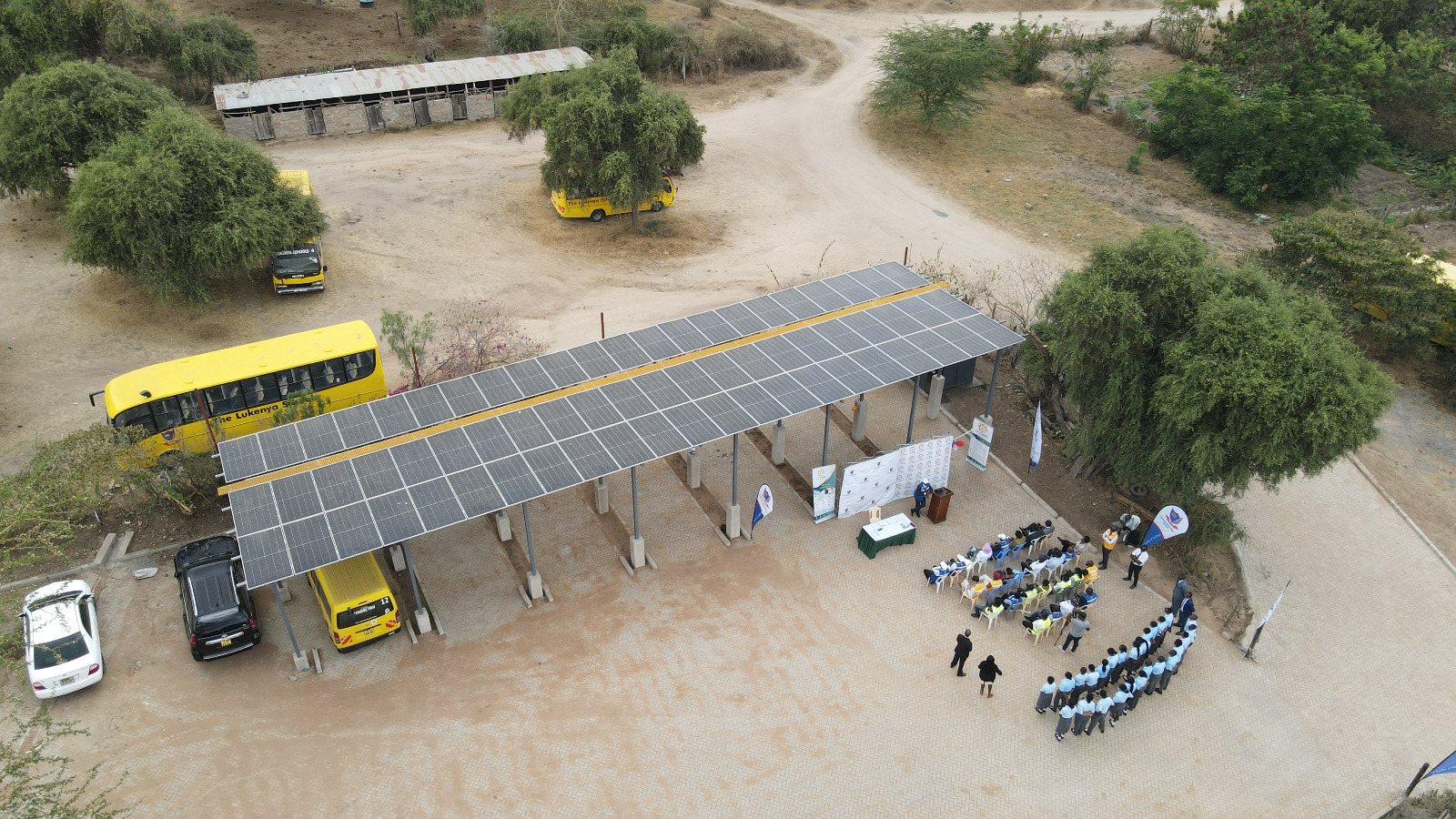
Lukenya Schools in Athi River has commissioned a solar power system aimed at reducing its reliance on the national electricity grid, cutting energy costs and ensuring a reliable supply of electricity for learning and boarding operations.
The system, installed by Safer Power Limited, comprises a 40.92 kWp solar photovoltaic (PV) system, a 40 kW AC hybrid inverter and an 80 kWh energy storage system (ESS).
It is expected to offset a significant portion of the school’s daytime electricity consumption while providing battery backup during power outages.
Speaking during the commissioning, Lukenya Schools Director Mutheu Kasanga said the institution hoped to eventually move completely off the national grid.
“Today we have commissioned a solar plant and hope to move completely out of the grid,” Kasanga said.
She said unreliable electricity supply had posed significant challenges to the school, particularly because of its rural location, forcing it to invest in backup systems to keep operations running during outages.
“As a boarding school, we have day and night consumption of power and we wanted a reliable source of energy that is in our control,” she said.
Kasanga cited vandalism of power lines and transformers among the causes of interruptions, adding that the disruptions affected essential school operations, including food storage and refrigeration.
“Our institution has so many processes that rely on electricity, from cooling machines to storage machines for food,” she said.
She said the solar installation would help the school manage its expenditure more predictably while reducing the risk of unexpected costs associated with power interruptions.
The project comes as the institution prepares for the rainy season and the examination period, when a reliable electricity supply is particularly important.
“We are now assured that we will have power throughout, and we also know that food will not be consumed outside programme when we have extended outages. Our freezers will be running,” Kasanga said.
She recalled that prolonged outages had sometimes forced the school to serve students food earlier than planned to prevent it from spoiling.
“When you had extended outages, we would go to the freezers and give students [food] that was meant for another time to avoid it from going bad,” she said.
Beyond improving reliability, the solar system is expected to reduce operating costs at a time when the cost of living and running institutions remains high.
“In Kenya today, the cost of living has gone up, and for us to have one thing that is stable and reliable is a saving in itself,” Kasanga said.
She added that unpredictable electricity bills had made budgeting difficult, but savings from the solar installation would be channelled back into the school.
“We will be saving a lot of money, which goes back to reinvestment in the school,” she said.
Kasanga said learners would ultimately benefit from the investment through improvements to their learning environment.
“Children are the greatest beneficiaries. We will improve their learning spaces. For us, the investment will pay off,” she said.
She added that the system came with a 15-year battery guarantee.
Safer Power Group chief executive officer Dalmus Mbai said the project demonstrated how institutions could use renewable energy to address persistent power challenges across Africa.
“When we are commissioning some of these projects, I focus on excellence of Africa. Potential of Africa, what does it mean to learners?” Mbai said.
He said unreliable and expensive electricity affected critical sectors, including healthcare, manufacturing and food storage.
“If it is healthcare, hospitals are not able to store medicine. In manufacturing, factories do not have enough power. Power is too expensive,” he said.
Mbai noted that Africa had abundant sunshine that could be harnessed to meet some of its energy needs.
“Africa has the highest number of sun hours from January to December. Why are we not able to tap into that potential? It has to start somewhere,” he said.
He challenged Lukenya Schools students to view the project as an example of the opportunities available in renewable energy and encouraged them to acquire the knowledge needed to help develop the continent’s energy sector.
Lukenya Schools founder Kasanga Mulwea said the commissioning marked a major milestone for the institution, recalling the difficulties and high costs involved in securing electricity when the school was established more than three decades ago.
“Thirty-four years ago, the troubles we had, I had to pay commercial rates to get power from the road to here,” she said.
Mulwea said the cost of extending electricity infrastructure to the school had been substantially higher than the investment in the new solar project.
“I paid many millions more than what I have paid today for Safer Power,” she said.
The installation of solar panels, a hybrid inverter and battery storage is expected to give the school greater control over its energy supply, reduce exposure to grid interruptions and free up resources for investment in education.