Religious leaders and civil society organisations have questioned the cost and justification of judges’ Sh10 million car grants, urging the Supreme Court to balance judicial independence with accountability in the use of public funds.
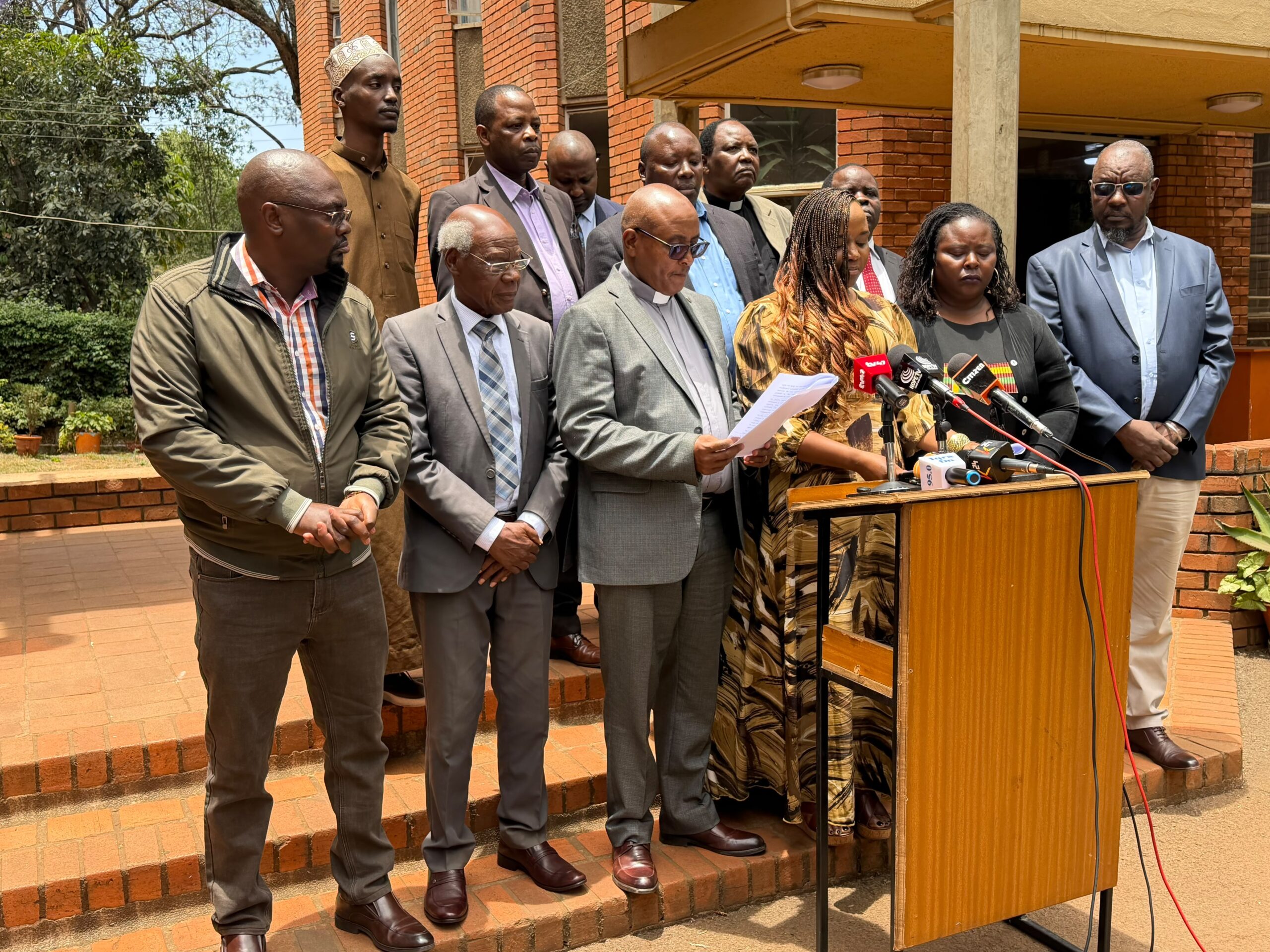
During a joint press briefing in Nairobi on Tuesday, the organisations warned against what they termed an “unholy union” of Parliament, the Executive and the Judiciary, accusing public institutions of protecting their privileges at the expense of taxpayers.
The groups, which include the Presbyterian Church of East Africa, Seventh-day Adventist Church, Muslim Professionals League Africa, the Institute for Social Accountability (TISA), Transparency International Kenya and Inuka Kenya Ni Sisi among others, said the dispute raised wider concerns about equitable remuneration and the management of public resources.
They called on the Supreme Court to uphold the Constitution and protect the public interest as it prepares to determine the dispute over the taxable vehicle benefit.
“At a time when citizens are struggling with the cost of living, unemployment, school fees, healthcare costs and an unsustainable tax burden, the question is simple: Who is protecting the Kenyan taxpayer?” the statement posed.
The organisations said judicial independence was essential but should not shield public expenditure from constitutional scrutiny.
They cited Articles 160(4) and 230 of the Constitution, which address the protection of judges’ remuneration and benefits and the mandate of the Salaries and Remuneration Commission (SRC) to set and review the remuneration of State officers.
The groups said the Supreme Court should clarify how the two provisions should be interpreted alongside the principles of accountability, equity and fiscal sustainability.
The dispute follows a 2024 High Court ruling in Gachuiri v Attorney General and another; Kenya Judges Welfare Association and another, which held that the taxable car allowance was a protected benefit under Article 160(4).
The Court of Appeal subsequently considered the matter in Salaries and Remuneration Commission v Gachuiri and three others in 2026.
The organisations said the Supreme Court should determine the legal status of the disputed benefit and clarify the extent to which judges’ remuneration is protected from variation.
They estimated that a Sh10 million vehicle grant for each judicial position covered by their analysis would cost approximately Sh2.3 billion before tax, or Sh1.61 billion after tax, every four years.
However, they clarified that the figures were estimates based on available information and assumptions, rather than confirmed expenditure or a determination of the grant’s legality.
The groups also questioned the justification for the benefit, noting that judges have access to official chauffeur-driven transport while the disputed grant is intended for private vehicle use.
They argued that the proposed expenditure should be weighed against competing national priorities, including healthcare, education, water supply and agricultural support.
“The issue is not whether judges deserve fair remuneration. They do. The issue is whether a private vehicle benefit of this magnitude is legally justified, equitable and defensible to citizens who finance the State while struggling to meet their basic needs,” they said.
The organisations also called for greater accountability in public retirement benefits, including those of judges, citing Article 201 of the Constitution, which requires transparency and accountability in public finance and the prudent use of public resources.
They urged the Judiciary and other State institutions to ensure that public benefits have a lawful basis and remain subject to appropriate scrutiny.
The groups further called on religious institutions, civil society organisations, professional associations, universities, workers’ organisations and the media to sustain peaceful public engagement on public spending.
They maintained that their position was not intended to weaken the Judiciary but to ensure that judicial independence was matched by integrity and accountability.
“The Constitution cannot become a marketplace of institutional exceptions, where every powerful institution demands a special rule for itself,” the statement said.
The organisations insisted that no public institution should place itself above the Constitution, arguing that public resources must be used in the interests of Kenyans.