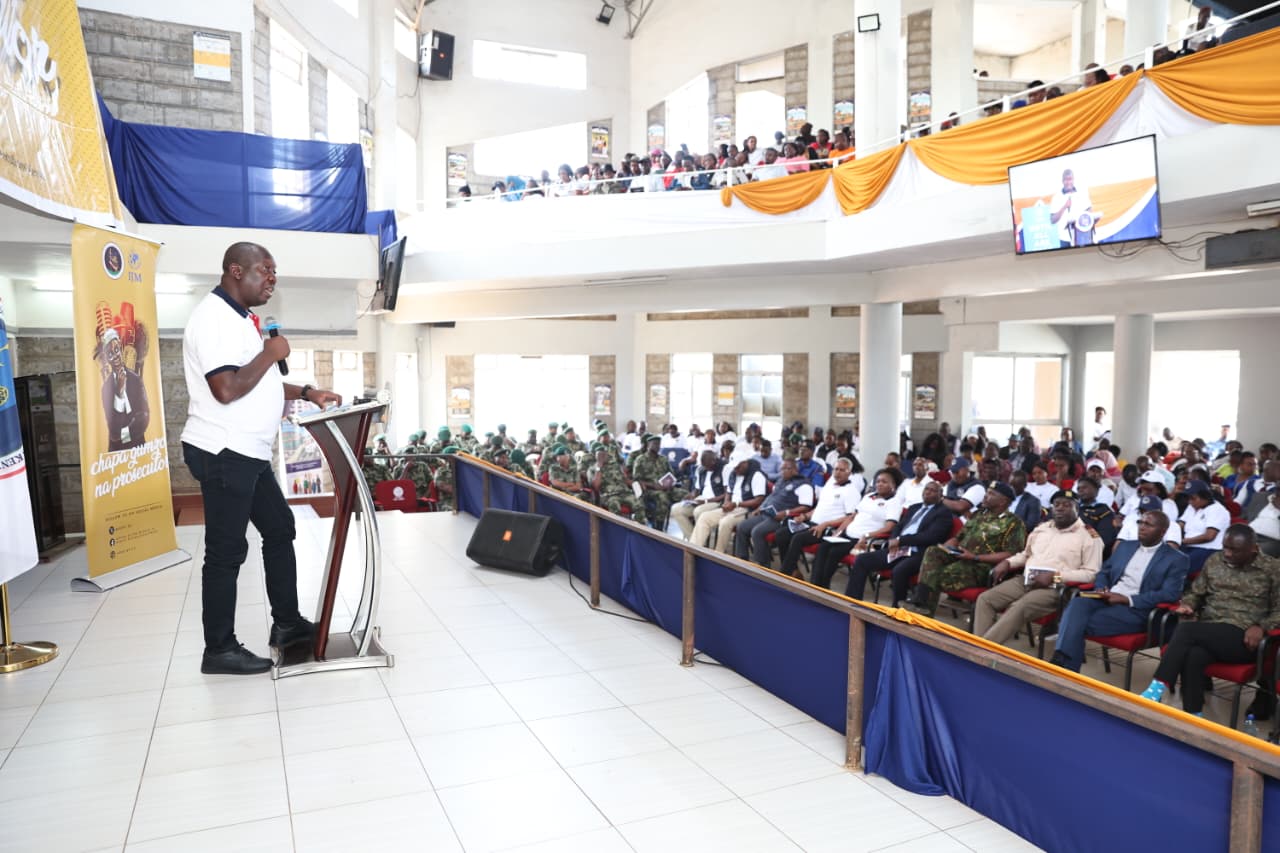
Director of Public Prosecutions Renson Ingonga has called for closer engagement between prosecutors and communities to strengthen public confidence in the criminal justice system and improve access to justice.
Ingonga spoke on Friday during a community dialogue at the African Inland Church in Riruta, Nairobi, where residents and justice-sector stakeholders discussed the administration of justice and the role of prosecution.
He said the Office of the Director of Public Prosecutions (ODPP) needed to engage the public beyond courtrooms and offices to address concerns and misconceptions about how criminal cases are handled.
“Today, we come to listen, to learn, and to strengthen the relationship between the prosecutors and the communities we serve,” Ingonga said.
He noted that some members of the public did not understand why certain cases proceeded to court while others were dropped. Victims, he added, were sometimes unaware of their rights, while fear discouraged witnesses from coming forward. In some cases, families waited years for criminal proceedings to conclude.
Ingonga said community dialogues provided an opportunity for justice institutions to listen to citizens, explain prosecution procedures and address concerns affecting public confidence in the system.
He cited previous engagements in Nairobi and Kakamega, saying direct interaction with communities had reinforced the importance of understanding the challenges faced by those seeking justice.
The DPP also outlined the constitutional mandate of his office, saying the ODPP was responsible for decisions on criminal prosecutions, including whether to institute or discontinue proceedings, in accordance with the law.
He said prosecution was not merely about securing convictions but ensuring fairness, protecting victims’ interests and respecting the rights of accused persons.
“A prosecutor is a minister of justice,” Ingonga said, adding that prosecutorial decisions must be guided by evidence, constitutional safeguards and the public interest.
He said the justice system also needed to adapt to emerging forms of crime, including financial offences, digital fraud, organised criminal networks and the exploitation of vulnerable people.
Ingonga warns against financial crime
Ingonga raised concern over money laundering and the movement of criminal proceeds into the legitimate economy, warning that the practices could undermine businesses, disrupt economic activity and erode public confidence in institutions.
He said criminal networks were increasingly exploiting digital payment systems, complex corporate structures and virtual assets to conceal illicit funds.
Although Kenya had strengthened its legal framework through laws addressing proceeds of crime, money laundering and virtual asset service providers, Ingonga said legislation alone could not eliminate the offences.
He emphasised the need for effective enforcement backed by reliable intelligence, thorough investigations, credible evidence and cooperation among agencies involved in financial crime investigations and asset recovery.
The DPP also cautioned young people against allowing others to use their bank accounts, mobile money accounts or digital wallets to receive money from unknown sources.
He warned that such arrangements could expose account holders to involvement in financial crime, even when they did not fully understand the origin of the funds.
Ingonga urged Kenyans to exercise caution when handling financial transactions and avoid lending their accounts or digital wallets to individuals seeking to channel unexplained funds.
The community dialogue provided residents with an opportunity to raise concerns, seek clarification on prosecution procedures and discuss barriers to accessing justice.
Ingonga said sustained engagement between prosecution authorities and the public was essential to strengthening accountability, protecting vulnerable people and building confidence in the administration of justice.