Mission for Essential Drugs and Supplies (MEDS) on Tuesday launched MEDS Devane Company Limited (MDCL), a new commercial company targeting Kenya’s private healthcare sector.
Speaking during the launch, MDCL Board Chairman Rt Rev Benard Owuor said the company had been established to respond to the changing needs of private healthcare providers.
“As Kenya’s healthcare landscape continues to evolve, the private healthcare sector, pharmacies and other healthcare institutions require a commercially responsive partner that understands the urgency, complexity and responsibility of healthcare delivery,” he said.
He said MDCL would operate as a distinct, professionally governed commercial entity while retaining MEDS’ commitment to quality and affordability.
“Our ambition is not only to grow a successful company, but to grow a trusted company. We believe that commercial success and positive health impact can, and should, go together,” he said.
MEDS Chief Executive Officer Dr Wycliffe Nandama, who is also MDCL’s acting general manager, said the company was designed around the needs of private healthcare providers.
“Today’s healthcare customers need more than products on a shelf. They need quality assurance, dependable availability, timely delivery, professional support and a partner who understands that every product supplied can have a direct impact on patient care,” he said.
Nandama said MDCL would focus on quality products, reliable service and partnerships with healthcare providers.
The company is named after Rev Sr Joan Devane, an American medical missionary and pharmacist who founded MEDS in 1986 in a small warehouse in Ruaraka, Nairobi, with about 30 products.
Owuor said her legacy continued to shape the organisation’s approach to healthcare.
“Her legacy reminds us that healthcare is not simply about products and transactions; it is about service, trust, professionalism and the wellbeing of communities,” he said.
MEDS now stocks more than 2,000 health products and technologies and serves healthcare facilities in all 47 counties. It has more than 10,000 clients.
Its World Health Organization-prequalified Quality Control Laboratory has supported quality assurance in more than 46 countries and analysed about 2,350 samples in 2025.
MEDS’ health systems strengthening programmes reach more than 20,000 healthcare workers annually. The organisation became a self-sustaining social enterprise in 2005 after ending its reliance on donor funding.
Health Cabinet Secretary Aden Duale commended MEDS for its contribution to quality assurance, including its collaboration with the Pharmacy and Poisons Board on laboratory testing and post-market surveillance to identify substandard and falsified health products.
He cited MEDS’ WHO prequalification since 2009, ISO 9001:2015 certification and ISO/IEC 17025 accreditation as evidence of its commitment to quality standards.
“I want in particular to recognise MEDS for a contribution that may be less visible than the delivery of supplies, but is just as important: its commitment to quality assurance,” Duale said.
The CS said faith-based health facilities remained important partners in the government’s universal health coverage agenda.
He said 876 faith-based health facilities had active contracts with the Social Health Authority, with KSh29.8 billion paid against claims worth KSh41.1 billion.
“Universal health coverage is realised at the point of care. It depends on a facility being open, a health worker being available, a patient being able to afford treatment, and quality-assured medicine being there when it is needed,” he said.
Duale urged MEDS to maintain its founding values while investing in skills, supply systems and quality testing capacity as it enters its fifth decade.
“Kenya needs strong supply systems, skilled health workers and dependable, independent quality testing capacity. MEDS has an important role in each of these areas,” he said.
Nandama said a strong healthcare system depended on an effective supply chain.
“The strength of healthcare depends not only on the medicine itself, but also on the strength of the supply chain that carries it from innovation to the patient,” he said.
The anniversary celebrations, held under the theme “Celebrating 40 Years of Life Saving Health Solutions – Legacy. Impact. Posterity,” brought together representatives of MEDS’ founding institutions, the Kenya Conference of Catholic Bishops and the Christian Health Association of Kenya, as well as government officials, partners, suppliers and staff.
The company was launched by Health Cabinet Secretary Aden Duale during MEDS’ 40th anniversary celebrations in Nairobi, where he also unveiled the new MEDS-Strathmore Supply Chain Academy.
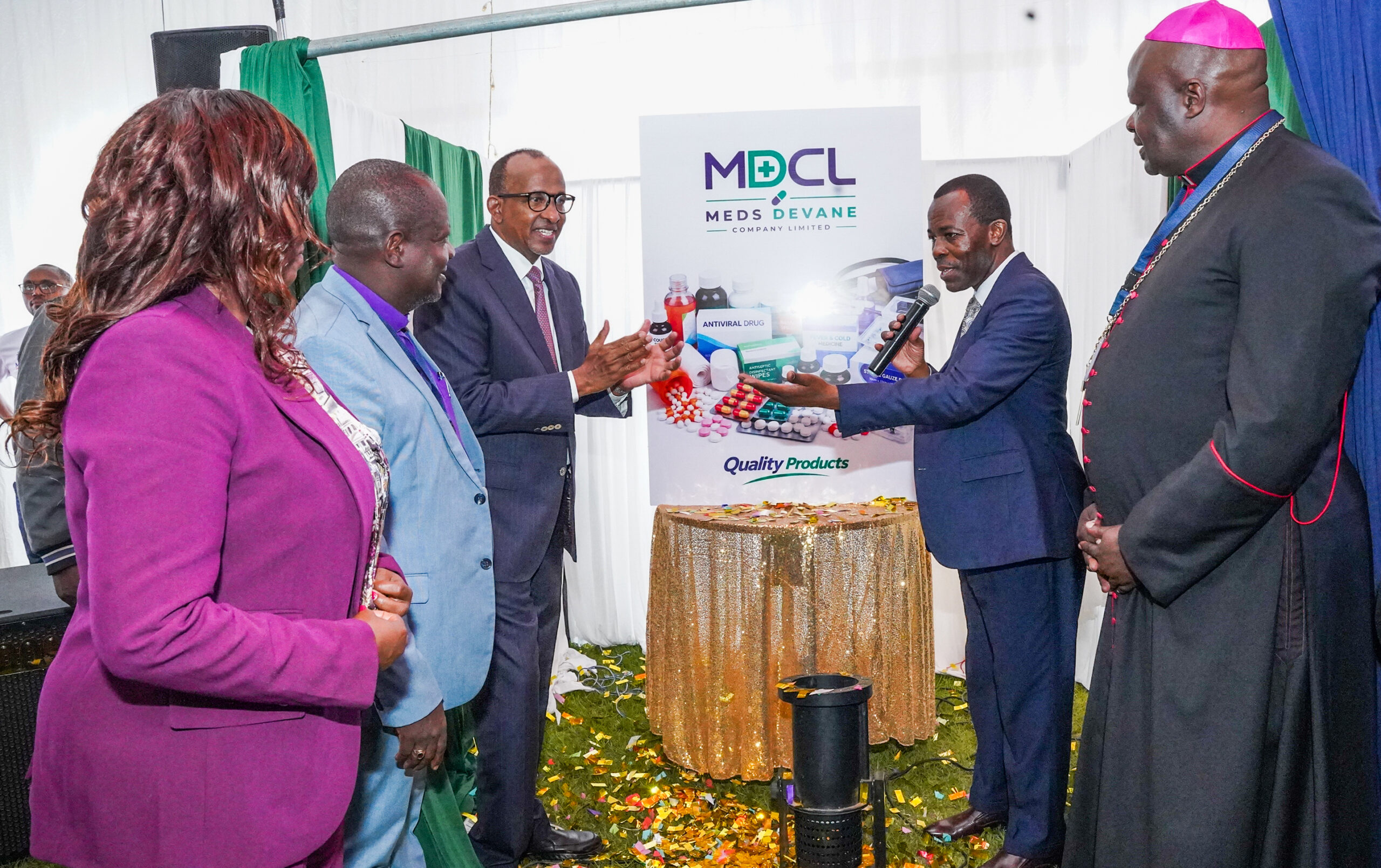
The launch included the unveiling of MDCL’s logo and corporate colours and a preview of its website.
MDCL will serve private hospitals, clinics, retail pharmacies, laboratories, corporates and distributors, with its immediate focus on Kenya and a longer-term ambition to expand into selected East African markets.
MDCL will open for business on November 1, 2026, offering medicines, medical consumables, diagnostics, laboratory products, infection prevention and control solutions, orthopaedic implants, equipment and other specialised health products.