Scientists from across East Africa have been challenged to transform their research into commercially viable businesses capable of creating jobs, strengthening food security and driving the region’s bioeconomy.
The call was made during the pitch day of the second Biobased Innovation and Entrepreneurship Bootcamp (BIEB) at the International Centre of Insect Physiology and Ecology (icipe) in Nairobi.
Speaking at the event, BioInnovate Africa Manager Dr Julius Ecuru said scientists must play a central role in addressing societal challenges by translating research into market-ready innovations.
“We believe scientists are crucial and very central to our socioeconomic transformation,” Dr Ecuru said. “We also believe the private sector is the growth engine of our economies, while innovation is the fuel that keeps that engine moving.”
He described entrepreneurial scientists as the drivers of innovation, noting that even the most promising ideas require strong support systems, including partnerships, mentorship, investment pathways and enabling policies.
According to Dr Ecuru, BioInnovate Africa is helping innovators refine technologies, de-risk innovations, attract investment and access markets to accelerate commercialisation.
Drawing inspiration from Tanzania’s founding President Mwalimu Julius Nyerere, he said scientific knowledge should not remain confined to laboratories but should be harnessed to improve people’s lives.
“This is exactly what we are doing through BioInnovate Africa. We are taking scientific ideas and helping make them investment-ready. We are de-risking technologies, connecting innovators to markets and opening doors to sustainable businesses of tomorrow,” he said.
Dr Ecuru said investing in science-led enterprises is an investment in East Africa’s future and called for stronger collaboration among researchers, investors, industry and development partners to accelerate innovation-led growth.
Professor Ruth Oniang’o, a member of the BioInnovate Africa Programme Advisory Committee, said Africa’s growing bioeconomy presents immense opportunities for young innovators to build businesses around natural products, including food, medicines, cosmetics and biofertilisers.
She urged governments to streamline regulatory processes, saying lengthy approval procedures continue to delay the commercialisation of promising innovations.
“Many innovations that should take two or three years to reach the market end up taking seven or eight years because of regulatory bottlenecks,” she said.
Prof Oniang’o encouraged young scientists to embrace entrepreneurship instead of waiting for employment, arguing that Africa’s rich biodiversity and natural resources provide a strong foundation for globally competitive bio-based industries.
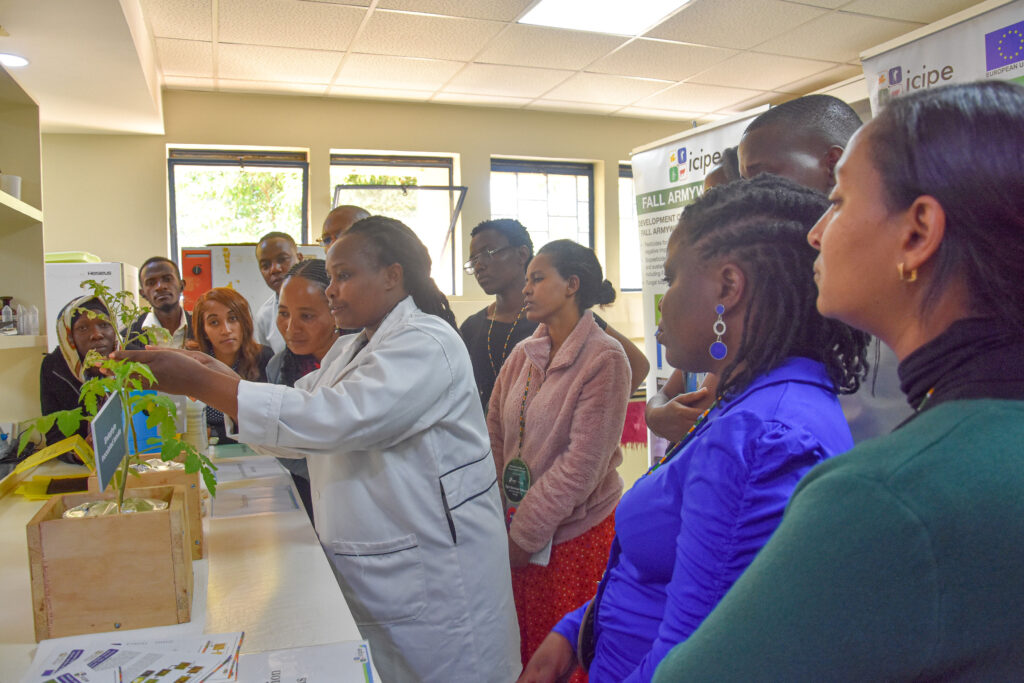
Among the innovations showcased was a rhizobia-based soybean biofertiliser developed by Tanzanian researcher Dr Monica Daniel Nakei of Sokoine University of Agriculture.
The biofertiliser is designed for tropical soils to improve soybean yields by increasing nitrogen availability, enhancing soil health and reducing dependence on chemical fertilisers.
Dr Nakei said the organic product has the potential to help farmers produce export-quality soybeans while meeting growing demand in international markets, particularly in Asia.
She said the bootcamp equipped participants with practical skills in entrepreneurship, financial planning and intellectual property protection, helping bridge the gap between scientific research and successful business ventures.
Organised by BioInnovate Africa, the bootcamp brought together 13 early-stage innovators from Kenya, Uganda, Tanzania, Ethiopia, Burundi and the Democratic Republic of Congo. Most of the participants were master’s and PhD students or recent graduates seeking to transform research-based innovations into market-ready products.